Australia needs a school lunch program – like many other high-income countries
- Written by: Rachel Carey, Senior Lecturer in Food Systems, The University of Melbourne

Many Australian parents of school-age children will be looking forward to a break from the routine of packing school lunch boxes over the summer holidays. But in some other countries, lunch boxes are increasingly being replaced by school lunch programs.
Around 80% of primary school children in high-income countries globally receive school meals. This includes almost all primary school children in countries such as Finland, Sweden, Japan and South Korea. It’s around three-quarters of primary school children in the United States and 40% in New Zealand.
School meal programs may provide breakfast, lunch, snacks or food to take home, but in many countries they include a school lunch.
Australia is one of the few high-income countries that’s not part of the School Meals Coalition, a global alliance of national governments that aims to ensure all children get nutritious school meals by 2030.
That’s despite many Australian families struggling to afford enough nutritious food. Around 16% of Australian families with dependent children (including students aged 15–24) experienced food insecurity in 2023. It was 34% in lone-parent households.
High levels of ultra-processed food consumption among Australian school children are also contributing to rising overweight and obesity, which increases the risk of chronic diseases in adulthood.
With so many ultra-processed foods – such as chips and biscuits – in lunchboxes, a well designed school lunch program could make a difference.
Improving diets and academic performance
A growing number of countries are introducing free school lunch programs to tackle food insecurity, increase the quality of children’s diets and improve student performance.
Some school lunch programs provide free meals to children with the highest levels of disadvantage, such as programs in Canada.
Universal free school lunch programs, on the other hand, provide free meals to all children in particular year levels or regions. This means all children get the benefits, and it can reduce the stigma of participating in lunch programs aimed at disadvantaged children.
England provides free school lunches to all children aged four to seven, through its universal infant free school meal policy, introduced in 2014. Schools typically provide children with a hot meal, and meals must meet nutrition standards for a healthy, balanced diet.
An evaluation of the first five years of the program found children who received free school lunches had higher educational attainment and fewer absences from school.
Children in the program consumed less ultra-processed food at lunchtime, and families saved money on food bills.
The UK government also funds free school lunches for older children in England experiencing disadvantage. It is expanding eligibility for free school meal programs.
Environmental and economic benefits
Some governments are using free school meal programs to deliver broader environmental, social and economic benefits.
Sweden provides free school lunches to all school children. Its national school meal guidelines say meals should be “eco-smart” as well as nutritious.
A program is underway in Sweden to explore how environmentally sustainable school meals could encourage a broader transformation of food systems.
School lunch programs can transform food systems by encouraging children to adopt healthy and sustainable diets, and by using sustainably produced food bought from local farmers.
Brazil provides nutritious free school meals to all school-age children. At least 30% of the funds provided for the program must be used to buy food from local family farmers, meaning the system supports regional economies as well as healthy eating.
Can Australia afford a school lunch program?
One challenge of introducing a free school meal program is the potential cost.
The average cost of a school meal program in high-income nations globally was around US$900 (A$1,345) per child per year in 2022.
But evidence suggests the benefits outweigh the costs.
A cost-benefit analysis for expanding England’s free school meals program estimated that every pound invested would generate a return of 1.3–1.7 times this investment.
This is made through savings to the national healthcare system, lower food bills for families, and increased lifetime earnings for students.
Another challenge of implementing a school lunch program is that most Australian schools don’t have catering kitchens or dining rooms.
But in some school lunch programs, such as the one in France, meals are made off campus in centralised kitchens run by municipal governments or private companies and delivered to schools.
Meals can also be served in classrooms.
Introducing a universal free school lunch program in Australia
School breakfast programs are growing in Australia in response to cost-of-living pressures.
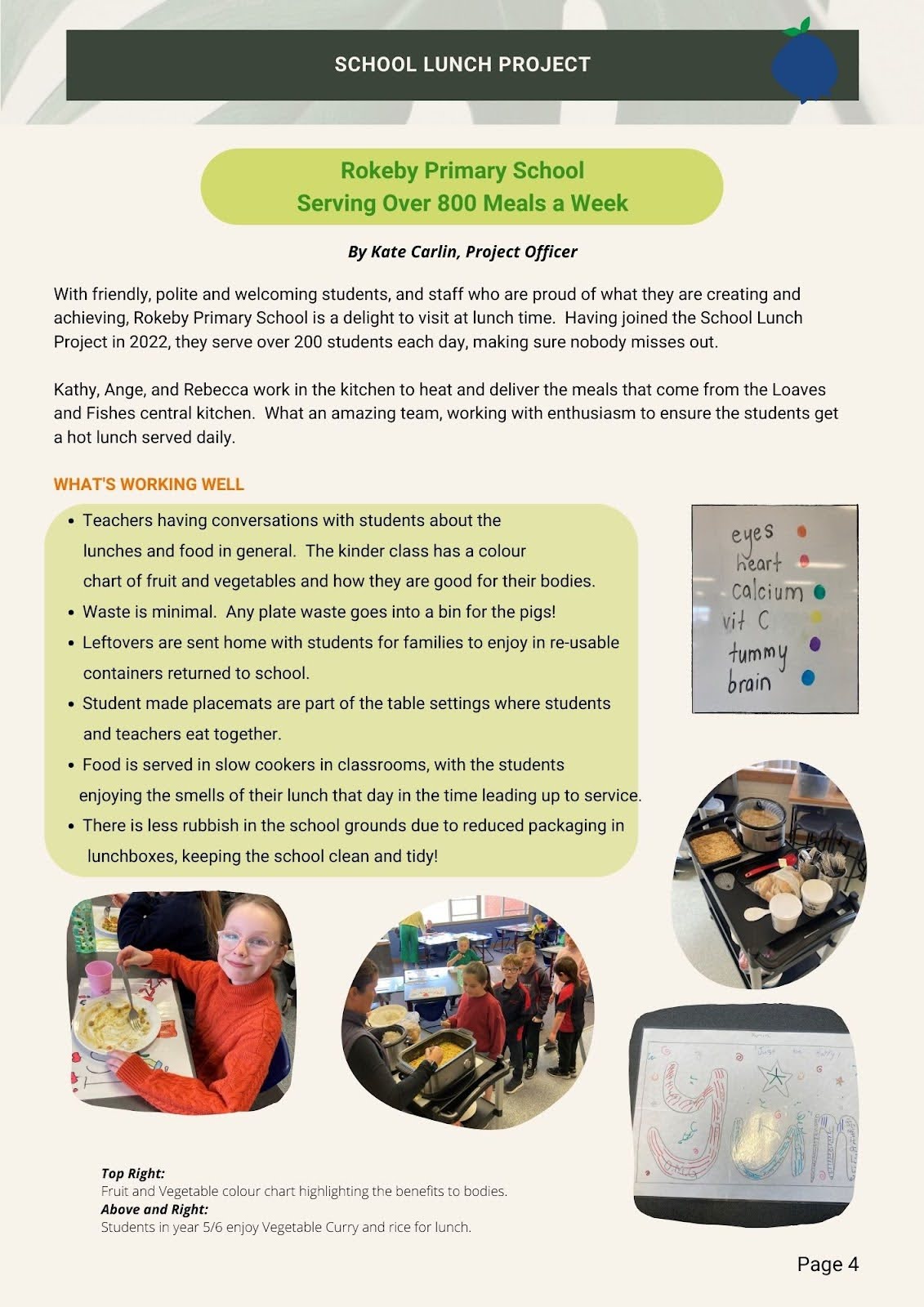
Tasmania has launched a free school lunch program that delivers healthy school lunches to children in around 45 schools.
Multiple federal and state government inquiries into food security have recommended the introduction of school meals programs in Australia.
Australia can learn from the experiences of other countries to introduce a universal free school lunch program that benefits children, their families, local farmers and the health of the planet.
Authors: Rachel Carey, Senior Lecturer in Food Systems, The University of Melbourne