

As authors abandon Adelaide Writers’ Week after cancelling of Randa Abdel-Fattah, is free speech in tatters?
- Written by Denis Muller, Senior Research Fellow, Centre for Advancing Journalism, The University of Melbourne
The decision by the Adelaide Festival Board to exclude Palestinian Australian author and academic Randa Abdel-Fattah from Adelaide Writers’ Week on the grounds of “cultural sensitivity” is based on a dangerously broad and vague criterion for suppressing free speech.
The board appears to have overruled Writer’s Week director Louise Adler to remove Abdel-Fattah from the program, arguing it would not be culturally sensitive to include her so soon after the Bondi terror attacks, due to her “past statements”.
In response, more than 30 leading authors have withdrawn from Writer’s Week, which begins on February 28.
They include international headliners such as novelist and essayist Zadie Smith and Greece’s Yanis Varoufakis, Miles Franklin award-winning authors Michelle de Kretser and Melissa Lucashenko, and Australian Society of Authors chair Jennifer Mills, who called the decision “completely unacceptable”.
The board yesterday issued a statement setting the decision against the background of the Bondi terrorist atrocity of 14 December 2025, invoking what it calls “the current national community context” and what it sees at the festival’s role in “promoting social cohesion”:
Whilst we do not suggest in any way that Dr Randa Abdel-Fattah’s [sic] or her writings have any connection with the tragedy at Bondi, given her past statements we have formed the view that it would not be culturally sensitive to continue to program her at this unprecedented time so soon after Bondi.
So the board’s position is that neither Abdel-Fattah’s writing nor Abdel-Fattah herself have anything to do with the Bondi atrocity. But because of some unspecified “past statements”, she is to be excluded in the interests of social cohesion and some vague notion called the “national community context”.
This decision goes far beyond the established standards embodied in the Racial Discrimination Act, which makes it an offence to “offend, insult, humiliate or intimidate” people because of their race.
It also goes far beyond the ordinary liberal standard articulated in John Stuart Mill’s harm principle: that the right to free speech ends at the point where it does harm to others.
Whose voice is entitled to be heard?
In a statement, Abdel-Fattah accused the festival board of “blatant and shameless” anti-Palestinian racism and censorship. She said the board’s attempt to associate her with the Bondi massacre was “despicable”.
The Board’s reasoning suggests that my mere presence is ‘culturally insensitive’; that I, a Palestinian who had nothing to do with the Bondi atrocity, am somehow a trigger for those in mourning and that I should therefore be persona non grata in cultural circles because my very presence as a Palestinian is threatening and ‘unsafe’.
Abdel-Fattah was to speak about her novel Discipline. It deals in part with a burning issue in media ethics: who is entitled to tell the story? Whose voice is entitled to be heard?
This issue, of particular salience in the coverage of the Gaza genocide, was the subject of the 2024 A.N. Smith lecture in journalism at the University of Melbourne given by the former ABC journalist and now, Guardian podcast host, Nour Haydar.
So Abdel-Fattah’s silencing robs not just the general community but other writers and journalists of an opportunity to reflect on a profoundly complex question.
Nor do the free-speech implications of the festival board’s actions stop there. The board says it has established a sub-committee to “guide” the writers’ festival’s decision-making and that this will include engagement with “government agencies” and “external experts”.
The risks to free speech are obvious.
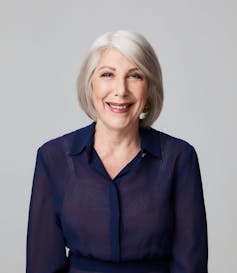
The decision is also a clear repudiation of the approach taken by Louise Adler, who has previously stood up for the right of Palestinian authors to be heard at the festival. In 2023, three Ukrainian writers and a major sponsor withdrew over the inclusion of two Palestinian authors, who had in different ways likened the state of Israel to Nazism. Adler vowed then not to be dissuaded from creating space for “courageous” discussions of literature and opposing views.
Against that history, it is difficult to believe that Adler would have concurred with the board’s decision to exclude Abdel-Fattah. Approached for her perspective on the events, Adler declined to comment.
Swift and devastating
The reaction from the artistic community has been swift and, for the festival, devastating. The Australia Institute and independent publisher Pink Shorts Press have withdrawn all of their participants. Among more than 30 local authors to have pulled out are poet Evelyn Araluen, novelist Jane Caro, and historians Clare Wright and Peter FitzSimons.
Also among the authors to withdraw is Peter Greste who, as a former prisoner of the Egyptian government for the crime of being a journalist, knows exactly where this kind of oppression leads. “We do not help social cohesion by silencing voices,” he posted on X.
“To be clear, I do not agree with everything Randa says. […] But I also believe that now is the time we should be having difficult conversations,” Greste told The Conversation via email.
At the time of writing, this message had been posted on the Writers’ Week website:
In respect of the wishes of the writers who have recently indicated their withdrawal from the Writers’ Week 2026 program we have temporarily unpublished the list of participants and events while we work through changes to the website.
An extraordinary aspect of this case is that the festival board seems not to have learnt from the experience of other arts bodies on the question of Gaza. Nor has it absorbed the lessons of principle they taught.
Last August, the Bendigo Writers’ Festival was gutted when around 50 writers withdrew over the last-minute issuing of a code of conduct. Among other things, the code required participants to “avoid language or topics that could be considered inflammatory, divisive or disrespectful”.
And in July 2025, Australia’s premier arts funding body, Creative Australia, backflipped on a decision to remove the artist Khaled Sabsabi and curator Michael Dagostino as Australia’s representatives at this year’s Venice Biennale.
Once again, there was outrage in the artistic community about what was seen as an attack on free speech. This led to a review. It found that, rather than Sabsabi’s work being contentious, the issue was the fact that he was of Middle Eastern background “at a time when conflict in that region was so emotive and polarising”.
Ironically, given the present case, it was Louise Adler who drew attention then to the need for arts bodies to be aware of the political environment in which they operated and to provide risk assessments to their “increasingly risk-averse boards”.
The Adelaide Festival Board is chaired by marketing executive Tracy Whiting AM. It includes journalist and communications strategist Daniela Ritorto and the managing director of Adelaide Airport, Brenton Cox, but no artists.
A South Australian government spokesperson told the ABC SA Premier Peter Malinauskas supported the board’s decision.
There are many lessons here. Free speech should be protected up to the point where it does unjustifiable harm. The arts, along with the media, are the prime means by which the right of free speech is made real. And these institutions have an obligation to stand firm in the face of objections from sectional interests.
Finally, on the issue of social cohesion it might be observed that in the black horror of the terrorists’ assault at Bondi, one gleam of light shone through. His name is Ahmed al-Ahmed.
Authors: Denis Muller, Senior Research Fellow, Centre for Advancing Journalism, The University of Melbourne

















