

Fire almost wiped out rare species in the Australian Alps. Feral horses are finishing the job
- Written by: Jamie Pittock, Professor, Fenner School of Environment & Society, Australian National University
On Friday I flew in a helicopter over the fire-ravaged Kosciuszko National Park. I was devastated by what I saw. Cherished wildlife species are at grave risk of extinction: those populations the bushfires haven’t already wiped out are threatened by thousands of feral horses trampling the land.
The New South Wales park occupies the highest mountain range in Australia and is home to plants and animals found nowhere else in the world. Many of these species are threatened, and their survival depends on protecting habitat as best we can.
Read more: Double trouble as feral horse numbers gallop past 25,000 in the Australian Alps
Kosciuszko National Park provides habitat for two species of corroboree frog (critically endangered), the alpine she-oak skink (endangered), broad-toothed rat (vulnerable) and stocky galaxias (a critically endangered native fish), among other threatened species.
As the climate has warmed, the cool mountain habitat of these species is shrinking; bushfires have decimated a lot of what was left. Feral horses now threaten to destroy the remainder, and an urgent culling program is needed.
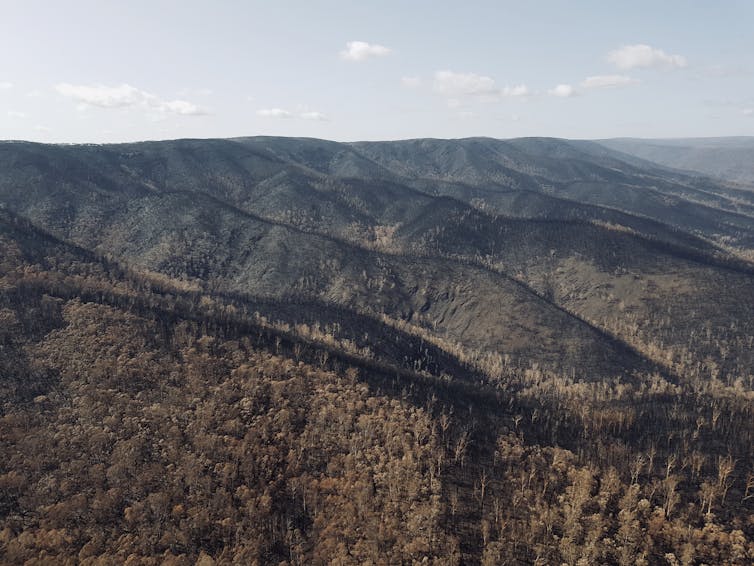 Devastation as far as the eye can see on the burnt western face of Kosciuszko National Park.
Jamie Pittock
Devastation as far as the eye can see on the burnt western face of Kosciuszko National Park.
Jamie Pittock
Not a green leaf in sight
Australia’s plants and ecosystems did not evolve to withstand trampling by hard-hooved animals, or their intensive grazing. Unfortunately, the New South Wales government has allowed the population of feral horses in the park to grow exponentially in recent years to around 20,000.
I flew over the northern part of the park with members of the Invasive Species Council, who were conducting an urgent inspection of the damage. Thousands of hectares were completely incinerated by bushfires: not a green leaf was visible over vast areas. A cataclysm has befallen the western face of the mountains and tablelands around Kiandra and Mount Selwyn.
Read more: Many of our plants and animals have adapted to fires, but now the fires are changing
Further north and east of Kiandra the fires were less intense and burnt patchily. On Nungar Plain the grassland and peat wetlands were only lightly burnt, and the first green shoots were already visible along the wetlands of the valley floor.
At first, I wondered if the fires may have spared two animals which live in tunnels in the vegetation on the sub-alpine high plains: the alpine she-oak skink and broad-toothed rat (which, despite the name is a cute, hamster-like creature).
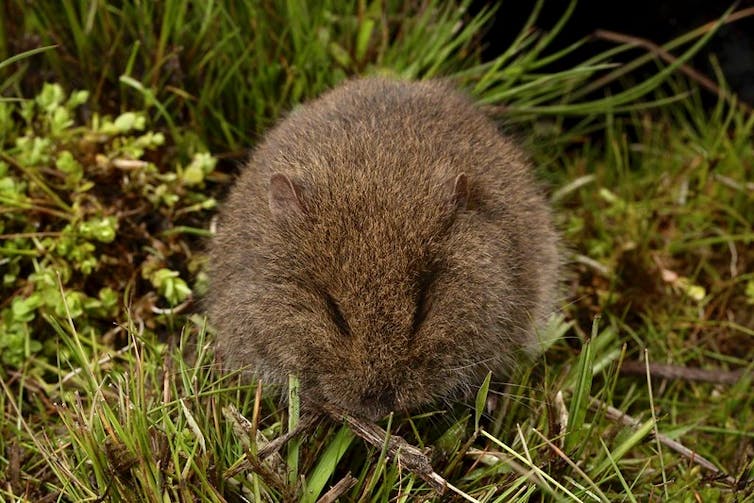 The hamster-like broad toothed rat.
Flickr
The hamster-like broad toothed rat.
Flickr
But not only was their understory habitat burnt, a dozen feral horses were trampling the peat wetlands and eating the first regrowth.
On the unburnt or partially burnt plains a few ridges over, 100 or more horses were mowing down the surviving vegetation.
Precarious wildlife refuges
Next we flew over a small stream that holds the last remaining population of a native fish species, the stocky galaxias. A small waterfall is all that divides the species from the stream below, and the jaws of the exotic trout which live there.
The aftermath of the fires means the last refuge of the stocky galaxias is likely to become even more degraded.
Over the years, feral horses have carved terraces of trails into the land causing erosion and muddying the stream bank. As more horses congregate on unburnt patches of vegetation after the fires, more eroded sediment will settle on the stream bed and fill the spaces between rocks where the fish shelter. Ash runoff entering the stream may clog the gills of the fish, potentially suffocating them.
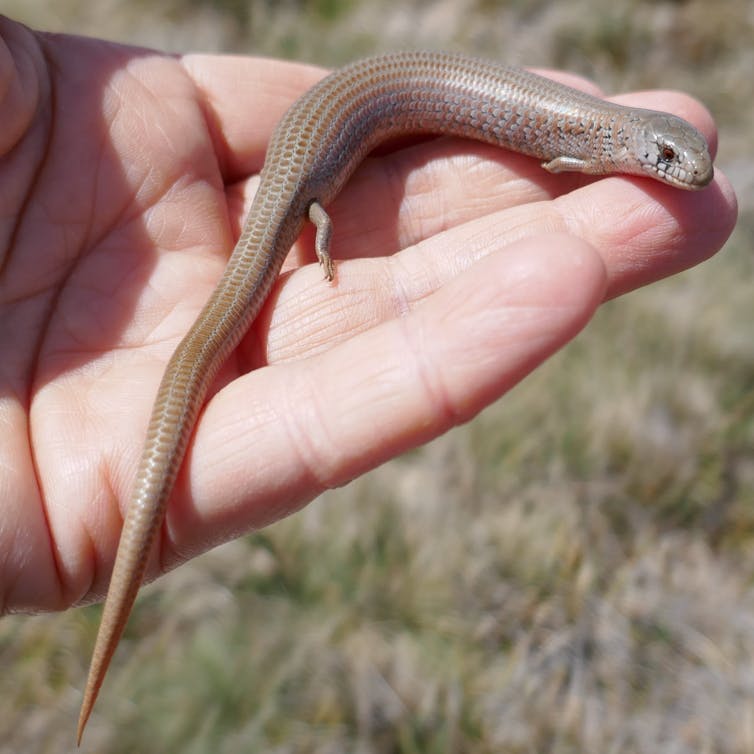 An Alpine she-oak skink.
Renee Hartley
An Alpine she-oak skink.
Renee Hartley
Read more: Conservation scientists are grieving after the bushfires -- but we must not give up
Many key wetland habitats of the southern and northern corroboree frogs have also been burnt. These striking yellow and black frogs nest in wetland vegetation.
 A corroboree frog.
Flickr
A corroboree frog.
Flickr
We hovered over a key wetland for the northern corroboree frog that had not been burnt, deep in the alpine forest. A group of feral horses stood in it. They had created muddy wallows, trampled vegetation and worn tracks that will drain the wetland if their numbers are not immediately controlled.
Horses out of control
Five years ago a survey reported about 6,000 feral horses roaming in Kosciuszko National Park. By 2019, the numbers had jumped to at least 20,000.
We saw no dead horses from the air. Unlike our native wildlife, most appear to have escaped the fires.
Read more: Why do brumbies evoke such passion? It's all down to the high country's cultural myth-makers
Flying down the upper Murrumbidgee River’s Long Plain, I saw large numbers of feral horses gathered in yet more wetlands. Displaced by the fires to the south and west, they were already trampling the mossy and heathy wetlands that store and filter water in the headwaters.
The Murrumbidgee River is a key water source for south-east Australia. The horses stir up sediment and defecate in the water. They create channels which drain and dry the wetlands, exposing them to fire.
One-third of Kosciuszko National Park has been burnt out and at the time of writing the fires remain active. Feral horses are badly compounding the damage.
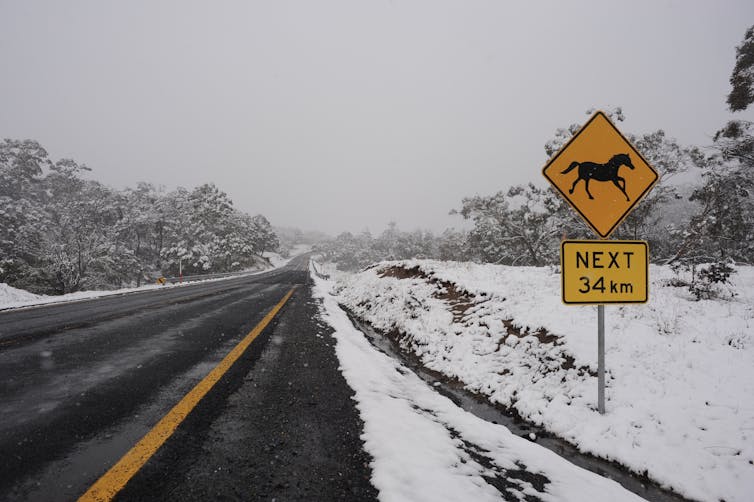 Feral horse numbers in the national park have reached at least 20,000.
Perry Duffin/AAP
Feral horse numbers in the national park have reached at least 20,000.
Perry Duffin/AAP
If we don’t immediately reduce feral horse numbers, the consequences for Kosciuszko National Park and its unique Australian flora and fauna will be horrendous.
Responsible managers limit the numbers of livestock on their lands and control feral animals. The NSW government must repeal its 2018 legislation protecting feral horses in Kosciuszko National Park, and undertake a responsible control program similar to those of the Australian Capital Territory and Victorian governments.
Without an emergency cull of feral horses in Kosciuszko National Park, burnt vegetation may not fully recover and threatened species will march further towards extinction.
Authors: Jamie Pittock, Professor, Fenner School of Environment & Society, Australian National University


















