

greener ways to go when you die
- Written by: Sandra van der Laan, Professor of Accounting, University of Sydney
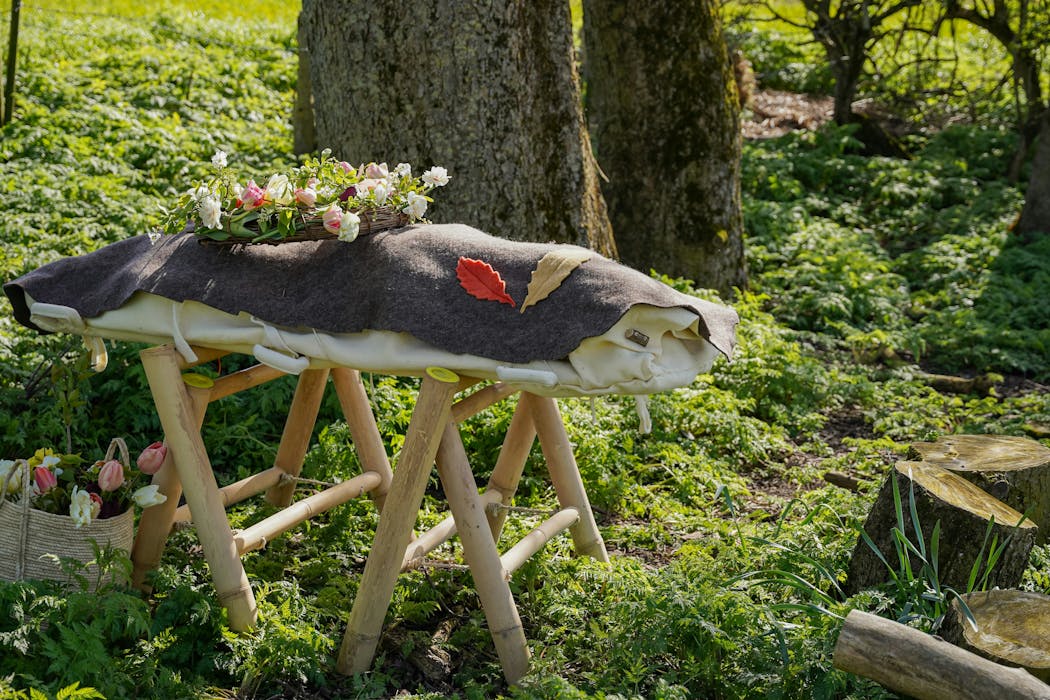
All of us, sooner or later, will need to make a decision about the final resting place for ourselves or a loved one.
But the usual options offered by most funeral homes – burial or cremation – come with some pretty major environmental problems. Both involve huge amounts of energy, resources and pollution.
Some religions have clear rules around how a body should be laid to rest, but if you’ve got a broader set of options – and you can afford it – what are the alternatives to mainstream burial and cremation methods?
The burial problem
Burial is increasingly out of reach for many. It’s expensive and cemeteries are running out of space, particularly in urban areas.
While many cemeteries in Australia now have limited tenure on burial plots (25 years in most places, renewable up to 99 years), space is still at a premium.
Even if you can secure a spot in a cemetery, it’s worth noting it takes a vast amount of resources to create and transport a wooden coffin.
All that felling of trees, refining the wood, shaping it into a coffin, transporting the materials and final product – it adds up to a lot of greenhouse gases. And then there’s the additional resources used for memorials such as a headstone.
And, while embalming is not common in Australia, preserving bodies this way uses chemicals such as formaldehyde, which can contaminate the soil and groundwater. It also poses health risks to funeral workers.
What about more natural options?
Natural burial methods are a more environmentally friendly alternative.
Also referred to as green burials, this is where bodies are buried in shallow graves in biodegradable material, such as a shroud or cardboard coffin.
Again, however, physical space remains a challenge. There’s just not that many green burial sites in Australia, and securing a spot can be costly and difficult. It might also be very far from where you or your surviving family members live.
Another option known as “human composting” takes green burials a step further. That’s where human remains are transformed into nutrient-rich soil with the aid of organic matter. However, this method is currently not legal in Australia, despite the efforts of advocates.
What’s the issue with mainstream cremation techniques?
Cremation, chosen for around 70% of body disposals in Australia, is not particularly environmentally friendly.
Each cremation releases toxins such as mercury into the atmosphere, as well as a significant amount of of CO₂.
How much? Well, estimates vary but one 2021 report noted that the “total greenhouse impact, taking into account electricity, transport and resources inputs as well as natural gas, of a single cremation is around 430kg of CO₂ equivalent.”
Each standard burial as practiced in Australia, the same report noted, is responsible for the emission of 780kg of CO₂ equivalent.
Water cremation: greener but pricier
Water cremation, also known as alkaline hydrolysis, can reduce some of the environmental impacts of traditional flame cremation.
Water cremation produces far fewer emissions compared to flame cremation. It avoids the release of toxic fumes from burning things like mercury from dental fillings.
The process uses water and alkaline chemicals, which are heated and circulated in a stainless steel vessel to speed up decomposition.
The result is bone ash and a sterile liquid byproduct. The ash can be kept, buried or scattered in the same way as ashes from a flame cremation. The liquid can be recycled.
Currently water cremation is relatively expensive in Australia, costing around A$6,000 compared to around $1,000 for a flame cremation. However, it may become more affordable over time if the practice becomes more popular.
And while it is legal in most of Australia, availability is restricted as there are only a few operators nationwide.
What about donating my body to science?
Donating your body to science might appeal to some as a form of “recycling”.
However, university and hospital-based programs generally cremate remains after they finish using your body or tissues for research and education, unless the body has been embalmed. If it has been embalmed or the family has specific requests, the body will be given a simple burial subject to certain conditions.
Private body donation operators merely harvest usable tissue immediately after death, leaving the family to dispose of the body via whatever method they would have done anyway.
In the end
A key issue across all options is that many people want a spot they can go to pay respect and remember loved ones – a sense of place.
While cremated remains can be placed in a niche in a cemetery with a memorial plaque, more often they are scattered in a meaningful place.
However, with cemeteries now leaning toward limited tenure for funeral plots, any enduring sense of place might also be lost even if you choose to be buried.
Finally, we all need to make sure we are all having conversations about our final wishes so loved ones have the best opportunity to carry them out.
In the end, the executor of the estate has the ultimate say over what happens to the body, so choose your executor carefully. Most people entrusted to this role tend to carry out the wishes of the deceased, if they are clearly articulated and affordable.
Authors: Sandra van der Laan, Professor of Accounting, University of Sydney


















