

how to build your child’s confidence as they start school
- Written by: Fiona Boylan, Senior Lecturer, School of Education, Edith Cowan University
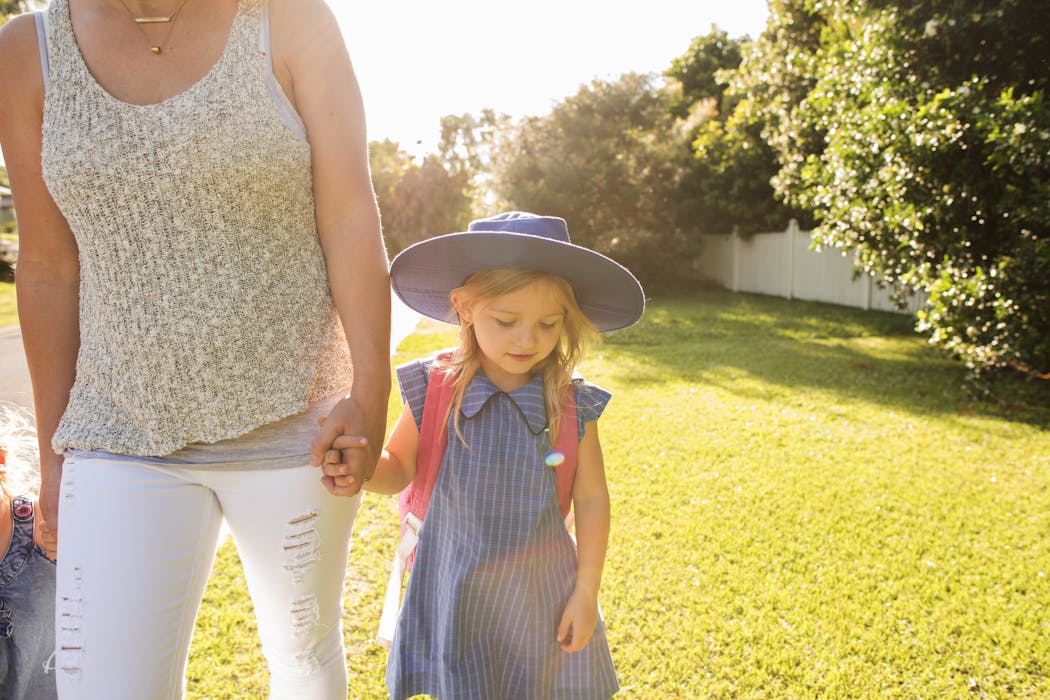
Starting school is a big moment in a child’s life. It is a time filled with new routines, new people and new places. These changes can also mean it is sometimes a stressful time. But it doesn’t have to be.
Our recent research explored what helps children’s confidence as they begin formal schooling. More than 100 children aged three to six and 21 teachers participated in our study, which included interviews, observations and children’s drawings.
We found there are many simple, everyday things families can do to help children feel calm and ready for their first day.
Practise new skills
Our research shows children are often expected to be more independent at school than they are at home. They’ll need to open their own bag and lunchbox, organise their belongings and use the toilet without help.
Families can make the transition smoother by practising one or two of these skills each day in the lead‑up to school.
Encourage your child to pack and carry their bag, open and close their lunchbox, and manage any food packaging they’ll encounter, like zip-lock bags or containers.
Try packing their lunchbox during the holidays so they can practise opening items and learn what’s for morning tea and lunch. This also helps you spot packaging that’s too tricky (something teachers are always grateful for).
Set up routines
Young children need repeated practice to learn new tasks such as packing their bag, getting dressed, or organising what they need for the day.
In the schools we worked with, children transitioned more smoothly when parents practised getting-ready routines with them beforehand. Rehearsing the morning routine gives children a sense of what to expect, without the pressure of rushing out the door.
A simple visual chart on the fridge can help. For example, you might include three steps – “eat breakfast”, “brush teeth and hair”, “pack your bag”. This is usually enough for young children to manage at the start.
Get to know school’s places and spaces
Help your child feel familiar with their new setting before the first day by attending any orientation sessions or arranging a visit. Even walking around the school, driving past, or exploring the playground can make the environment feel safe.
Talk about what the day might involve for example,
you will meet your teacher at the classroom door and they will take you into the classroom. You’ll have a break where you can play on the equipment. I’ll be at the tree to pick you up in the afternoon.
Use any stories or short videos the school provides to build familiarity. The more children know what to expect, the more confident they’ll feel when they get to school.
Watch out for big feelings
Starting school is exciting but also tiring. Young children are adjusting to new routines, people and expectations. It’s normal for them to come home exhausted or irritable.
Keep afternoons calm and avoid extra activities so they have time to rest, play and recharge. Offer a snack and water as many children forget to drink during the day.
Once they’ve had downtime, gentle questions like “What was your favourite part of today?” work better than pressing for details. This means you are not pressuring kids to go over things when they are tired and helps avoid emotional outbursts. Don’t worry if they can’t remember names yet.
Remember, this transition can be tiring for parents too – so keeping after-school time simple helps everyone to manage their emotions.
Get to know the teachers and school
It’s not just children who prepare for starting school – schools prepare too. Teachers want to get to know your child and family because strong relationships help them support children more effectively.
Share things like the language you speak at home, your family culture, and your child’s routines.
Feel free to ask questions about the daily schedule. Research shows us when families and schools exchange information, a child’s transition to school is smoother.
Leonie Barblett and Amelia Ruscoe from Edith Cowan University were co-researchers on the research mentioned in this article.
Authors: Fiona Boylan, Senior Lecturer, School of Education, Edith Cowan University


















