

A major overhaul of NZ’s local government is underway – will it really fix what’s broken?
- Written by: Guy C. Charlton, Associate Professor, University of New England
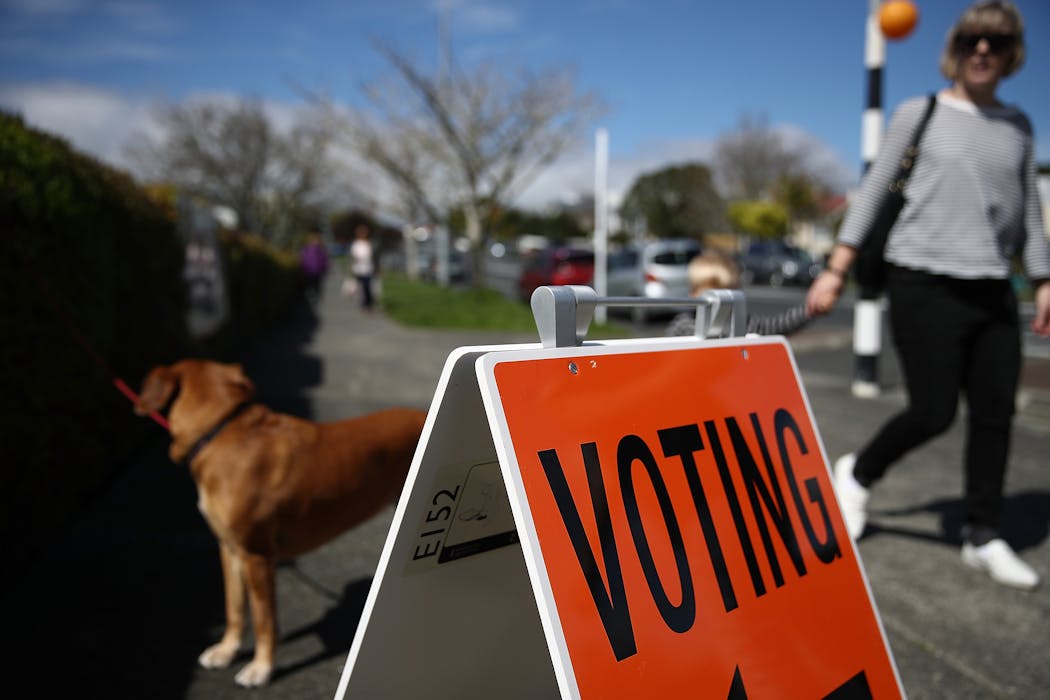
With a general election looming, the largest shake-up of New Zealand’s local government system in three decades sits on the table.
New Zealanders are being invited to have their say on the draft policy proposal, Simplifying Local Government, which would fundamentally reshape how councils operate.
The government’s case for reform is that the status quo is inefficient, confusing to voters and “tangled in duplication, disagreements and decisions that don’t make sense”.
It argues these problems will only intensify as councils take on new responsibilities, from resource management reform to water services and climate adaptation. Its proposed solution: removing an entire tier of elected local government.
While reform may well be overdue, the proposal raises crucial questions about democratic representation, accountability and how regional decisions should be made.
These issues sit at the heart of the consultation – and they matter as much as the promise of efficiency or lower costs.
How the proposed changes would work
The proposal would abolish regional councils and replace them with combined territorial boards made up of locally elected mayors. Voters would elect only one set of local representatives, rather than both territorial and regional councillors.
The new boards would take on the legal responsibilities of existing regional councils, while much of the regional bureaucracy would remain. Mayors on the boards would not have equal voting power; instead, votes would be weighted by population, with adjustments set by the Local Government Commission.
The proposal also allows – though not as a preferred option – for a Crown Commissioner to be appointed to a territorial boards. Depending on the circumstances, that commissioner could have no vote, a veto, or more than half of the weighted votes, to ensure national interests are taken into account.
The boards’ primary task would be to prepare a regional reorganisation plan within two years of establishment.
These plans would aim to encourage cooperation between councils to reduce costs, improve efficiency and deliver services better aligned with regional needs, while safeguarding local voices. They would also examine whether combined councils or alternative regional entities could deliver services more effectively.
Importantly, the plans would consider how local government works with post-settlement governance entities in relation to Treaty of Waitangi settlements.
They would be guided by a central government review of council functions, assessing whether some responsibilities should be reallocated to other agencies, delivered through different models, or removed where national consistency is required.
Once completed, each plan would be assessed against national priorities, financial viability, service quality, governance and treaty obligations. The outcome could range from retaining the territorial board to modifying or dissolving it, depending on the region.
Where the plan falls short
There is little question that New Zealand’s local government system is no longer serving the needs of communities.
The sector is awash in paperwork, rates have increased, services reduced and it seems unable to deal with a multitude of problems that surfaced during the pandemic.
To this extent, the draft proposal, with its focus on shared efficiencies, reducing the number of local institutions and attempting to reinvigorate local democracy, is welcome. But it comes with significant shortcomings.
First, it does not require a prior assessment of national legislation and policy that shapes – and often constrains – local government functions. Many of the costs and inefficiencies councils face stem from nationally imposed mandates.
Reforming governance structures without examining these obligations risks entrenching, or even worsening, existing problems.
Moreover, the proposal does not consider the Local Government Act 2002, which imposes significant procedural and substantive obligations on councils that could be directly affected by legislative reform and any resulting reorganisation plan.
Second, eliminating regional councils before undertaking a comprehensive review of service delivery may exacerbate existing problems rather than resolve them.
Simply removing elected regional councillors while awaiting a central government review of service delivery is unlikely to resolve pressing local problems or uncover issues not already well known to local officials.
Will voter turnout improve?
The government also presumes, without clear evidence, that regional councillors are a major contributor to local government problems. Even under the plan, local government would still face too many nationally imposed obligations and too little funding to operate effectively.
Instead, the new boards have potential to increase parochial non-regional decision-making and create legitimacy issues due to how votes are allocated.
Nor is there much reason to think that restructuring councils in this way would lead to higher voter turnout in local elections. Given New Zealand voters routinely navigate the complexities of MMP, it is unconvincing to attribute low turnout to voter confusion.
A more plausible explanation lies in the growing centralisation of policy making by successive governments – a trend that won’t change under this proposal.
Lastly, by removing regional constituencies, the proposal effectively eliminates the possibility of Māori constituencies at the regional level. Given the likely outcome of more centralised local government, this change would remove an important mechanism for Māori representation and participation as treaty partners.
Retaining the option of Māori wards and constituencies is crucial to reflecting local aspirations, supporting reconciliation and ensuring meaningful involvement in regional decision making.
With changes of this scale on the table, the consultation now underway deserves careful scrutiny of what might be simplified, but also what could be lost.
Authors: Guy C. Charlton, Associate Professor, University of New England


















