Modern Australian
The Times

The Voice would have renewed Australian democracy. Its failure leaves us all worse off

  • Written by Sana Nakata, Principal Research Fellow, James Cook University

There’s long been a fundamental issue underpinning Australia’s approach to Indigenous affairs. The state makes laws specifically about Aboriginal and Torres Strait Islander peoples without any protected mechanism giving them a say in the process.

The proposed Voice to Parliament sought to remedy this democratic deficit. Had the referendum succeeded, it would have established a formal representative connection between Indigenous peoples and the Commonwealth parliament.

The Voice proposal was a reform to democratic representation. Its failure was a missed opportunity to renew Australian democracy.

But it was also an explicit choice: to sustain the political subjugation of Indigenous people by denying them representative channels for making their voices heard on matters that affect them.

This enduring structural limitation leaves the parliament without any representative mechanism to consult with, or be accountable to, Aboriginal and Torres Strait Islander peoples.

What does Indigenous representation look like?

Even as we have seen increasing numbers of Aboriginal members in the federal parliament, they do not represent all Aboriginal and Torres Strait Islander people.

Nor are they empowered to. In the 125 years since federation, there has never been a Torres Strait Islander representative at the Commonwealth level.

A key aspect of political accountability is the ability of a constituency to remove their representative at the ballot box. If a majority feels their MPs have failed to advance their interests or otherwise represent them, they can vote them out.

This article is an edited extract from the new book The Failure of the Voice Referendum and the Future of Australian Democracy, edited by Professors Gabrielle Appleby and Megan Davis.

For minority populations, this mechanism fails because their votes will, by definition, always fall short of a majority. This has long been called “the tyranny of the majority”.

While this is a problem for all minorities, the political claims of Aboriginal and Torres Strait Islander people are distinct from other minority groups. This is because they’ve been politically subjugated through unlawful dispossession.

Voting rights alone cannot remedy this. We need to move beyond this narrow view of political representation.

More than politics

Being represented is not just about aggregating votes or delegating decision-making power to elected parliamentarians.

There are many types of democratic representation, far beyond formal political institutions. There are also unions, nongovernmental organisations, social movements, media organisations and community advocates.

These actors represent themselves and others through various channels, such as:

Through this lens, we can see Aboriginal and Torres Strait Islander people have long maintained and exercised their representative power, even when formal political institutions exclude or silence their voices.

A sign says voting yes means recognition, listening and better results.
The Voice would have been a link between First Nations people and the institutions that govern them. Con Chronis/AAP

Critics of the Voice proposal from both conservative and progressive perspectives focused on the power of direct decision making.

But it’s crucial to recognise representative power entails more than just making decisions in formal political institutions. Representative power can also set new agendas, shape political debates and transform public attitudes and values.

The proposed Voice offered what we might call “connective tissue” between First Nations peoples and communities, and the Australian state that continues to govern them.

The Voice proposed a new focal point for channelling the varied interests of diverse First Nations communities directly to government, as well as the broader Australian public. In similar ways to the Yoorrook Commission and First Peoples’ Assembly of Victoria (and now Gellung Warl), the Voice promised to highlight new priorities for action.

Read more: Why the Voice referendum failed -- and what the government hasn't learned from it

In Victoria, this mobilised public attention on issues such as policing and self-determination.

This is why the proposal’s defeat represents more than just maintaining the status quo. It transforms the political subjugation of Aboriginal and Torres Strait Islander peoples from a historical legacy into the contemporary choice of the nation.

Despite decades of Aboriginal and Torres Strait Islander advocacy, careful institutional design and extensive consultation, the Australian public collectively decided to maintain political structures that exclude First Nations perspectives from decision-making processes that affect them.

Strengthening democracy for all

As we move forward, the implications of this decision extend beyond Aboriginal and Torres Strait Islander affairs. It raises questions about Australia’s capacity to renew its democracy.

The capacity of democracies to change themselves in response to shifting social conditions and emerging demands is a key part of what keeps them democratic.
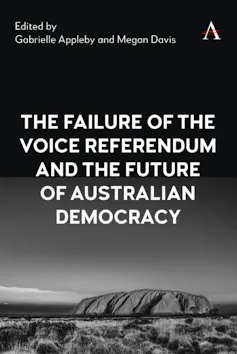
The black and white front cover of a book
Anthem Press But this renewal involves much more than just holding elections. It requires political systems to transform their structures in response to injustices and problems of new generations. This includes long-term challenges, such as climate change. When democratic systems don’t adapt, they risk ossifying into forms of rule that maintain historical inequities under the guise of democratic process. This kind of political ossification threatens the democratic futures of all Australians. It also does nothing to improve the everyday lives of Aboriginal and Torres Strait Islander people. The challenge now becomes how to maintain pressure for democratic renewal in the face of this setback. This requires Australians to continue to expose and challenge the democratic deficit the Voice sought to address. We must also strengthen the many forms of First Nations political representation that persist in the face of institutional exclusion.

Authors: Sana Nakata, Principal Research Fellow, James Cook University

Read more https://theconversation.com/the-voice-would-have-renewed-australian-democracy-its-failure-leaves-us-all-worse-off-271836

Mini Excavator and Trailer Package for Sale: What I Buy as One Deal in 2026

The first client who asked me for a mini excavator and trailer package for sale wasn’t trying to save a few hundred dollars on shipping. They we...

Make Dad a Guest in His Own Home This Father’s Day

Father’s Day can accidentally turn Dad into the unpaid event manager of his own celebration. He lights the barbecue, finds extra chairs, checks wh...

Where to Enjoy Your Off-Road Caravan on the Gold Coast

With a caravan, you can travel anywhere and everywhere without battling the rush of the peak holiday season or last-minute reservations. While the r...

How Osteopathy Supports Recovery from Sciatica and Nerve Pain

Sciatica isn't just annoying. It's genuinely painful. It sits deep in your glute and shoots straight down the back of your leg. It turns something as...

The Winter Jewellery Edit: Five Pieces You'll Wear All Season

As wardrobes shift to cosy knits, tailored coats and rich seasonal textures, jewellery becomes the finishing touch that pulls every winter outfit to...

7 Signs It's Time to Upgrade Your Piston Air Compressor

If you run a workshop, panel shop, or fabrication business anywhere around Perth, you already know what heat and dust do to equipment over a few sum...

How Long Do Bathroom Renovations Melbourne Take? Step-by-Step Process Explained

Planning a bathroom renovation is exciting, but one of the biggest questions homeowners ask is, "How long will it take?" While every project is uniq...

Why Your Skin Breaks Out: The Science of Acne Explained

Acne is the most common skin condition in the world. An estimated 85% of people experience it at some point between the ages of 12 and 24, and a gro...

10 Swimwear Trends Australian Women Are Wearing This Summer

Every Australian summer brings a fresh wave of swimwear trends, but some styles have much greater staying power than others. While fashion constantly ...

Why Regular Skills Updates Are Essential for Licensed Security Officers

A guard at a Brisbane shopping centre gets a call about a shoplifter who's turned aggressive.  They’ve done the job for six years. But their de-...

10 Benefits of Choosing Professional Tutoring Penrith Services

Every student has unique learning strengths, challenges, and academic goals. While classroom teaching provides essential knowledge and structure, so...

Sunshine Coast Baby Classes Prove Big Hit Among First-Time Mums

There's a movement gaining traction on the Sunshine Coast, providing a village of support, socialisation and relief for first-time mothers and babie...

Father's Day Gift Ideas for Men Who Are Hard to Buy For

Some dads are easy to buy for. Others do not want anything, already have everything, or give you the classic "don't worry about me" answer every yea...

Top 5 Mistakes That Wear Out Your Brakes Faster

Brakes don't need frequent replacements like oil changes do.   But a lot of the wear happens quietly, over months, because of habits most drivers...

Plantation Shutters vs Curtains: Which Is Better for Your New Home?

Moving into a new home is an exciting opportunity to personalise your space and make it your own. While many homeowners focus on furniture, flooring...

Celebration of Life vs Traditional Funeral: What's the Difference?

When saying goodbye to someone you love, there is no single way to honour their life. Every family has different traditions, beliefs, and preference...

Building Approval for Roofing Projects: What Homeowners Need to Know

Roofing projects are an important part of maintaining and protecting your home. Whether you're repairing storm damage, replacing an ageing roof, or ...

Chatswood Tutoring And Its Role In Academic Achievement

Academic success often requires more than classroom attendance alone. Students face increasing expectations as they progress through school, particu...