

School breaks make up more than an hour of the day. Should they be considered part of learning?
- Written by: Brendon Hyndman, Associate Professor of Education and Associate Dean (Academic), Faculty of Arts and Education, Charles Sturt University
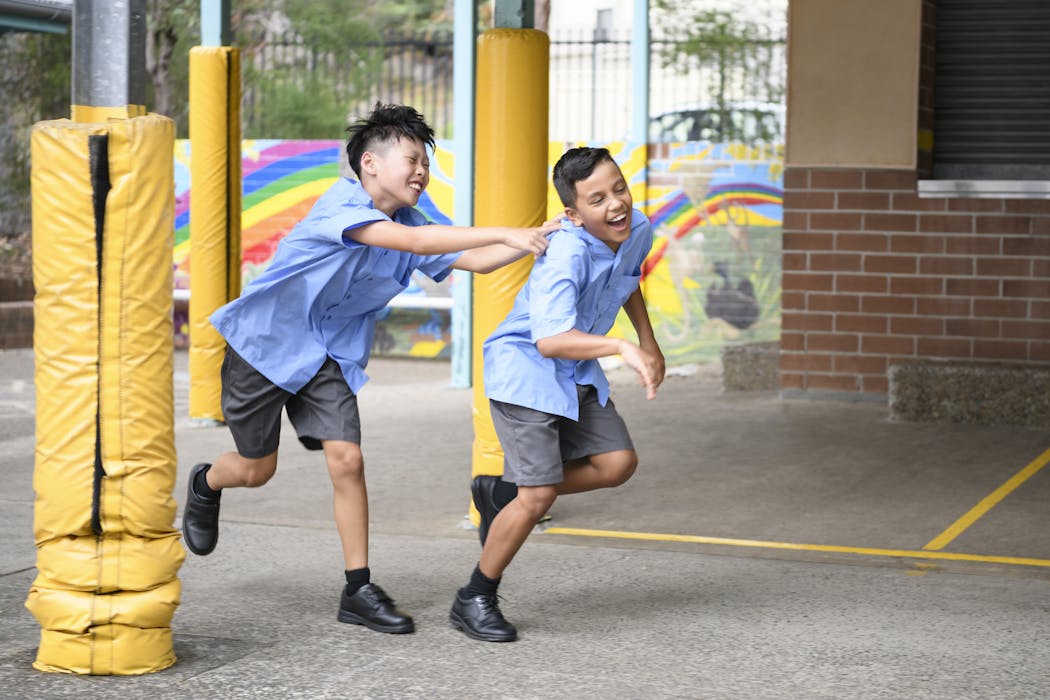
Most public debate about schooling focuses on what happens inside the classroom – on lessons, tests and academic results.
But students also spend significant time at school outside formal classes. While break times vary between Australian schools, a 2026 study suggests average recess and lunch periods take up about 12-16% of school time. This is between 62-82 minutes per day across both primary and high school. By comparison, Finland – regarded as one of the world’s leading education systems – sets aside more than 19% of the school day for breaks.
Recess and lunch are generally regarded as “breaks” from learning – where children can play or have free time. But given they make up such a significant part of the school day, should schools and education systems give them more consideration?
Our study
In a new study, we surveyed 130 primary and high school teachers about their views on school break times.
Teachers came from 25 countries and were recruited by targeted posts on social media. The majority of participants were female, from co-educational schools, had taught for more than 11 years and were working within early elementary/primary grade levels up to Year 2.
Teachers completed an online survey that included short, rating questions and longer, open-ended responses.
We deliberately included teachers from outside Australia. Schools across the world face similar pressures in terms of crowded curricula, accountability demands, risk management requirements and growing concerns about students’ wellbeing.
Teachers from Australia, the United States, Canada, the United Kingdom, New Zealand and other countries told remarkably similar stories.
Why breaks are important
Teachers in our study were clear that time outside the classroom supports learning. As well as recharging students, other studies show outdoor play and exploration are linked to stronger social skills, self-regulation, confidence, physical health and classroom engagement.
One New Zealand teacher noted:
physical strength via play supports academic learning, ability to concentrate, and the importance of risky play […] supports resilience.
Several teachers said when this time was supported well, it helped them build relationships and understand students in ways classroom teaching alone could not.
Research also tells us active supervision from teachers can strengthen students’ sense of belonging at school, which is a powerful protective factor against bullying.
It’s demanding for teachers
Teachers described rostered playground supervision during recess and lunch (often labelled “yard duty”) as demanding, unpredictable work.
Teachers need to constantly scan outdoor areas for safety risks, manage injuries and conflicts, support distressed or dysregulated students and make rapid decisions about inclusion and behaviour. This includes decisions about when to allow children to work things out and when to step in, when there is rough-and-tumble play and minor conflicts.
But there’s no training
Despite the benefits and demands of recess and lunch periods, teachers consistently reported they were rarely given preparation or professional learning to support students and give them opportunities to learn during these times.
On average, teachers rated their preparation to support in this area at just two out of ten (one UK teacher said they had to source their own training). As a result, decisions were often driven by risk avoidance rather than developmental value.
But with more training and expertise, teachers could support play by scanning for early signs of harm or exclusion, then using brief coaching prompts. For example, “What do you think would make this activity work for everyone?”, “How could you solve this so it feels fair?” and “What rule do you want to agree on before you restart?” can help students negotiate, reset boundaries and re-join the group.
This helps students to learn social skills and resilience, rather than relying on teachers to sort things out.
What about the weather?
Amid episodes of extreme heat and wild weather, teachers also need to be able to make rapid safety decisions about outdoor time.
Teachers in our study reported they have limited guidance here, beyond students needing to come indoors at certain temperatures. This highlighted the need for clearer preparation about handling weather. As one Australian high school teacher noted, colleagues “dread” wet weather days or extreme heat, with multiple classes in a confined space.
Further support for teachers could include flexible timetabling (having outdoor play earlier, when the day is cooler) and resources to support consistent decisions and safe adaptation when conditions allow.
Do we need a name change?
Teachers also identified broader barriers around break times. These included limited funding for outdoor spaces and school policies that frame breaks as a supervision “duty” rather than as a legitimate part of education.
Many teachers felt terms such as “recess” or “break time” signal this time is less important. Several suggested reframing it as “discovery time” or “outdoor exploration” to better reflect what children are actually doing and learning.
Teachers also expressed concern that opportunities for outdoor time decline sharply in high school. Even though young people face increasing mental health and wellbeing challenges and may benefit from more support to be outside.
What else could we do?
Improving learning beyond the classroom requires a shift in mindset from school leadership and education policy makers.
Schools can start by recognising this time as a legitimate part of learning. This includes providing teachers with basic professional guidance on play, inclusive supervision and risk-benefit decision making in the playground.
Allowing teachers to supervise students they know well can also help build relationships. This may include setting up simple play opportunities (such as helping to set up a student-led play zone or theme).
At a broader level, clearer links between learning beyond the classroom and curriculum goals are needed. This can give teachers evidence and guidance to help them get the most of this time, not just for students’ wellbeing but for their learning.
Authors: Brendon Hyndman, Associate Professor of Education and Associate Dean (Academic), Faculty of Arts and Education, Charles Sturt University

















