

WHO membership doesn’t threaten NZ’s sovereignty – walking away from it would
- Written by: Helen Petousis-Harris, Associate Professor in Vaccinology, University of Auckland, Waipapa Taumata Rau
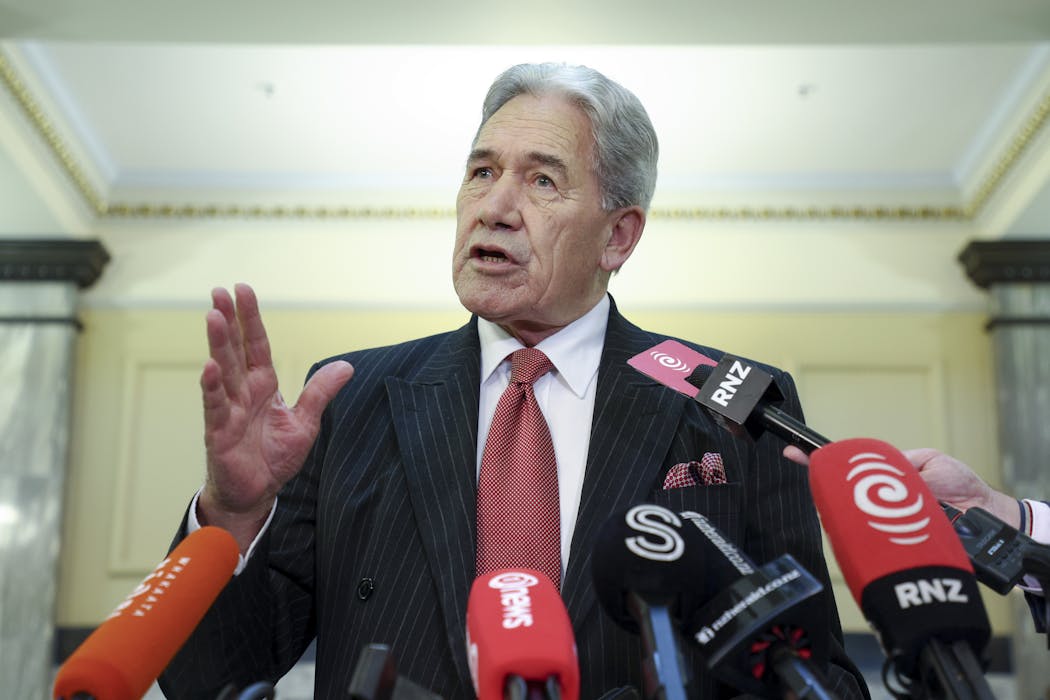
When NZ First leader Winston Peters responded to the recent US withdrawal from the World Health Organization (WHO) by questioning whether New Zealand should continue funding it, he employed a familiar narrative.
Peters was not speaking in his capacity as foreign minister, but describing the WHO as an organisation full of “unelected globalist bureaucrats” nonetheless plays into fears that New Zealand’s membership is a risk to national sovereignty.
The rhetoric mirrors wider international narratives that frame global health cooperation as a threat to national interests.
But such fears are misplaced.
The WHO is a global advisory body and cannot override New Zealand law. No WHO instrument has any legal force in New Zealand unless it passes through a domestic implementation process like any other international treaty.
In practice, that means decisions are made in Wellington, through Cabinet and Parliament – not in Geneva.
The most recent amendments to the WHO’s international health regulations explicitly preserve national decision-making flexibility. The pandemic agreement, adopted by the World Health Assembly last year, does the same.
Even during the COVID pandemic, WHO guidance remained advisory. Countries deviated constantly. New Zealand adopted measures stricter than WHO baselines in its elimination strategy by choice. Sovereignty was not lost in 2020. It was exercised.
Why the WHO is easy to attack
Part of the problem for the WHO is not that it is too powerful, but that it is oddly invisible.
As the scientific journal Nature recently noted, the WHO struggles to succinctly explain what it does, not because it does little, but because it does everything only a global public health authority can do. It is the sole body mandated to coordinate international public health action across borders, systems and income levels.
For low-income countries, the WHO is a lifeline providing access to affordable medicines and vaccines, quality and safety standards, laboratory capacity and expertise during disease outbreaks.
For high-income countries like New Zealand, the benefit is less visible but no less real. We rely on the WHO to limit the international spread of infectious diseases before they reach our borders through surveillance, data sharing and coordination that no single country can run alone.
The WHO’s signature achievement was the eradication of smallpox in 1980. It is often invoked nostalgically, as if it were a relic of a more cooperative era. In reality, that success defined the WHO’s modern role, shifting from time-limited eradication campaigns to permanent global surveillance and coordination.
During the COVID pandemic, the WHO provided early alerts, technical guidance and global intelligence, but it did not dictate New Zealand’s response. New Zealand’s elimination strategy was only possible because global information flowed early.
In recent years, the organisation has also strengthened its scientific backbone by embedding evidence review more deeply in decision making, including through its chief scientist’s office. This development rarely features in political attacks on the WHO, which tend to portray it as ideological rather than technical.
The irony is that the WHO is most effective when it is least visible. When surveillance works, outbreaks are smaller. When standards hold, medicines are safe. When coordination succeeds, crises are quieter.
That makes the WHO easy to caricature and to dismantle rhetorically.
What New Zealand gets from the WHO
Lost in this debate is a more important question. What would New Zealand lose by stepping back?
New Zealand benefits from global disease surveillance systems we could not replicate independently. For example, the global influenza surveillance and response system provides early warning, viral strain characterisation and vaccine reference data that feed directly into Medsafe decisions and national preparedness.
The WHO also sets international reference standards for vaccines, blood products and diagnostics that small regulators rely on to function efficiently and safely. Without that shared scientific baseline, New Zealand would have to either duplicate global work at extraordinary cost or accept greater uncertainty in regulatory decisions.
Then there is the Pacific. New Zealand’s role as a regional partner is amplified, not diluted, through the WHO.
During recent health emergencies in the Pacific, the WHO provided the coordination framework that allowed New Zealand and Australia to act quickly, coherently and legitimately.
Walking away would not make New Zealand more independent, but rather less effective at detecting, preparing for and responding to health threats.
The current resurgence of WHO hostility is not happening in isolation. It closely tracks developments in the United States, where public health institutions have become ideological targets.
In Aotearoa New Zealand, sovereignty has always been exercised through negotiated authority and collective responsibility, not isolation. Sovereignty is not the ability to opt out of reality. It is the ability to choose how you engage with it.
Information sharing, early warning and coordination are not signs of weakness. They are tools that allow national governments to act decisively in their own interests. In practice, sovereignty has never meant standing alone.
New Zealand’s COVID response was successful not because it ignored the WHO, but because it used global intelligence and then made its own choices – sometimes stricter, sometimes different – based on local conditions and values. That is a model to be defended, not caricatured.
Authors: Helen Petousis-Harris, Associate Professor in Vaccinology, University of Auckland, Waipapa Taumata Rau


















