

NZ is slowly slipping on the global corruption index. Is it time for an anti-corruption agency?
- Written by Matevz (Matt) Raskovic, Professor of International Business & Strategy, Auckland University of Technology
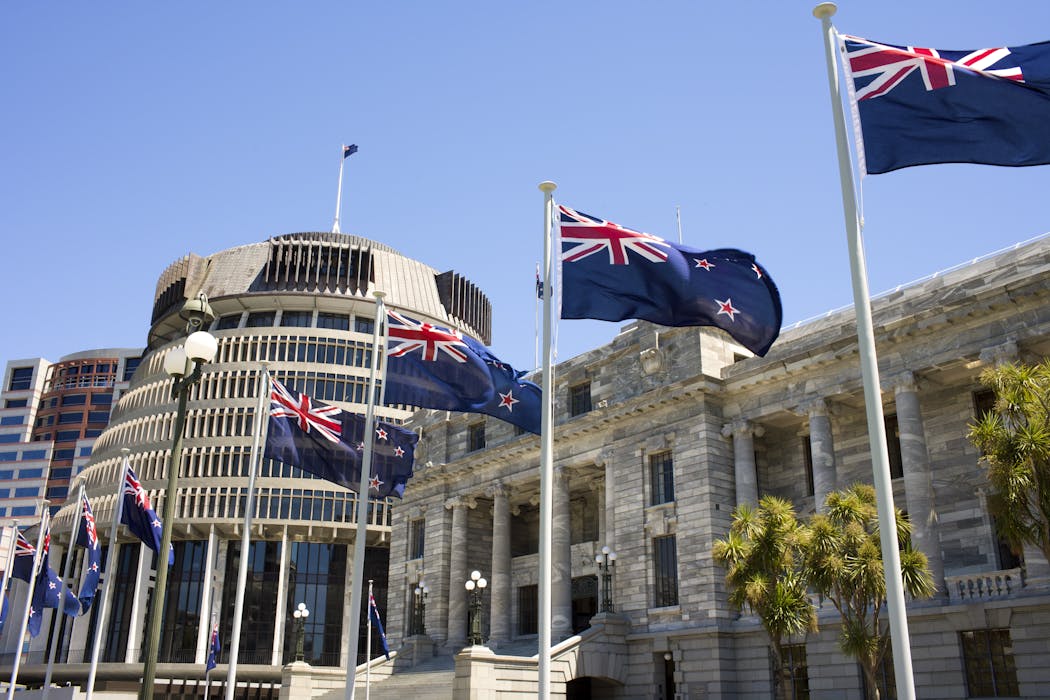
On the face of it, New Zealand’s positive placing in a newly-released scorecard of perceived corruption seems reassuring.
The country remains among the world’s least corrupt in the latest Corruption Perceptions Index (CPI), published annually by global civil society organisation Transparency International.
But the 2025 rankings hide a more troubling story. New Zealand’s score has been falling for a decade, even as its position near the top holds.
The index scores more than 180 countries on a scale from 0 to 100, where 0 means highly corrupt and 100 means very clean. With a score of 81, New Zealand now sits joint fourth with Norway, after a two-point drop from last year.
That pattern reflects not just mounting challenges at home, but a wider global shift that is dragging down even top-performing countries.
A decade ago, a dozen nations would have earned “A-grade” rankings at the top of the board. Today, that group – including Denmark (scoring 89), Finland (88), Singapore (84), Sweden (80) and Switzerland (80) – has nearly halved.
Some might argue a top-four ranking is still strong, especially when two-thirds of countries receive failing grades (below 50). But that misses the broader point.
New Zealand’s score has fallen from 91 in 2015 to 81 today. If that trend continues, it risks slipping out of the top tier altogether.
A global slide
At a global level, the picture is also deteriorating. The average CPI score fell by one point this year to a historic low of 42. That may not sound like much, but it is the first drop in a decade – and from an already low baseline, even small declines are notable.
There is now a clear pattern of gradual but noticeable slips among top performers, including New Zealand, Sweden, Canada and the United Kingdom. The United States is the only other country near the top to have seen a drop as steep as New Zealand’s, with its score falling from 76 in 2015 to 64 today.
For Aotearoa, that global slide has real-world consequences. Falling in the corruption rankings weakens “Brand New Zealand” and makes the country potentially less attractive to investors, tourists, skilled migrants and trading partners.
Around 30% of New Zealand’s exports go to countries with CPI scores above 70, including Australia, Japan, Singapore and the UK – markets where reputation and trust carry weight.
At the same time, about a third of New Zealand’s exports go to countries with CPI scores below 50, including China and several Southeast Asian nations.
In those markets, strong domestic integrity systems and robust safeguards in trade relationships are even more important, to ensure foreign corrupt practices do not spill back into New Zealand.
NZ’s lingering weak points
Several reports have laid out where New Zealand’s anti-corruption framework is falling short.
They point to the absence of a national anti-corruption strategy and a central agency. This comes alongside lax lobbying rules, inadequate reporting on political donations and gaps in electoral safeguards.
Successive governments have been slow to address these issues. The current government has faced scrutiny over the role of well-resourced lobby groups – including the tobacco and gun lobbies – and millions of dollars in political donations from the property industry.
Several high-profile fraud cases have rattled sectors ranging from construction and building inspection to infrastructure, health, procurement and IT. There have also been concerns about judicial appeal processes being bypassed through ministerial approval or alternative resolution mechanisms.
More recently, local election breaches and allegations of misuse of personal data in national elections have further eroded public trust in politics – something playing out alongside declining trust in news media.
Formulas and fixes
To stop sliding further down the global rankings, New Zealand requires a dedicated anti-corruption strategy – one focused more on prevention than response.
New Zealand is now the only one of its four other key security partners without a central anti-corruption agency, after Australia established its own in 2023. Since then, Australia’s CPI score has risen by two points.
A similar body in New Zealand could strengthen information-sharing, improve early-warning systems and provide ongoing oversight of integrity risks.
There is also a need for more competitive markets and stronger checks and balances to help counter the influence of special interest groups.
It is ironic that much of New Zealand’s drop in the 2025 CPI index has stemmed from growing concern from business leaders about public sector conduct, including how public contracts and licences are awarded.
While the government pitches itself as “business friendly”, limited competition across retail, construction and banking helps explain why more business leaders feel the market is not working for everyone.
US academic Robert Klitgaard, a leading authority on anti-corruption, devised a simple formula: “corruption equals monopoly power plus discretion minus transparency”. By that equation, New Zealand would need to address monopoly power across several sectors, reduce ministerial discretion and fast-tracking processes, and increase political transparency.
In an election year, politicians should understand that the public’s satisfaction with the political system is mainly driven by the interplay between how well the economy is performing and perceptions of injustice and corruption.
There are of course trade-offs between the two. But given the steady drop in New Zealand’s index score over the past decade, any government will need to pay more attention to fighting real or perceived corruption more effectively.
Authors: Matevz (Matt) Raskovic, Professor of International Business & Strategy, Auckland University of Technology

















