

Using your phone while driving is dangerous. What about listening to music or eating?
- Written by Johra Kayeser Fatima, Senior Lecturer, Marketing, University of Canberra
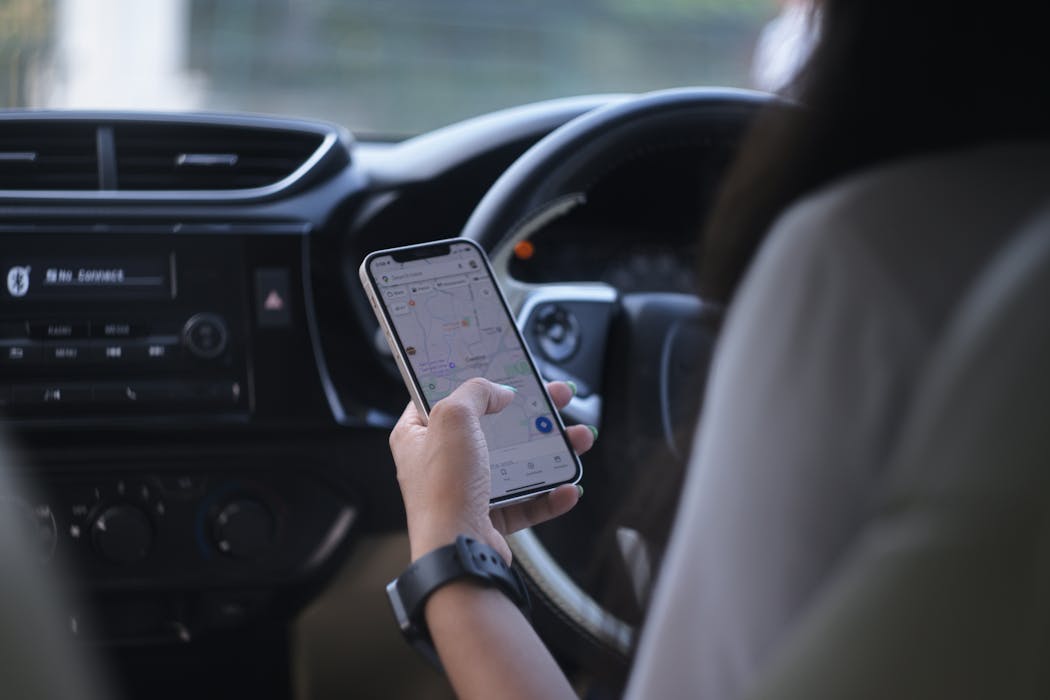
In Australia, around 16% of major road accidents (such as multi-vehicle crashes and pedestrian collisions) involve distracted driving.
Distracted driving happens when people shift their attention from the primary task of driving to a secondary task such as using a mobile phone or eating.
We recently examined the specific effects of different distraction types on driving performance – and discovered some carried a greater risk than others.
What we studied
Driving distractions that cause accidents can happen for any of these reasons:
auditory distractions, such as listening to music, having a conversation or hearing a baby cry
visual distractions, such as looking at a navigator or passengers
cognitive distractions such as thinking, daydreaming, or future planning
behavioural distractions such as texting, calling, fixing a mirror or eating/drinking.
In our study we used a driving simulator in a controlled laboratory setting to systematically manipulate distraction conditions and assess their impact on driving.
The simulator had three screens with nearly 180° peripheral vision in a driving scenario.
We distracted participants in four ways. We:
called their mobile phone while they were driving (auditory distraction)
asked them to locate a specific key of a computer keyboard located in front of them, which was a part of the driving simulator (visual distraction, as drivers need to look at the key by moving their eyes from road on the screen)
engaged them in a conversation (cognitive distraction)
instructed them to move a cup from one side of their driving seat to the other (behavioural distraction).
We studied 103 Australian drivers aged 16–82 in the Australian Capital Territory, using a road deviation measure to reflect the “sway” of the vehicle.
How did these distractions impact driving?
Participants’ driving was worse when they were involved in listening (auditory distraction) and when they were asked to do a task (behavioural distraction) compared with the other two types of distractions (cognitive and visual).
The reason is likely to be that our brains struggle to concentrate on driving and deal with these distractions at the same time. The result? An increased risk of making a mistake on the road.
The results did surprise us. Before the study, we assumed visual distractions would impact drivers most but that was not the case with our results.
A possible explanation is that when drivers intentionally look away from the road, they mentally predict what will likely to take place during the next few seconds. This is an internal decision.
That is not the case for most auditory distractions – these are largely created by others and often happen unexpectedly, like a baby crying or hearing a favourite song on the radio. Drivers may not be mentally prepared for this type of distraction.
Also, audio distractions can happen any time, even in a complex driving moment (such as high traffic or merging). Drivers are less likely to take their eyes off the road in these complex moments.
It must be noted these four distractions can be interrelated (a phone ringing is mainly an auditory distraction but it also sparks the brain to do something, which is cognitive). And you may also look at your phone, which is is a visual distraction.
In our study, we used verbal conversations as a measure of cognitive distractions but drivers can also be cognitively distracted by thinking about problems or being in a hurry.
Our study supports previous research investigating in-vehicle distractions.
Mobile phone usage is the big one – a United States study found using (not just hearing it ring) a phone while driving increases the chances of a collision by up to four times.
Australian research found non technology-based activities – such as eating, drinking, smoking and interacting with passengers – all have the potential to increase crash risk as well.
So, how do we make our roads safer?
Our findings suggest there are a few key takeaways for drivers, educators, government bodies and road safety organisations.
On an individual level, drivers need to be aware of the auditory and behavioural distractions they face, and the potential impact on road safety. We found people often don’t know which distractions negatively influence their driving the most.
While many drivers talk with passengers, it can affect their locus of control and driving behaviour. They therefore need to be mindful of the level of noise inside the vehicle and try to avoid arguments or noisy conversations.
Podcasts and audio books can have a similar effect on driving performance.
Inside vehicle distractions are increasing with the rapid growth of technologies such as smartphones, smart watches and navigation systems. It is therefore essential drivers are also aware of how to use (or not to use) these gadgets safely.
Read more: Yes, those big touchscreens in cars are dangerous and buttons are coming back
Road safety organisations and government bodies must develop road safety promotions that highlight inside vehicle distractions (in particular, auditory and behavioural types). Often, these promotions only focus on external distractions such as poor weather, road conditions and pedestrian behaviour.
We would like to acknowledge Hilmi Khan, research assistant in this project for his contribution.
Authors: Johra Kayeser Fatima, Senior Lecturer, Marketing, University of Canberra

















