

Modern Australian
The Times

Good fungus may one day help save plants from bad fungus like deadly myrtle rust disease

  • Written by Michelle Moffitt, Associate Professor in Microbiology, Western Sydney University
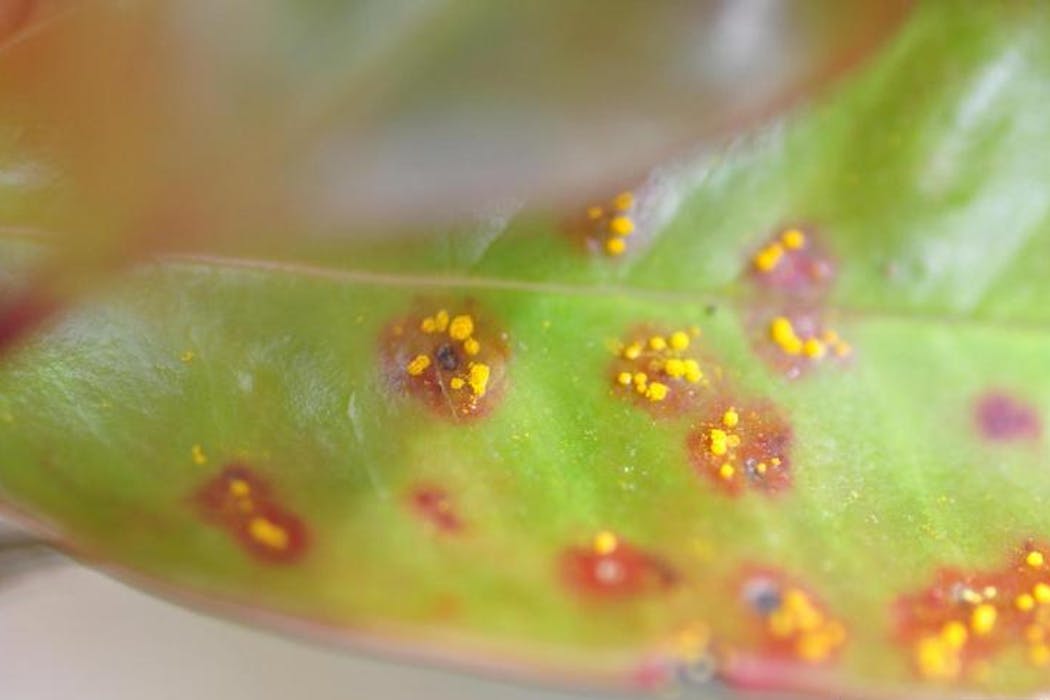
Good fungus may one day help save plants from bad fungus like deadly myrtle rust disease

What do coffee, sugar, wheat, soy, eucalypts and paperbarks all have in common?

They are all susceptible to parasitic rust diseases caused by fungi. Plant rust disease can easily be spotted by the characteristic orange or yellow spores that cover plant leaves, making them look rusty.

The spores are easily transferred to your skin by touch or carried by the wind to other host plants.

Despite their symptomatic similarities, each species of rust fungus is restricted to a single type of plant host.

Farmers and nursery managers often use fungicide to tackle plant rust disease, but we need to find ways to decrease our reliance on fungicide treatment. Otherwise, we risk fuelling fungicide resistance.

Could treating with natural beneficial fungi be a viable alternative?

What we did and what we found

To find out, we grew 143 species of fungi that were living in association with the leaves of the Australian native scrub turpentine tree, a species now considered critically endangered due to the effects of myrtle rust disease.

Myrtle rust disease, cause by the exotic fungus Austropuccinia psidii is a type of plant rust disease, and it’s a huge problem. At least 380 Australian native plants are susceptible to it.

Myrtle rust threatens trees and shrubs in the Myrtaceae family of plants. This is Australia’s largest plant family in Australia, and includes tea tree and eucalypts. It also threatens several rainforest tree species.

The recent arrival of this disease into Australia, in 2010, means little is known about how we may feasibly control it within natural ecosystems.

Our research found that of the 143 species of fungi we grew, nine of them naturally stopped the germination of the myrtle rust spores in the lab.

This suggests native plants may already harbour beneficial fungi that could protect them from this deadly disease.

How? Our research shows one way beneficial fungi can protect the plant from the rust disease is by producing chemicals that attack the disease and prevent it from infecting the plant.

It’s like a biological machine, producing microscopic amounts of fungicide directly onto the rust as it grows.

Other ways these fungi can protect the plant are through competition for nutrients or by stimulating the plant’s immune system to protect itself.

One advantage over fungicides may be that if the fungi establishes a symbiotic relationship with the plant, repeated applications may not be necessary.

So far, we’ve only shown this in the lab. More research is clearly needed.

Now, we need to make sure the fungi can effectively do their job in the environment on our most susceptible plants. We may even one day be able to incorporate these fungi into our plant conservation breeding programs.

A growing body of research

A similar study of myrtle rust disease in Hawaii found that adding multiple beneficial fungi to the leaves of the native Hawaiian Koʻolau eugenia or nioi plant increased the effectiveness of the beneficial fungi over using a single strain alone.

This highlights that we have a lot to learn about how beneficial fungi can protect plants.

Our previous research also identified that fungi can protect crop plants such as wheat, barley and oats from rust disease.

Similar studies around the world have found fungi can also protect against coffee rust and soybean rust, among others.

Despite many successful lab studies, there remains a gap between lab studies and field applications. And even if it could be proven to work in the field, then we’d need to find efficient ways to get the beneficial fungi onto the plants that need it.

That said, it’s worth persevering. If we want strategies to reduce fungicide usage on farms and in the environment we must continue to learn more about beneficial fungi and how we can best use them to our advantage.

Authors: Michelle Moffitt, Associate Professor in Microbiology, Western Sydney University

Read more https://theconversation.com/good-fungus-may-one-day-help-save-plants-from-bad-fungus-like-deadly-myrtle-rust-disease-269819

How Long Do Bathroom Renovations Melbourne Take? Step-by-Step Process Explained

Planning a bathroom renovation is exciting, but one of the biggest questions homeowners ask is, "How long will it take?" While every project is uniq...

Why Your Skin Breaks Out: The Science of Acne Explained

Acne is the most common skin condition in the world. An estimated 85% of people experience it at some point between the ages of 12 and 24, and a gro...

10 Swimwear Trends Australian Women Are Wearing This Summer

Every Australian summer brings a fresh wave of swimwear trends, but some styles have much greater staying power than others. While fashion constantly ...

Why Regular Skills Updates Are Essential for Licensed Security Officers

A guard at a Brisbane shopping centre gets a call about a shoplifter who's turned aggressive.  They’ve done the job for six years. But their de-...

10 Benefits of Choosing Professional Tutoring Penrith Services

Every student has unique learning strengths, challenges, and academic goals. While classroom teaching provides essential knowledge and structure, so...

Sunshine Coast Baby Classes Prove Big Hit Among First-Time Mums

There's a movement gaining traction on the Sunshine Coast, providing a village of support, socialisation and relief for first-time mothers and babie...

Father's Day Gift Ideas for Men Who Are Hard to Buy For

Some dads are easy to buy for. Others do not want anything, already have everything, or give you the classic "don't worry about me" answer every yea...

Top 5 Mistakes That Wear Out Your Brakes Faster

Brakes don't need frequent replacements like oil changes do.   But a lot of the wear happens quietly, over months, because of habits most drivers...

Plantation Shutters vs Curtains: Which Is Better for Your New Home?

Moving into a new home is an exciting opportunity to personalise your space and make it your own. While many homeowners focus on furniture, flooring...

Celebration of Life vs Traditional Funeral: What's the Difference?

When saying goodbye to someone you love, there is no single way to honour their life. Every family has different traditions, beliefs, and preference...

Building Approval for Roofing Projects: What Homeowners Need to Know

Roofing projects are an important part of maintaining and protecting your home. Whether you're repairing storm damage, replacing an ageing roof, or ...

Chatswood Tutoring And Its Role In Academic Achievement

Academic success often requires more than classroom attendance alone. Students face increasing expectations as they progress through school, particu...

Why Laser Hair Removal Treatments Continue Growing In Popularity

Managing unwanted hair can become time-consuming and frustrating for many people, especially when shaving, waxing, and other temporary methods requi...

Choosing the Right Devices for a Flexible Workplace

For IT leaders managing large fleets, the device layer is where workforce productivity and security policy meet. The shift towards flexible and hybrid...

How Business Advisory Services Help Companies Achieve Sustainable Growth

Every business owner aims to build a profitable and sustainable organisation. While dedication, innovation, and hard work are important, achieving l...

Why Body Contouring Has Become A Popular Cosmetic Treatment

Many people maintain healthy lifestyles through regular exercise and balanced eating habits but still struggle with stubborn areas of fat that are d...

How to Choose the Right POS Hardware for Your Business in Australia

A lot of Australian business owners spend weeks researching POS software but buy hardware almost as an afterthought. That's a mistake. The wrong har...

Why Material Handling Hose Is Critical for Industrial Efficiency

A high-performance material handling hose is an essential component in industries that transport abrasive, dry, or bulk materials on a daily basis...
















