

How lowering the voting age to 16 could save democracy
- Written by: Bronwyn E Wood, Senior Lecturer in Education, Victoria University of Wellington
Former US president Barack Obama visited New Zealand this week and met with Prime Minister Jacinda Ardern. Both leaders share an interest in youth development and their discussions focused on how to keep younger generations engaged and involved.
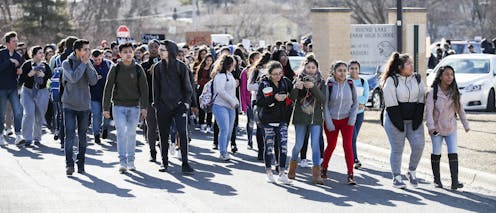
In the wake of the school shooting in Florida last month, there have been calls in the US to lower the voting age to 16 to give high school students power to challenge gun laws. In New Zealand, too, the idea of allowing 16-year-olds to vote has again been mooted by the children’s commissioner, Andrew Becroft.
So, what are the arguments against and for a lower voting age?
Read more: #NeverAgain: do student protests work? History tells us they can
Ongoing opposition to lower voting age
Becroft argues that a lower voting age could enhance turnout, ingrain the habit of voting, and give young people more rights.
However, his comments have been met by similar responses to those former New Zealand Green MP Sue Bradford received when she initially proposed lowering the voting age back in 2007.
Opponents argue that young people lack maturity, life experience and civic knowledge. At 16 and 17, critics say, young people are heavily influenced by adults such as teachers and parents (and therefore subject to coercion), and their ability to vote doesn’t match other responsibilities young people hold as they are still largely dependent economically on adults.
This time, however, New Zealand would not be alone in giving younger people the vote. Sixteen-year-olds in Argentina, Cuba, Ecuador, Austria, Nicaragua and Brazil now have voting rights.
In the 2014 Scottish independence referendum, 16- and 17-year-olds seized the opportunity to vote; 75% of their cohort turned out to vote. In the US, high school students are showing their considerable political strength in protesting against gun violence in their schools.
Inconsistent arguments
New Zealand has a very inclusive electoral system. It allows people on benefits to vote, despite their lack of economic independence. It also allows those with cognitive disabilities to vote, regardless of the severity of their disability and the degree to which they are influenced by their parents or caregivers. And it allows that members of religious groups are given guidance on how to vote by their religious leaders.
The system ought to be more consistent in applying its reasons for preventing people from voting. If lack of maturity is a reason to stop someone voting, it applies to all who lack maturity. If being heavily influenced by others is a reason to prevent someone from voting, it applies to all who are subject to this sort of influence.
There is an even deeper problem with the objections against a lower voting age. Consider how we treat those aged above 18 and those below 18 when it comes to proving their capacity to vote.
Those over 18 are accepted as voters, and remain so regardless of their actions (short of criminal offences that see them imprisoned and their voting rights removed). Those under 18 are presumed not to have the capacity to vote, and are denied any opportunity to show otherwise. But in neither case are we actually examining whether the individual concerned has the qualities we want in a voter.
Read more: Giving voice to the young: survey shows people want under-18s involved in politics
Young people have perhaps more opportunity than older people to develop these qualities. The younger a person the more time they have to spend in formal education, where they can develop their civic knowledge and recognise the importance of political participation – including voting.
Lowering the voting age to 16 would bring the age of political responsibility more in line with the age of criminal responsibility and the age of informed consent for medical procedures.
New Zealand’s current system is willing to hold a 16-year-old responsible for murder, but deny that same 16-year-old the responsibility to cast a vote. This isn’t right. They are either capable of acting both well and badly, or of doing neither.
Civic education
In New Zealand, discussions on lower voting ages take place alongside conversations about civic education in schools. Becroft and others recognise that both should go hand in hand. However, this is not a simple premise.
Merely learning more about civics and political processes has not been shown to lead to greater citizenship participation. The type of civic learning matters.
A large-scale longitudinal study of more than 4,000 students in the US found that civic learning in which students actually experienced involvement in civic and political issues — and particularly on issues that matter to them – had the greatest long-term impact on future political participation.
This bodes well for New Zealand, as research published last year following a two-year study on social studies students taking social action for their internal assessment credits showed the curriculum is well set up for young people to experience civic engagement.
Encouraging younger voter participation is complex but essential if we want to maintain the health of our democracy.
Authors: Bronwyn E Wood, Senior Lecturer in Education, Victoria University of Wellington
Read more http://theconversation.com/how-lowering-the-voting-age-to-16-could-save-democracy-93567


















