

‘Don’t leave late’ is the best advice for fires or floods. These terrifying videos show why
- Written by Sara Fazeli, PhD Candidate, UNSW Sydney
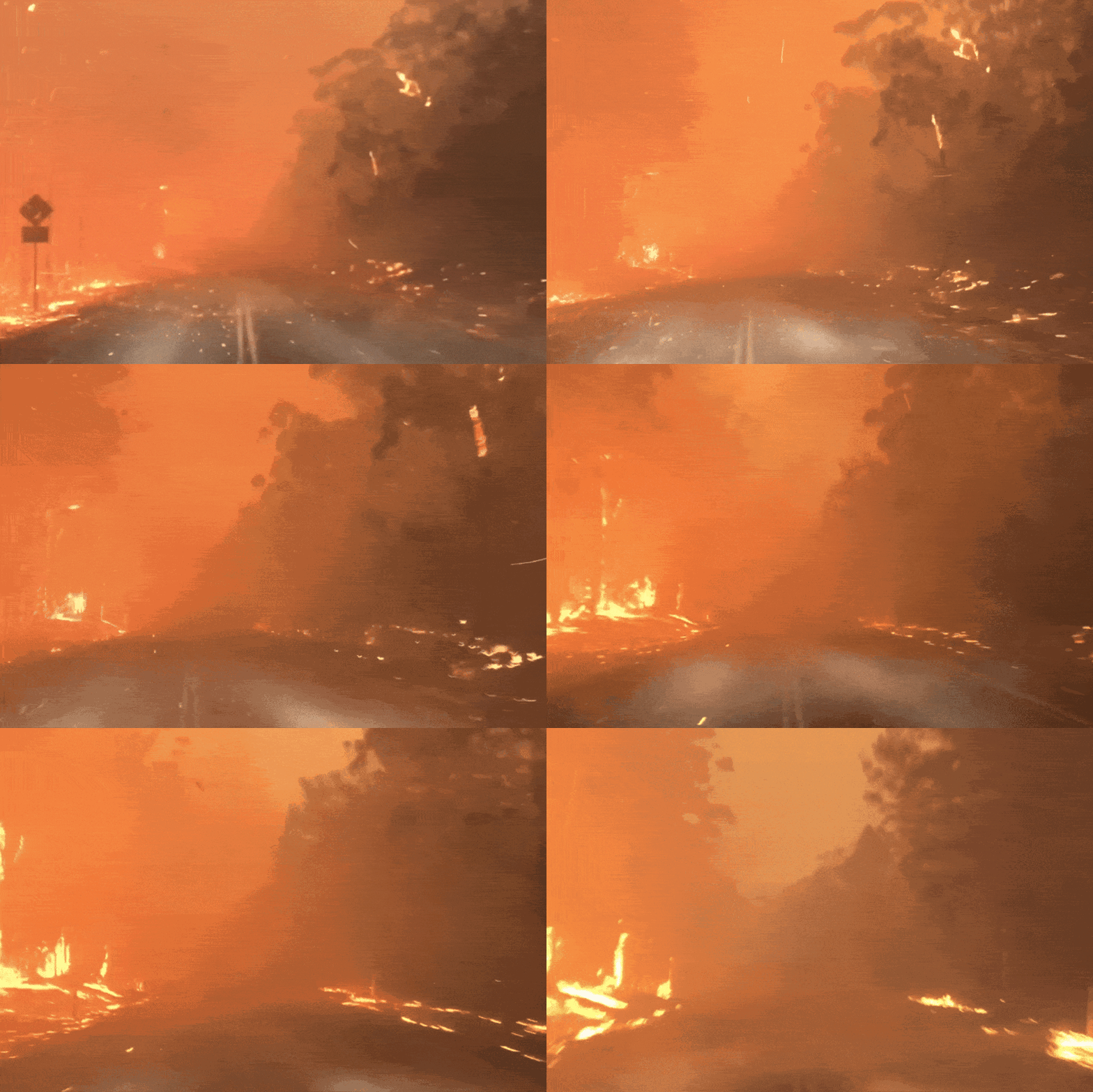
Where are you at most risk when a flood or bushfire strikes? You might think it’s at home. But in reality, the most dangerous time is when you leave and jump in your car. Many flood and bushfire deaths are linked to vehicles, often driven by people evacuating late.
One of the clearest examples comes from the 2009 Black Saturday bushfires in Victoria, in which 173 people lost their lives; 35 of those deaths occurred during evacuation, with many on the road.
What is going through people’s minds as they try to escape? We don’t have to guess – many self-recorded evacuation videos are publicly posted on social media. We analysed hundreds of these videos from around the globe to get a better understanding of how people end up in these dangerous situations.
We found many people either evacuated late after realising the situation was more dangerous than they first thought, or drove back to defend their property. They thought they were doing the right thing in trying to flee to safety – only to find the roads were far more dangerous than they expected.
A father and son drive into an increasingly dangerous fire situation and start praying for help.How risky are roads during bushfires?
When disasters escalate rapidly, the decision to leave can become one of the most crucial moments people face.
Between 2010 and 2020, bushfire deaths in Australia often occurred on the road rather than at the fire front. An analysis found 33 of 65 bushfire deaths during this period were vehicle-related, many during late evacuations.
More recently, an ABC program documented survivor accounts from Black Saturday, including firefighters, people who defended their properties and those who took to the road in the final minutes.
One firefighter’s account, in particular, captures how quickly conditions can change on the road. At first, nothing about the drive appeared unusual.
when I drove up over the top of the hill down into Kinglake, there was nothing untoward. It was just a normal hot day […] a bit of smoke around.
But within minutes, the road environment changed completely.
so I do a U-turn, and there was a wall of smoke. I’m thinking, where did that come from? All of a sudden, […] You can’t see. It was pitch black. As we’re driving, the sides of the roads were igniting.
The risk of conditions changing is not confined to a single event or location. It is a recurring and ongoing feature of bushfire emergencies in Australia.
A father sings to his daughter to comfort her as they drive through a bushfire.How dangerous are roads during floods?
Floods present a different kind of threat, but the risks on the road can be just as severe.
In Australia, nearly half of all flood fatalities are associated with vehicles, most commonly when people attempt to drive through flooded roads, crossings, or causeways.
This is not unique to Australia. A study of flood fatalities in Texas, covering the period from 1959 to 2009, shows around 80% of flood deaths with known circumstances were vehicle-related.
These deaths often occur when drivers underestimate water depth or flow speed, assume the road ahead is still passable, or follow other vehicles into floodwater. This can quickly lead to vehicles stalling, being swept away, or trapping occupants in fast-moving water.
A school bus is swept away by floodwater in Texas, US.What people experience inside a vehicle
To gain a first-person view of what actually unfolds on the road in these situations, we analysed hundreds of self-recorded evacuation videos.
On bushfire-affected roads, conversations inside vehicles revealed uncertainty as conditions changed quickly. Many drivers showed fear and stress – some prayed, while others tried to stay calm for their families.
Videos show people caught in intense heat and heavy smoke, struggling with poor visibility and concern over falling trees or bursting tyres. Some said they were struggling to breathe while others decided to stop or turn around.
Conditions appeared hazardous even for firefighters. Conversations between drivers and passengers often reflected the complexity of the environment and a lack of certainty about what to do.
Some drivers travelled with their windows open and suddenly realised how hot the air was.
Drivers struggled with visibility and some cases showed families expressing extreme distress. Parents comforted their children and sometimes sang to them.
On flood-affected roads, drivers showed signs of distress and intense emotion, often reflected in swearing and expressions of regret, or praying.
They sought reassurance from the actions of others, reflecting an “if they can do it, we can too” sentiment. Extreme cases showed water entering the vehicle, causing the vehicle to become unstable or dysfunctional, with water levels reaching the windshield.
Some drivers could not make it through and were forced to escape.
Importantly, these flood and fire videos only represented those who managed to escape and survive.
A video of people driving through fires in California, where the drivers are distressed and can hear tyres popping.The best way to stay safe
In our analysis of these flood and fire videos, we found a recurring theme – surprise. People found themselves in a very different situation to the one they imagined when they began driving.
Driving on roads affected by floods and fires is risky, and the situation can escalate very quickly. Flash flooding is aptly named: torrential rain can trigger floods in just minutes. Bushfires, too, can intensify quickly
The clearest advice remains to avoid these situations altogether by evacuating early. But if you do find yourself in a vehicle on a fire-affected road, existing Country Fire Authority guidance can make a critical difference to survival.
Stop when it’s no longer safe to continue, park well off the road and away from vegetation if possible. Stay inside the car with windows and doors closed, turn off vents and air conditioning, get below window level and protect yourself from radiant heat using woollen blankets or clothing.
In floods, if rising water traps your vehicle, get out early and move to higher ground. As a last resort, climb onto the roof.
Ultimately, the safest option is to avoid hazardous driving wherever possible. Because once you’re on the road, it may already be too late.
Authors: Sara Fazeli, PhD Candidate, UNSW Sydney

















