

The strikes on Iran show why quitting oil is more important than ever
- Written by Hussein Dia, Professor of Transport Technology and Sustainability, Swinburne University of Technology
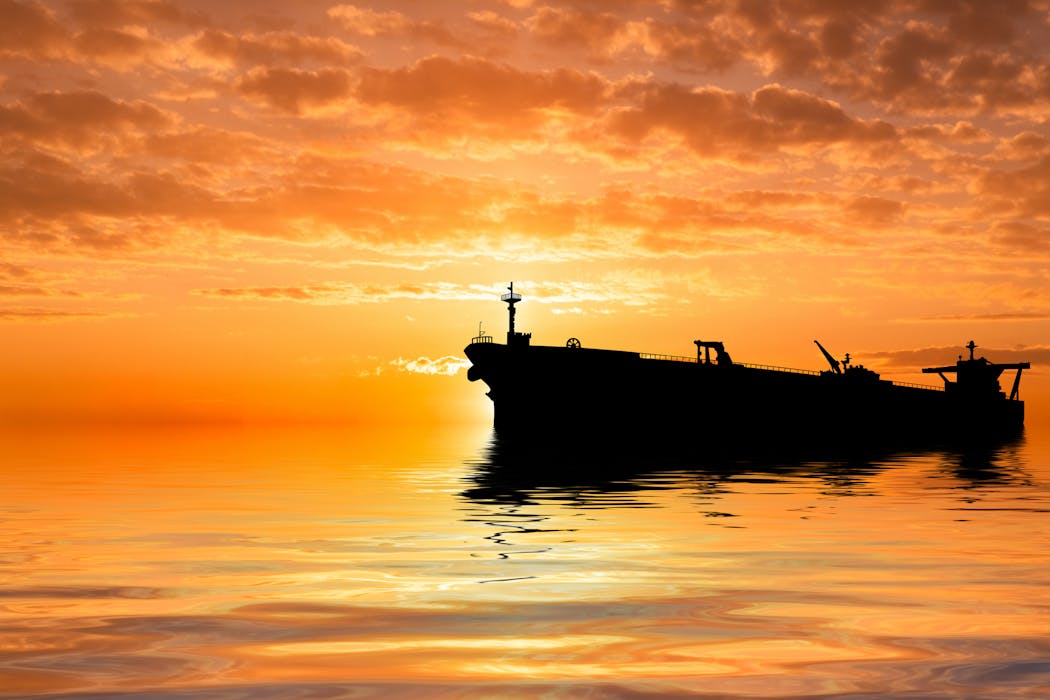
As Israel and the United States strike Iran, global oil markets are on edge.
Oil prices have begun rising even before any disruption to supply. Oil traders are factoring in the possibility the Strait of Hormuz might close.
Roughly 20% of the world’s traded oil passes through this narrow waterway between Iran to the north and Oman and the United Arab Emirate to the south. One oil tanker has been bombed and traffic has all but halted. In global energy markets, the mere threat of interruption can push prices higher.
Oil isn’t like most commodities. Control of the energy-dense fuel shapes geopolitics. Three-quarters of the world’s population live in countries dependent on oil imports for cars, trucks and other uses. Controlling the flow of oil and, increasingly, gas, has long been used as leverage, from the oil shocks of the 1970s to Russia cutting European gas supplies in 2022.
Any serious disruption to tanker traffic in the Gulf would send shockwaves through global oil markets and threaten economic stability. Long queues have already been reported in Australia as motorists vie to fill up before possible price spikes.
As international tensions increase, nations from Cuba to Ukraine to Ethiopia are accelerating plans to reduce their oil dependence and boost energy security.
Half a century of oil leverage
The power of oil became obvious during the 1973 oil embargo, when major Middle East oil producers slashed supply in a bid to reshape US foreign policy. Prices quadrupled, economies stalled and energy security became a central political issue almost overnight. The Organization of the Petroleum Exporting Countries have since coordinated supply to drive up prices.
Today, the mechanisms of control look different but the power created by oil dependence remains.
Even before US military action, sanctions on major producers such as Iran and Venezuela have cut supply and reshaped trade flows.
Current tensions near chokepoints such as the Strait of Hormuz introduce risk premiums into prices.
Oil markets are forward-looking, meaning prices reflect not only current supply and demand but expectations of what might happen next.
The strikes on Iran have seen prices of Brent crude – the global benchmark – trading around US$76 (A$107) per barrel, up from roughly US$68 (A$96) a few weeks earlier. Because prices are global, political instability anywhere can have economic consequences everywhere.
Who’s reducing dependence on oil?
In 2015, India blocked Nepal’s oil imports, triggering chaos. In response, authorities encouraged the very rapid growth of electric vehicles. Oil imports have begun to fall.
More recently, the Russia–Ukraine war and US strikes on Venezuela and Iran have brought new focus on reducing oil imports and bolstering domestic energy security.
In oil-dependent Cuba, US pressure has slashed the supply of oil. Blackouts are common and cars stay put. In response, authorities and businesses are importing 34 times as many Chinese solar panels as they did a year ago. Imports are 34 times higher than a year ago.
It’s not ideology driving this shift – it’s necessity. Electric vehicle imports, too, are soaring. “Cuba may experience the fastest energy transition in the world,” a Cuban economist told The Economist.
Why renewables change the equation
Unlike oil, solar panels and wind turbines can avoid being shipped through maritime chokepoints such as the Strait of Hormuz. Renewables are not traded in the same globally centralised way. Power is generated locally and increasingly across many smaller sites.
Russia has long targeted Ukraine’s energy infrastructure and power plants during the war. In response, Ukraine is ramping up renewables as fast as possible, as decentralised power generation is much harder to destroy. As a Ukrainian energy expert told Yale360, a single missile “could take out” a coal power station, while a wind farm would require 40 missiles.
Decentralised power is more resilient, meaning damage to one farm won’t collapse the grid.
Resilience through electric transport
Electrification of transport is a key plank of these new approaches to energy security.
Electric vehicles powered by locally-produced electricity reduce exposure to global oil markets. This thinking is visible in Ethiopia’s decision to ban new internal combustion cars.
China imports most of its oil – much of it from Iran. Beijing has been accelerating its rapid shift to electric vehicles. Last year, EVs made up 50% of new cars in China and 12% of the total fleet. China is increasingly using oil to make plastics, not for transport. Last year’s uptick in imports was due to stockpiling of huge volumes amid global uncertainty.
Australia’s exposure
Australia imports the vast majority of its refined fuels. We would have about a month’s worth of petrol before we ran out.
If wars drive up oil prices, pain at the petrol pump will flow through to freight costs, food prices and inflation.
While the EV shift is accelerating, Australia is slow by global standards. Even as electricity rapidly goes green, transport remains overwhelmingly dependent on foreign oil. That leaves Australia exposed.
Energy policy is security policy
Renewables do not eliminate geopolitical risk. Power grids face cyber threats. Critical mineral supply chains introduce new dependencies – and much of today’s solar panel, battery and EV manufacturing is concentrated in China.
But there is a clear structural difference. Decentralised systems are harder to manipulate through supply chokepoints. Solar panels, once installed, generate energy locally. The vulnerability shifts from ongoing fuel imports to upfront manufacturing dependence.
Oil has shaped global politics for decades because it’s transportable, globally traded and only a few countries have large reserves.
Reducing oil dependence is often framed as climate policy. But it is also vital to energy security and national security. Cutting oil use boosts resilience to shocks and reduces the leverage of other nations.
The Iran crisis may not lead to sustained price spikes. Supply may adjust. Markets may stabilise. But leaders will be rethinking the wisdom of exposure to globally traded oil in a volatile world.
Authors: Hussein Dia, Professor of Transport Technology and Sustainability, Swinburne University of Technology

















