

4 main lessons to improve NZ’s future pandemic resilience
- Written by: David Murdoch, Distinguished Professor, University of Otago
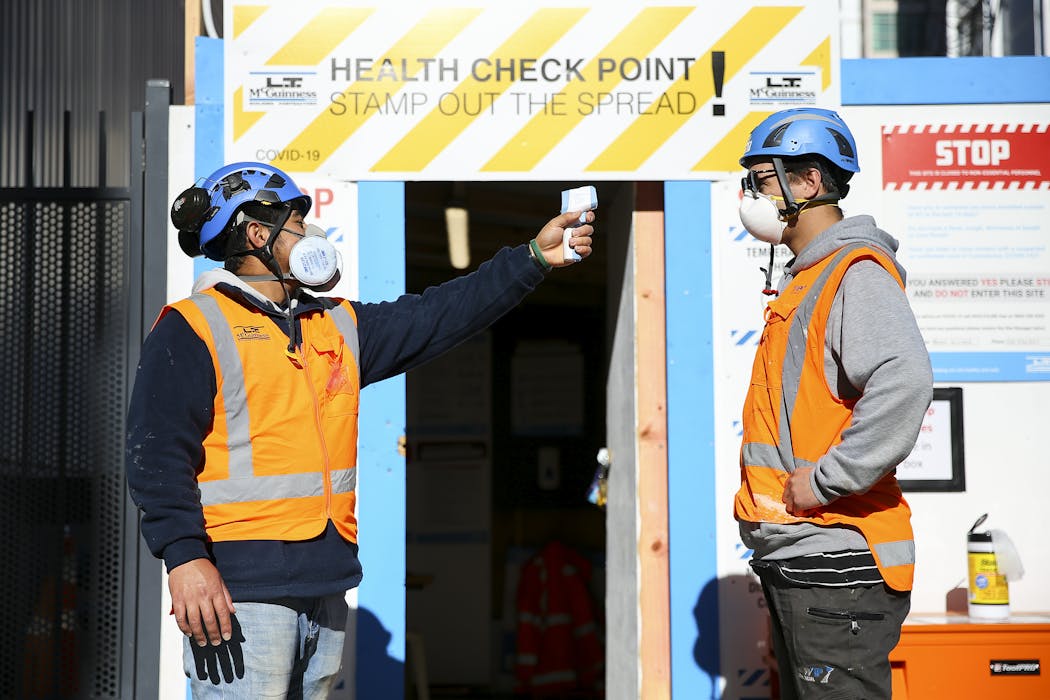
A second Royal Commission of Inquiry into New Zealand’s experience and handling of the COVID pandemic released its substantial report today, running to several volumes and hundreds of pages.
The coalition government commissioned the inquiry to specifically examine key decisions made between 2021 and 2022, with a focus on vaccine mandates, lockdowns and testing systems.
During this period, New Zealand moved from an elimination strategy, which required strict lockdowns, border closures and social distancing, to an approach of minimisation and protection, including the rollout of vaccines.
Overall, the commission found that:
While our health system and economy may have come through the pandemic better than expected, and New Zealand recorded lower case numbers and fewer deaths per capita than other comparable countries, our society is still counting the cost of the pandemic and the response.
The commission’s report is a reminder of just how many difficult decisions had to be made. It identifies four broad lessons for improving future pandemic resilience.
These lessons matter because pandemics place extraordinary pressure on decision-making systems, health infrastructure and public trust. Preparing those systems before the next crisis arrives is critical.
1. Systems for government decision making
The first lesson focuses on improving the quality and speed of decision making during a crisis.
Looking back at the pandemic, it is clear that many decisions needed to be made quickly with incomplete evidence. Epidemiological models were evolving, real-time data were limited and the wider impacts of interventions such as lockdowns were difficult to estimate.
The commission recommends strengthening strategic capability at the centre of government, including improved data systems, stronger modelling capacity and clearer frameworks for weighing public health benefits against social and economic costs.
This is fundamental. Pandemic responses rely on timely epidemiological information. Without strong surveillance systems and modelling capability, governments risk responding either too late or with measures that are broader and more disruptive than necessary.
Preparedness therefore requires institutional capacity to analyse risk and act quickly on evidence.
2. Clearer legal frameworks for pandemic powers
The second lesson focuses on legislation and democratic safeguards.
During the COVID pandemic, New Zealand relied partly on emergency legislation to implement public health measures such as lockdowns and vaccine mandates. While these powers enabled rapid action, they also raised questions about proportionality and limits on state authority.
The commission recommends establishing pandemic legislation that clearly defines what powers governments can use, under which conditions and safeguards. It says these powers should be transparent, subject to review and grounded in human rights protections.
Legal clarity is also about trust and compliance. Public health measures work best when people understand why they are necessary and believe they are being applied fairly.
3. More agile economic policy
The third lesson addresses the economic shock created by pandemics.
The COVID crisis required large-scale fiscal support for businesses and workers as well as significant monetary policy interventions. The inquiry recommends clearer frameworks for how economic agencies should respond to future pandemics and other crises.
Although economic policy may seem separate from health policy, the connection is strong. Public health measures inevitably affect employment, education and economic activity. Economic insecurity can also worsen health outcomes and widen existing inequities.
A pandemic response therefore needs to integrate public health, economic and social policy, rather than treating them as competing priorities.
4. Planning for social impacts and recovery
The final lesson focuses on the broader social consequences of pandemics.
COVID disrupted education, strained mental health services, affected employment and reshaped community life. It also exposed, and sometimes widened, existing inequities.
The commission highlights the need to plan for these impacts earlier, rather than treating recovery as an afterthought.
This reinforces a long-standing principle that pandemics are not purely biomedical events. They are social crises as well as health emergencies, requiring attention to mental health, social cohesion, community engagement and equity.
Being prepared for next time
While the four lessons describe system-wide challenges, several of the report’s specific recommendations focus directly on strengthening New Zealand’s preparedness.
These include improving the integration and timeliness of disease surveillance systems, expanding national epidemiological modelling capability, and developing structured decision-making frameworks that allow governments to assess the health, economic and social impacts of interventions during a crisis.
The inquiry also emphasises the importance of community engagement and public trust, recommending stronger partnerships with iwi, local organisations and communities that often play a central role in delivering public health responses.
Finally, the report calls for mechanisms to review and adapt pandemic strategies as evidence evolves. The experience of the COVID pandemic showed how quickly circumstances can change as new variants emerge.
Future preparedness therefore requires systems that allow policy to adjust rapidly as scientific knowledge and epidemiological conditions shift.
The commissioners note that the report reflects relatively narrow terms of reference, concentrated on specific policy decisions during 2021 and 2022. Consequently, some wider questions about the pandemic response and preparedness fall outside its scope.
New Zealand’s response to the COVID pandemic protected many lives, particularly in the early stages. This second inquiry makes clear success in one crisis does not guarantee readiness for the next.
Future pandemics will inevitably involve uncertainty and difficult trade-offs. Strengthening the systems that support decision making and public health response will help ensure New Zealand is better prepared for whatever comes next.
Authors: David Murdoch, Distinguished Professor, University of Otago


















