

Should e-bike riders be required to have a driver’s licence?
- Written by: Richard J. Buning, Research Lead, UQ Micromobility Research Cluster, The University of Queensland
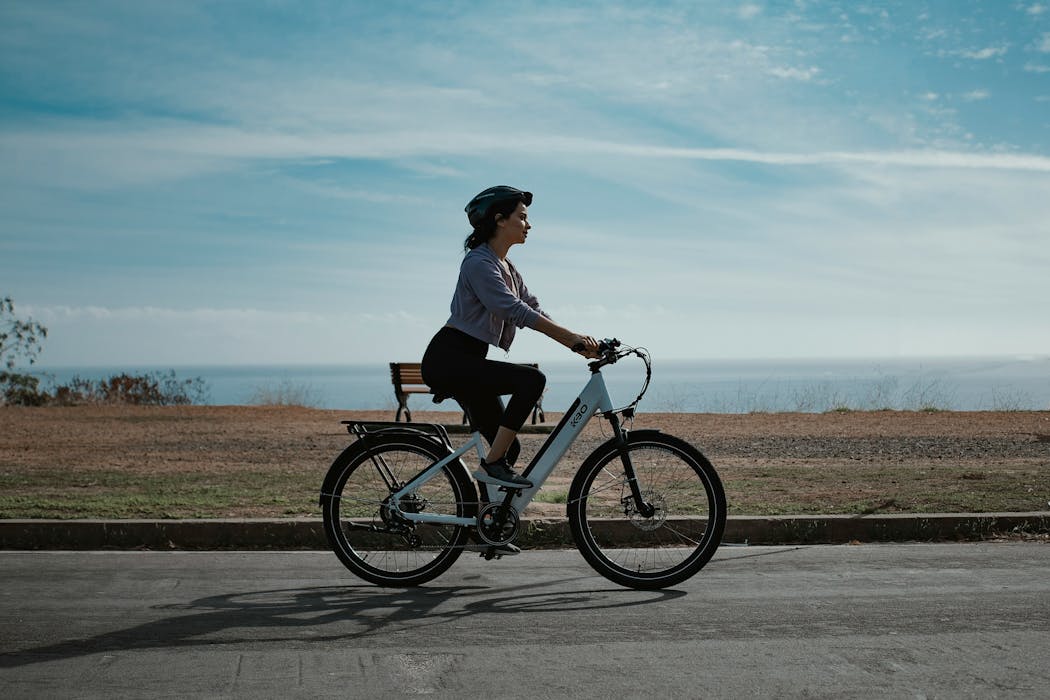
E-bikes have been increasing in popularity – they make cycling more accessible than ever. However, they’ve also been linked to tragic accidents.
In response, the Queensland government has conducted a parliamentary inquiry on e-mobility devices, including e-scooters and e-bikes.
The inquiry aimed to improve safety and address community concerns. It examined benefits, risks (crashes or battery fires), existing regulations compared to other jurisdictions, enforcement approaches, and importation laws.
The resulting report recommends banning all e-bikes for riders under 16, and requiring at least a learner driver’s licence to operate them.
If implemented, Queensland would become only the second jurisdiction in the world to mandate a driver’s licence for riding a standard e-bike, joining New Jersey, which passed similar legislation in January to much condemnation.
If Queeensland adopts this rule, it will quickly become the worst state for cycling in Australia – and set a dangerous precedent.
How risky are legal e-bikes?
Legal e-bikes (also known as pedelecs, short for “pedal electric cycles”) don’t pose greater risks than conventional bicycles. On average, e-bike crashes are equally as likely and severe as conventional bike crashes. And research from Denmark even shows e-bike riders are more likely to follow traffic laws and are more safety oriented than conventional cyclists.
A pedelec is defined under the European Union EN 15194 standard as a bicycle in which the motor provides assistance only when the rider pedals, power is limited to 250 watts, and the maximum assisted speed is 25km/h. This is the standard recognised in Australia.
To be clear, 250 watts is roughly the power an avid cyclist can generate with their body. Professional cyclists easily produce well over 400 watts.
The injury stats only become troubling when these standard pedelecs get mixed in with more powerful devices that can have a max pedal-assisted speed of 45km/h or more. The problem of increased danger doesn’t lie with EN 15194 compliant e-bikes.
Who would be impacted by licensing requirements?
About 7.5% of Queenslanders aged 16 and over – more than 340,000 people – don’t hold a driver’s licence. Across Australia, an estimated 1.5 million adults are without a licence.
These include:
- people with certain types of disabilities (visual, neurological or cognitive)
- children under 16 riding to school
- migrant workers from countries with licences not recognised in Australia, or who are in the process of transferring overseas licences. Many delivery riders fall in this category
- urban youth, who increasingly rely on alternative transport and delay obtaining a learner’s permit
- older people who have given up driving for age-related reasons
- low-income people for whom the costs associated with lessons, testing, and car ownership are prohibitive
- Aboriginal and Torres Strait Islander people, particularly in regional and remote areas. These communities often face practical barriers to licensing, such as high cost, difficulties obtaining identity documents, and limited access to training
- individuals who are car-free by choice for lifestyle or environmental reasons
- people who have temporarily lost their driver’s licence, such as for speeding.
In short, legal e-bikes provide an important way to get around and maintain independence for many people. They can travel to work, education, or social activities without relying on a car.
For Queensland locals, even requiring a learner’s licence would impose a significant burden. Obtaining one costs about A$77 and requires passing an online test which typically takes four to six hours. Test questions focus on motor vehicle laws, not rules specific to cycling or e-mobility. The test is offered only in English and requires proof of identity and residency in Queensland.
Visitors from countries where driver’s licences are far less common than in Australia would be impacted too. For example, only about half of Chinese adults have a licence.
Queensland hosts more than 2 million international visitors annually, and Brisbane is expected to welcome more than 100,000 international visitors during the 2032 Olympic Games. Unless they hold a licence from their home country, these visitors would be forced to rely on ride-hailing services or risk penalties for using a legal e-bike.
What should be done instead?
A more effective approach would focus on clear vehicle classification, targeted regulation, safe cycling infrastructure, and education. This is the model used in the European Union.
Regulators should maintain a clear distinction between standard e-bikes and higher-powered devices.
EN 15194 compliant e-bikes should be legally treated as ordinary bicycles and integrated into everyday mobility. They shouldn’t require a driver’s licence, registration, or insurance. Riders should simply follow the same rules that apply to cyclists.
Only the more powerful models should require licensing and insurance. E-bikes that reach up to 45km/h should be classified as mopeds. In this way, regulation can reflect the actual risk level of the vehicle.
Enforcement is key. Authorities should focus on ensuring that devices sold in the market actually comply with power and speed limits. Regulators should keep targeting non-compliant imports and illegal modifications.
Read more: That e-bike you bought your teen might be an illegal electric motorbike – and the risks are real
We all share the road
Beyond product standards, much more emphasis should be placed on infrastructure. Investments in protected bike lanes, traffic calming, and well-designed intersections are crucial to improving safety for all road users.
Finally, Australia should start investing heavily in education and communication campaigns. Cycling education should be provided through schools, local councils, and road safety programs. These should focus on responsible riding, interaction with pedestrians, and visibility in traffic.
Importantly, they should also encourage a mindset that moves away from an “us versus them” stance between drivers and cyclists. Children should learn early that, as adults, they may occupy both roles – sometimes driving, sometimes cycling.
In combination, these policy approaches would allow e-bikes to expand while remaining a safe, accessible and inclusive mobility option.
Authors: Richard J. Buning, Research Lead, UQ Micromobility Research Cluster, The University of Queensland
Read more https://theconversation.com/should-e-bike-riders-be-required-to-have-a-drivers-licence-278207


















