

lessons from a crisis New Zealand has seen before
- Written by Basil Sharp, Professor of Energy Economics, University of Auckland, Waipapa Taumata Rau
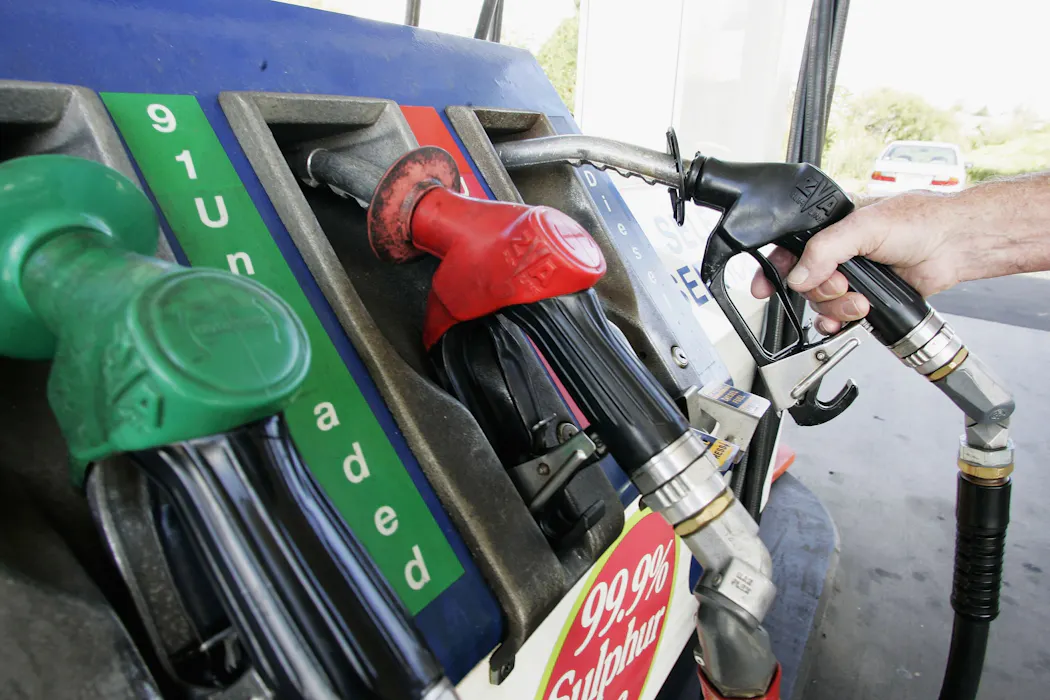
The world’s energy situation is growing more volatile by the day.
The US-Israel war on Iran has effectively shut one of the world’s most important oil choke points, the Strait of Hormuz, sending the price of Brent crude over US $100 a barrel for the first time since the Russian invasion of Ukraine. Tit-for-tat attacks on gas fields in the region are compounding the crisis.
In New Zealand, the fallout is being directly felt with rising fuel prices, to which the government may respond with targeted support for some.
It has already warned a prolonged conflict could drive up inflation, slow economic growth and even lead to fuel restrictions.
At this stage, it says such a step is not yet needed. But a four-level contingency plan shows how quickly the government could move ahead if conditions worsen.
There has also been talk of other extraordinary interventions, available under the 45-year-old Petroleum Demand Restraint Act. Again, these are measures the government says would only be necessary if fuel supply were seriously disrupted.
Unsurprisingly, this has all focused attention on the vulnerability of New Zealand’s fuel security. In particular, there has been renewed political debate over whether the 2022 closure of Marsden Point refinery made the country less resilient.
Experts say the difference would be marginal. But for those who lived through New Zealand’s past oil shocks, the events unfolding now will come with a strong sense of déjà vu.
And with talk of reviving interventionist measures from decades ago, the question is whether the country has learned enough to respond differently this time?
Lessons from the Muldoon era
New Zealand’s response to the soaring oil prices of the 1970s, similarly driven by turmoil in the Middle East, came at a time of extensive government control of the economy and energy sector under the National government of Robert Muldoon.
The discovery of Taranaki’s Māui gas field in 1969 appeared to offer New Zealand a trump card for energy supply. But it was tied to a long-term “take-or-pay” contract, meaning taxpayers ultimately carried the cost whether the gas was used or not.
This was the beginning of the “Think Big” strategy. Large-scale projects, including gas-to-gasoline and CNG/LPG conversion, were promoted as pathways to energy security, with little room for dissent.
At the same time, the Petroleum Demand Restraint Act was used to impose restricted petrol sales and carless days, along with reduced speed limits.
Much of this intervention proved costly and ineffective. When global oil prices fell sharply in the mid-1980s, New Zealand was left with debt-funded infrastructure that no longer made economic sense.
From 1984, the economy shifted away from heavy government intervention towards a more market-based model. Nearly four decades later, there are some valuable lessons to be drawn from those interventionist responses to past oil shocks.
One is the appreciation that markets are complex systems, with many players. Interdependence exists across economies. Actions by one sovereign country, such as an oil embargo, inevitably affect others. Complexity plays out over time.
The current government’s response to the energy crisis needs to recognise that any heavy-handed decisions made now may influence the system for decades, often in ways that are difficult to predict.
Another lesson is that New Zealand is actually well positioned to let markets do what they do best: price scarcity.
When prices rise, people adjust their behaviour in response. Farmers faced with higher diesel and fertiliser costs, for example, do what they are renowned for: adapting and modifying.
With higher prices at the pump, many motorists may also prove able to adjust by using public transport, working from home or switching to electric vehicles.
Of course, the impact will be uneven and regressive. But the government directly intervening in the market with hardline measures similar to the Muldoon era should not be the answer.
A new fix, or old risks?
Lessons about the state meddling in energy markets should also apply to the government’s recently announced plans to build a liquefied natural gas (LNG) import terminal.
The facility, likely to be based in Taranaki, is purposed to provide a back-up fuel source for electricity generation during periods of low hydro storage or weak wind. While that appears logical, the plan nonetheless warrants careful consideration.
Māui gas was a sovereign asset. By contrast, the government’s proposal would rely on imported LNG, tying New Zealand to overseas suppliers and long-term contracts that may prove inflexible and costly.
It also risks the prospect – as the present emergency in the Middle East does – of suppliers invoking “force majeure” clauses to suspend deliveries during crises.
A gas backup could also reduce incentives to invest in alternative energy sources or manage demand, while raising questions about how gas would be integrated into the electricity system and who would ultimately control its use.
While efforts to improve the reliability of electricity are welcome, past experience should make us wary of direct government involvement in commercial enterprise.
The current crisis should be treated as a strategic policy opportunity as the government reconsiders New Zealand’s energy settings to build a more resilient and sustainable system.
Authors: Basil Sharp, Professor of Energy Economics, University of Auckland, Waipapa Taumata Rau

















