

Australia has dedicated more than 20% of its land to conservation but not where it matters most
- Written by James Watson, Professor in Conservation Science, School of the Environment, The University of Queensland
On paper, Australia is a conservation success story.
Over the past 15 years, we’ve dedicated vast areas of land to conservation. Our primary goal has been to protect our unique plants, animals, and ecosystems. As a result, Australia now has one of the largest protected area estates in the world, covering roughly 22% of the country.
That’s an impressive achievement, and a significant step towards our goal of protecting 30% of Australia’s land by 2030.
But there’s a problem. Our new analysis shows we’re not protecting the places that matter most for Australia’s diverse wildlife and environments.
So what are we actually conserving? And what should change?
More land but no more protection
Our recent analysis of Australia’s network of protected areas shows, between 2010 and 2022, we’ve nearly doubled the amount of land under protection. Protected land refers to areas which are specifically set aside to conserve nature. However, this expansion has done little to help our most at-risk animals, plants, and ecosystems.
Our national list of threatened species, which identifies the plants and animals most at risk of extinction, illustrates this. Since 2010, we’ve only slightly increased the amount of protected land that’s home to threatened species. Based on our data, in that time this figure rose by an average of just 3%.
Worse still, 160 species have virtually no protection. That’s roughly 10% of our endangered species list. Many others species only have a very small amount of their habitat inside the fences of protected areas.
One example is the Margaret River burrowing crayfish, a critically endangered crayfish from Western Australia. Currently none of its two remaining habitats are protected.
And the Grey Range thick-billed grasswren, a bird endemic to New South Wales, is now critically endangered because of habitat loss and agriculture. However none of its habitat, found just north of Broken Hill, is formally protected.

Tragically, these are not exceptional cases. And they are exactly the plants and animals that protected areas are designed to protect.
The same is true for Australia’s ecosystems, which are geographic areas where plants and animals interact with their natural environment. Nationally, we have nearly 100 ecological communities which are listed as threatened. But in the last decade, we’ve only improved protection for a handful of these.
And some still have no protection. The critically endangered weeping myall woodlands in the Hunter Valley, Sydney’s blue gum high forest and the iron-grass natural temperate grassland of South Australia are just three examples.
So what’s gone wrong?
For decades, we’ve tended to protect land that is more remote and less productive. Our findings suggest this pattern is continuing today.
However, many of Australia’s at-risk plants, animals, and ecosystems are found in heavily modified landscapes. These include areas which have been cleared for agriculture or are close to towns and cities. But under current conservation models, we’re much less likely to protect these kinds of land.
As a result, we are expanding protected areas but not necessarily where they matter most.
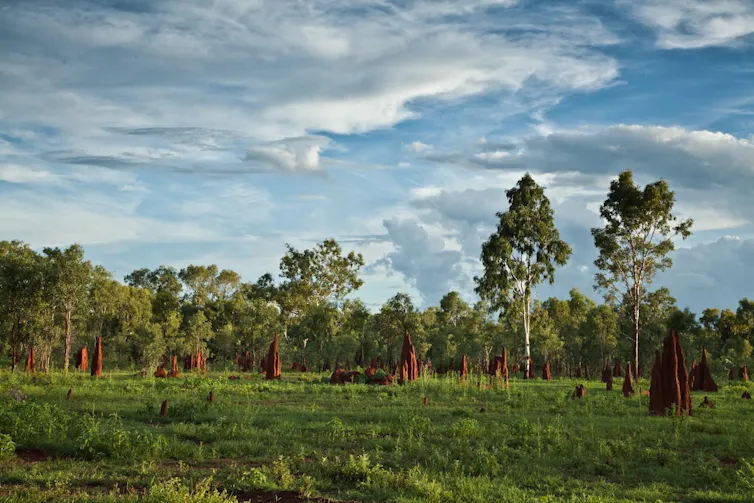
To be clear, protecting some of these landscapes is incredibly valuable. This is especially true given the current and future impacts of climate change. And in Australia, we’ve done well to protect nearly half of intact ecosystems by including them in nature reserves.
But protecting intact ecosystems is just one piece of the conservation puzzle.
Getting our priorities right
Australia has committed to protect 30% of our lands and waters by 2030. This is known as the “30 by 30” target. We are also a leader in the so-called high ambition coalition of 124 countries which have pledged to meet this same target.
But to protect our biodiversity we need to focus on which land is protected, not just how much. A hectare in the wrong place will have little effect, while a hectare in the right place can be the bridge between survival and extinction.
So as Australia moves towards the “30 by 30” target, the key challenge will be ensuring we protect land strategically, not opportunistically.
The good news is, we now have the tools to do so. Australia has some of the best biodiversity data in the world. This is because the Australian government has invested in ecologists from around the country, allowing them to closely study endangered species.
However, what we’re missing is a commitment to use this information. So far, we’ve largely measured progress using one blunt metric: total area protected. This metric is easy to communicate but is dangerously misleading. It tells us very little about whether protected areas are in the right location or are being managed well.
If we’re serious about halting species extinctions within the next five years, we need to change course now. Here are three ways to do that.
Without this shift, we risk meeting our “30 by 30” target while failing to save our most threatened species and ecosystems. That would be a hollow victory.
Authors: James Watson, Professor in Conservation Science, School of the Environment, The University of Queensland

















