

5 ways to manage your news consumption in times of crisis
- Written by: Mark Pearson, Professor of Journalism and Social Media, Griffith Centre for Social and Cultural Research, Griffith University, Griffith University
Thousands of employees internationally are already working from home in COVID-19 self-isolation because of their recent travel, related symptoms or immune system vulnerability.
But to do so while habitually checking the news on devices - and allowing 24/7 news channels to play non-stop in the background - might erode your productivity and increase stress and anxiety.
A foundational element of media literacy in the digital era is striking an appropriate balance between news consumption and other activities. Even before the current crises, Australian research demonstrated news avoidance had risen among news consumers from 57% in 2017 to 62% in 2019, driven by a sense of news fatigue.
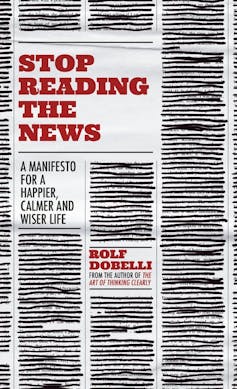 Self-help expert Rolf Dobelli implores us to stop reading the news. While he advocates going cold turkey and abandoning all packaged news consumption, Dobelli makes exceptions for long-form journalism and documentaries.
So too does philosopher Alain de Botton in The News – A User’s Manual, while proposing more positive news and journalism’s examination of life’s deeper issues, emotions and aesthetics.
In journalism education there has been a move towards “peace journalism”, “mindful journalism”, “constructive journalism” and “solutions journalism”, where the news should not merely report what is wrong but suggest ways to fix it.
Read more:
How peace journalism can help the media cover elections in Africa
Of course, it would be a mistake to abstain from all news during the COVID-19 pandemic and its unpredictable economic and social consequences.
Often it is best to navigate a middle path, so here are five suggestions on how you can stay in the loop at home while you get your work done - and help maintain your mental health.
1. Switch off
Avoid the 24/7 news channels and feeds unless it is your business to do so, or unless the information is likely to impact you directly.
Try to develop a routine of checking in on the main headlines once, twice or three times a day so you stay informed about the most important events without being sucked into the vortex of click bait and news of incremental changes in the number of coronavirus cases or the ups and downs of the stock markets.
2. Dive deep
Look for long-form journalism and in-depth commentary on the topics that most interest you. Articles by experts (Editor’s note: like those in The Conversation!) include the most important facts you need to know, and are likely to have a constructive angle presenting incisive analysis and a pathway to a solution or best practice.
Self-help expert Rolf Dobelli implores us to stop reading the news. While he advocates going cold turkey and abandoning all packaged news consumption, Dobelli makes exceptions for long-form journalism and documentaries.
So too does philosopher Alain de Botton in The News – A User’s Manual, while proposing more positive news and journalism’s examination of life’s deeper issues, emotions and aesthetics.
In journalism education there has been a move towards “peace journalism”, “mindful journalism”, “constructive journalism” and “solutions journalism”, where the news should not merely report what is wrong but suggest ways to fix it.
Read more:
How peace journalism can help the media cover elections in Africa
Of course, it would be a mistake to abstain from all news during the COVID-19 pandemic and its unpredictable economic and social consequences.
Often it is best to navigate a middle path, so here are five suggestions on how you can stay in the loop at home while you get your work done - and help maintain your mental health.
1. Switch off
Avoid the 24/7 news channels and feeds unless it is your business to do so, or unless the information is likely to impact you directly.
Try to develop a routine of checking in on the main headlines once, twice or three times a day so you stay informed about the most important events without being sucked into the vortex of click bait and news of incremental changes in the number of coronavirus cases or the ups and downs of the stock markets.
2. Dive deep
Look for long-form journalism and in-depth commentary on the topics that most interest you. Articles by experts (Editor’s note: like those in The Conversation!) include the most important facts you need to know, and are likely to have a constructive angle presenting incisive analysis and a pathway to a solution or best practice.
 Spend your time engaging with well-researched and accurate stories.
Eugene Zhyvchik/Unsplash
On radio and television, look for big picture current affairs programs like the ABC’s AM and 7.30 – or on a lighter and more positive note Ten’s The Project – so you don’t have to be assaulted by a disturbing litany of petrol station hold-ups, motorway chases and celebrity gossip in the packaged morning and evening news.
3. Connect
Use social media wisely – for communicating with family and friends when you might be physically isolated and by following authoritative sources if something in the news is affecting your life directly, such as emergency services during cyclones, fires and floods.
But avoid the suggested and sponsored news feeds with dubious and unfiltered information (often shared as spam by social media illiterates).
Keep your social media commentary civil, empathetic and supportive – mindful of everyone’s mental health during a crisis.
4. Interrogate
Ask the key question: “What is the best source of the information I absolutely need to know?”
Go to primary sources where possible. Subscribe to official and authoritative information feeds – for example, daily summaries from the World Health Organisation) and the Commonwealth Department of Health on COVID-19 and your preferred bank’s summary reports on the sharemarket and economic indicators.
5. Be mindful
Bear in mind the well being of any children in your household with the timing and selection of your hard/live news consumption. International research has shown more constructive news stories have fewer negative mental health impacts on children, particularly when combined with the opportunity to discuss the contents with their peers.
Spend your time engaging with well-researched and accurate stories.
Eugene Zhyvchik/Unsplash
On radio and television, look for big picture current affairs programs like the ABC’s AM and 7.30 – or on a lighter and more positive note Ten’s The Project – so you don’t have to be assaulted by a disturbing litany of petrol station hold-ups, motorway chases and celebrity gossip in the packaged morning and evening news.
3. Connect
Use social media wisely – for communicating with family and friends when you might be physically isolated and by following authoritative sources if something in the news is affecting your life directly, such as emergency services during cyclones, fires and floods.
But avoid the suggested and sponsored news feeds with dubious and unfiltered information (often shared as spam by social media illiterates).
Keep your social media commentary civil, empathetic and supportive – mindful of everyone’s mental health during a crisis.
4. Interrogate
Ask the key question: “What is the best source of the information I absolutely need to know?”
Go to primary sources where possible. Subscribe to official and authoritative information feeds – for example, daily summaries from the World Health Organisation) and the Commonwealth Department of Health on COVID-19 and your preferred bank’s summary reports on the sharemarket and economic indicators.
5. Be mindful
Bear in mind the well being of any children in your household with the timing and selection of your hard/live news consumption. International research has shown more constructive news stories have fewer negative mental health impacts on children, particularly when combined with the opportunity to discuss the contents with their peers.
 It’s important to think about where your children get their news, too.
Shutterstock.com
Finally, you might also use these crises to build your own media literacy – by pausing to reflect carefully upon what news you really need in your family’s life. This might vary markedly according to your work, interests and passions.
For many of us it will mean a much more critical diet of what we call “traditional hard news” – allowing us the time to read and view material that better contributes to the quality of our own lives and to our varied roles as informed citizens.
It’s important to think about where your children get their news, too.
Shutterstock.com
Finally, you might also use these crises to build your own media literacy – by pausing to reflect carefully upon what news you really need in your family’s life. This might vary markedly according to your work, interests and passions.
For many of us it will mean a much more critical diet of what we call “traditional hard news” – allowing us the time to read and view material that better contributes to the quality of our own lives and to our varied roles as informed citizens.
Authors: Mark Pearson, Professor of Journalism and Social Media, Griffith Centre for Social and Cultural Research, Griffith University, Griffith University

















