

Kids at home because of coronavirus? Here are 4 ways to keep them happy (without resorting to Netflix)
- Written by: Erin Mackenzie, Lecturer in Education, Western Sydney University
Some schools in Australia have moved online in response to the COVID-19 pandemic. Schools in which students and staff have tested positive have temporarily shut over the past three weeks.
It’s important to note the government’s health advice is to keep schools open. But many parents are choosing to keep their kids home for various reasons.
If your child is home more than usual, their normal sense of routine has been disrupted and you may be wondering how to ensure they don’t go stir crazy.
Here are four ways to keep your kids happy if they’re home for long periods.

1. Create a routine early
Children and teenagers thrive on routine. Some children may also experience anxiety about what is happening, and a new routine can help provide them with a sense of normalcy.
Plan a rough daily routine with times for different activities: school work, exercise, chores, creativity or free play, and time on digital devices.
Research also suggests children be involved in negotiating their routines as this helps support their empowerment. Older teenagers, who may be used to managing their affairs, may only require minor prompts to help with their routine.
Read more: 8 tips on what to tell your kids about coronavirus
By creating a rough routine, you allow children to know what to expect. For example, you can show children the times you will be fully available to them and the times you will be working or busy.
Where schoolwork is offered online, and you find yourself in the role of teaching support, a routine also allows children to know when your teacher hat is on and when it comes off again.
2. Help them get exercise
Many sporting activities have been cancelled for this season. Yet exercise is critical for young people’s physical and mental health.
Think creatively about the activities children and teenagers can do when confined to the home. Opportunities for exercise might include a mini bootcamp in the backyard, an obstacle course through the house, physically active video games (dance, fitness, boxing), or kid-friendly dance and kids yoga classes on YouTube.
 Primary-aged children love it when parents are involved in active play with them.
Shutterstock
Primary-aged children love it when parents are involved in active play with them.
Shutterstock
Primary-aged children are likely to love having their parents involved in such activities, and research shows parent support for exercise and role modelling improves teenagers’ exercise participation.
3. Help them stay social
Social distancing measures reduce children’s capacity to socialise with friends. What this means may differ depending on the age of your child.
Deep emotional connections with friends are extremely important for teenagers and many will turn to social media to discuss their feelings. Yet recent research has shown teenagers who go online for emotional support may experience more worry. This may be because the quality of support they find there may be poor, and they may also experience uncertainty about some of the messages they encounter.
You can encourage teenagers to continue using social media to bond with friends and peers, but to take regular breaks and share their bigger worries with parents. If they hear any alarming information about COVID-19 from their friends, it’s important to remind them to verify the information by checking with reputable sources – like the Australian government’s website.
Read more: 3 ways to help children think critically about the news
While primary-age children’s friendships may be less emotionally intense than teenagers’, they may still miss the company of their friends during an extended period of isolation. Research with children isolated due to hospitalisation shows digital devices can be effective in providing a sense of connection with peers.
Supervised FaceTime, Zoom or Skype play-dates may also help provide this connection. And children can write letters or draw cards to then photograph and send digitally to friends and family.
4. Think beyond Netflix
Harnessing your child or teenager’s interests is key to engaging them in new activities, especially when Netflix or video games are the alternative.
Talk to your child about a new skill they would like to learn or a place they would like to visit, and investigate real and virtual possibilities for accessing these. There are endless opportunities to learn new skills together through online platforms such as YouTube.
Read more: Stop worrying about screen 'time'. It's your child’s screen experience that matters
You could teach children games and skills you enjoy (such as cooking, chess, coding or science experiments). Virtual excursions promote interest and learning, and these are offered by many museums and zoos around the world.
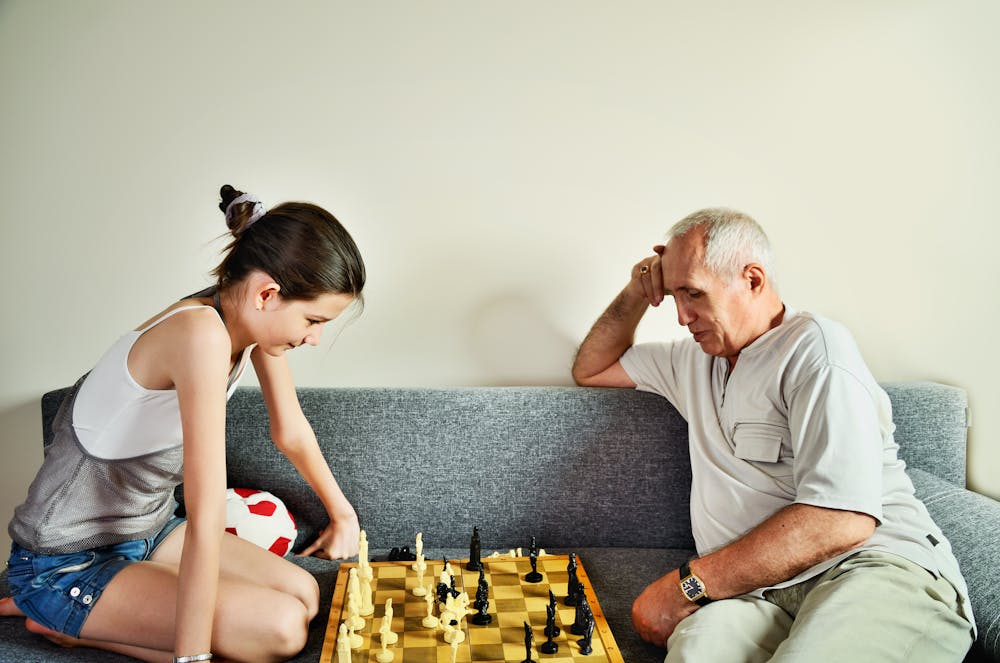 You can teach children skills you enjoy.
Shutterstock
You can teach children skills you enjoy.
Shutterstock
Children and teenagers are also strongly motivated by “achievable challenges”. Think creatively about challenges you could take together.
You could build a fort with every Lego block in the house, choose five board games for a family tournament or fix a neglected area of the garden.
Children’s ability to sustain and direct attention increases across time, so it is useful to plan these activities with your own child’s attention skills in mind. By rotating activities regularly, and aiming to complete one or two each day, it becomes easier over time to limit passive TV viewing.
Read more: Kids' diets and screen time: to set up good habits, make healthy choices the default at home
Children and teenagers stuck at home may become bored, experience increased conflict with family, or express stress and frustration in unhelpful ways. When you observe lapses in emotion control (such as temper tantrums), it is important to place these in context.
It can be useful to acknowledge how your child is feeling, and help them develop resilient emotional responses by problem-solving a path forward together.
Authors: Erin Mackenzie, Lecturer in Education, Western Sydney University
&media=https://www.modernaustralian.com/https://images.theconversation.com/files/320030/original/file-20200312-116261-a6ugi0.png?ixlib=rb-1.1.0&q=30&auto=format&w=600&h=90&fit=crop&dpr=2&description=Kids%20at%20home%20because%20of%20coronavirus?%20Here%20are%204%20ways%20to%20keep%20them%20happy%20(without%20resorting%20to%20Netflix) "Pin It")

















