

why radical ideas from psychoanalysis are my guiding light in a chaotic world
- Written by Nicola Redhouse, Lecturer, Publishing and Editing, The University of Melbourne
When I taught short fiction writing, I used to quote writer Meg Wolitzer on the pleasures of the form. “You will find yourself in a place you didn’t know about before. A place where you didn’t expect to be.” The trick, I’d tell my students, is to make the reader curious. That was a decade ago, and curiosity seems to have fallen from fashion since.
AI encourages quick, unreliable answers, rather than deep dives and nuance. (Though at the same time, a White House culture of lies – such as Donald Trump’s recent claim that regime change has occurred in Iran – requires a deeper level of fact-checking.) AI also encourages surface-level, short-form entertainments, in a world where 36% of 18–24-year-olds get their news from TikTok.
This week, the world seems especially uncertain. New wars in Iran and Lebanon have joined those in Ukraine and Gaza – where there is currently a ceasefire. In Australia last month, the primary vote of far-right populist party One Nation was higher than the Coalition’s for the first time. Trump is fighting with the Pope. The one bright spot is autocrat Viktor Orbán’s defeat in Hungary. And, of course, it’s all unfolding alongside accelerating climate catastrophe.
It’s not surprising that, under these conditions, we find ourselves craving certainty. But something like its opposite, curiosity, might be what we really need. It might open things up a little – allow us to care about what another feels or how they suffer, or what we might laugh about together.
My worldview has been heavily shaped by the work of 20th-century psychoanalyst Wilfred Bion and what is called “the psychoanalytic attitude”: a state of widely attentive, unrushed curiosity. I believe Bion’s ideas offer a blueprint for how we might encounter our world – and how we might soften its current fundamentalism.
The psychoanalytic attitude
A sometime contrarian, I have become less interested in the end point of the answer than in documenting what it is to grope around in the dark, asking. To probe what it might feel like outside my own body, or in someone else’s head. “Curiosity is the opposite of fanaticism; it asks, ‘What else might be true?’” writes psychotherapist Mannie Sher.
The very foundations of our capacity to think in a way that meets reality – rather than in a way that collapses into terror or rage or fantasies of annihilation – rests upon being able to bear uncertainty, Bion told us.

He understood that to adopt an attitude of already knowing prevented the possibility of real understanding. His work drew on a capacity that poet John Keats named as central to great thinking – negative capability: when a person is “capable of being in uncertainties, Mysteries, doubts, without any irritable reaching after fact and reason.”
Bion’s theory stems from the mother-baby relationship. The mother/caregiver adopts a kind of listening and attention that can bear not knowing what the baby wants. It can contain the baby’s rage or disappointment through language and action that meets the baby’s emotional state – cooing and rocking, for example – until she can understand what is being communicated, and meet the baby’s needs.
The “psychoanalytic attitude” has become the cornerstone of productive work for those who draw on Bion’s thinking. Psychoanalytic psychotherapist Robert Snell describes it as “an emotional orientation … a commitment, founded in respect, to maintaining a radically open-minded stance”.
Confronting messy truths
Partisanship, outrage and deep division have increasingly characterised our politics and ideologies, as demonstrated by the decline of our major parties and the rise of One Nation.
Five years after COVID, 55% of Australians felt the country was now more divided than it had been before 2020. A 2023 study showed only 24% of Australians would help a person in need who strongly disagreed with their own strong view on a societal issue. Only 21% would be willing to live in the same neighbourhood as them and only 19% would be willing to work alongside them.

The war in Gaza has become a flashpoint for this vexed situation. To take a political or moral position, or to identify – or be identified – with some religions, now risks material, personal and professional loss.
“The conflict in Israel and Gaza is the most polarising issue of the 21st century and continues to be highly polarising in the sense that it’s one that people are just encamped in their trenches and don’t talk to each other,” one respondent said in a 2024 poll.
On social media, this is exacerbated by the speed with which unchecked false or inflammatory information can be posted and the inbuilt demand for brevity. The result is often a kind of king-hit knowing that prevents us hearing another kind of truth: the experiential and emotional truths of individuals and communities who are not us.
For non-Indigenous Australians, this might mean hearing Stolen Generations testimony. These kinds of truths, found often beyond the confines of our algorithms, require us to lay down our defences and listen to another person’s experience so we might be able to feel, to be moved.
In the past few years, this happened for me. I am Jewish, and I despaired at how soon after October 7 many denied or minimised the Hamas attacks. But I also began to wonder what I did not know, or had avoided knowing. I had only been schooled in parts of Israel’s story, and I became curious.
 Israeli family members visit the memorials at the site of the Nova music festival on the second anniversary of the October 7 Hamas attacks.
Atef Safadi/AAP
Israeli family members visit the memorials at the site of the Nova music festival on the second anniversary of the October 7 Hamas attacks.
Atef Safadi/AAP
This opened my thinking to experiences I had not engaged enough with: I listened to Palestinian testimony, I read Palestinian histories, and I took in images from Gaza – actively calling on myself to read and hear and see these without the noise of what I already felt I knew. I was profoundly moved and disturbed.
I was still able to hold on to my horror and grief about October 7. I still had my own recent deeply distressing experiences of antisemitism to reckon with.
The understanding I came to was an emotional one. It’s captured in these words from a Holocaust survivor protesting in Israel: “I don’t think we can remember our suffering without acknowledging the suffering of Gaza … It occupies the same place in my heart.”
 A relative mourns over the body of Al Jazeera correspondent Mohammed Wishah, killed in an Israeli drone attack in April.
Haitham Imad/AAP
A relative mourns over the body of Al Jazeera correspondent Mohammed Wishah, killed in an Israeli drone attack in April.
Haitham Imad/AAP
We can only come to know in this way if we can, as Sher writes, “grieve without recrimination […] stay connected without collapsing into ideology […] preserve the capacity to think amid the noise of certainty”.
Such truths might confront us with their messy arcs – stories in which perpetrators are also victims or vice versa, where ordinary people commit evil in the name of bureaucracy, or where whole societies – under the spell of a charismatic power or a system of brutality – act immorally or fail to act. They might even implicate us.
But to turn away from them can only perpetuate the kind of us-and-them thinking that seeds societies in which horrors such as genocide, pogroms and ethnic cleansing take place.
Attention, algorithms and ‘alternate facts’
“The kinds of interest we take, the forms of attention we prefer, seem to be the best ways we have so far of trying to get the lives we want,” writes psychoanalyst Adam Phillips.
Anything other than fragmented attention has become a luxury – causing us to speed up everything we do, including forming our opinions and attaining our facts.
A recent analysis of 35 million public Facebook posts revealed that 75% of shared links had not even been read by their poster. A study of large-scale data from Twitter (now X) proved that users’ ideological stance in one debate predicts their positions in others. We get our truths from those with whom we share an ideology.
The “other side”, in many cases, proffers a different truth entirely, an ever-widening sinkhole between what “we” and “they” accept as fact.
What even is real, the kids might say, in a time when we struggle to tell whether a song has been created by a human or AI, when most adult Australians are not confident about their ability to identify false and misleading information online, when scams are on the rise, and when satirical news sites are less funny than disorienting.
On social media, where we’re spending more time than ever, the constraints of space and timeliness shape how we articulate our thinking, favouring decisive resolutions.
We know already – and we know enough already. Entire histories are distilled into slogans, the overlapping edges of different peoples’ traumas, sliced off neatly to fit into 30 characters. Like, laugh, love, care, angry. We can only choose one response to click.
This is a kind of knowing that can never accommodate reality.
Generative uncertainty
It also bulldozes the possibility of a position of not knowing – which I call “generative uncertainty”. A position that might give way to transformation or change – that might be a starting point, not an end.
The No campaign for the 2023 Referendum, for example, argued that a Voice to Parliament was risky and unknown: if you don’t know, vote no. A counterargument, of course, was that risk and the unknown have been prerequisites for change and growth for as long as humanity has progressed. Might that have led to a different result?
 The ‘No’ campaign for the Referendum was ‘if you don’t know, vote no’ – but risk and the unknown have long been prerequisites for change and growth.
Lukas Coch/AAP
The ‘No’ campaign for the Referendum was ‘if you don’t know, vote no’ – but risk and the unknown have long been prerequisites for change and growth.
Lukas Coch/AAP
Generative uncertainty, or taking a position of not knowing, is not the same as denial. There are truths we must hold sacred if we are to have any firm ground as a just society: records and witness testimony, body counts such as those recently released in the Gaza Mortality Survey, the names of victims and perpetrators.
Bearing witness to the documentation of such truths is a matter of collective sanity. “Names going into the world as a pact so that the speaker and listener may share that reality,” as moral philosopher Raimond Gaita says.
A willingness to find out
Years ago, after a writers festival panel, a woman barrelled over to tell me she was not going to buy my book. “It sounds like it asks a lot of questions, and I want answers.” At the time I found this mildly funny. But as AI encroaches on our ways of learning, I’m not so amused.
With its uncritical devotion to pattern recognition, AI offers this kind of fanatical knowing – the kind without space for uncertainty. It can helpfully distil massive amounts of particular kinds of data. For example, it can pinpoint rare medical conditions. But it is prone to disastrous errors of sense when answering questions that involve an understanding of context, notoriously giving harmful advice when it comes to eating disorders or depression.
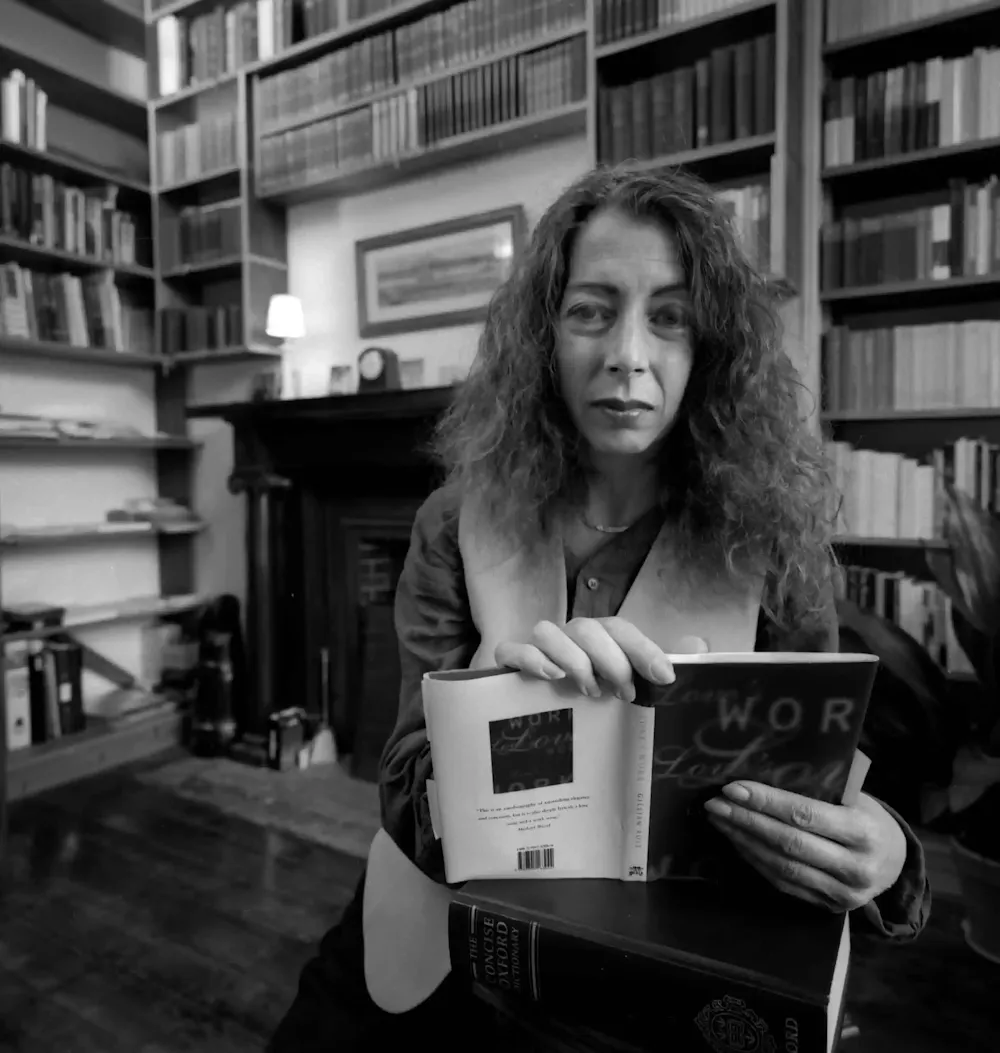 Philosopher Gillian Rose.
CLT
Philosopher Gillian Rose.
CLT
Chatbot answers cater to our desire to know without doing the work of finding out – a process that involves time, reflection and sometimes wide reading. For this reason, philosopher Gillian Rose has critiqued the tendency for writers to frame their theoretical work with a declaration of identity. To write “as a woman” or “as a Jew”, she tells us, illustrates the limitations of knowing already.
“My trajectory displays no such logic,” she says. “If I knew who or what I were, I would not write.” Like so many great thinkers, she writes to find out who she is.
“Arguments are now blunt tools with no space for persuasion,” a philosopher friend said to me recently. We were talking about the fruitful intellectual partnership between psychologists Daniel Kahneman and Amos Tversky, which helped us understand how people behave when making economic decisions.
The two were engaged in daily conversation for decades, challenging and questioning each other, particularly around research methods. “Because we were adversaries, Danny [Kahneman] wanted to see what we could discover,” Tversky has said.
“But I read Tversky was always sure he was right,” I told my friend. “How did they ever get anywhere?” My friend replied: “He was willing to be persuaded.”
To be persuaded, one has to relinquish already knowing.
Welcoming confusion
Outside the consulting room, we might use Bion’s “psychoanalytic attitude” to turn the king-hit outrage that lies behind so many social media posts into curiosity about our selves – so we can come to know our own prejudices and desires a bit better. “We should welcome confusion as a desirable state of mind,” writes psychoanalyst Stephen Seligman.
Again – this is not a call for denial or distrust. We must trust the truth of witnesses, records and testimonies with the certainty that comes from, as Gaita puts it, “disciplined and sober” judgement.
The kind of knowing I am advocating for is arrived at through both a radical open-mindedness and a sobriety for factual truths. So, generative uncertainty relies on us regaining trust in our institutions – in what philosopher Chris Fleming calls a knowledge that “depends not on individual critical thinking alone”, but on “distributive intelligence”.
This is a form of reasoning requiring “feedback, institutional mediation, and – crucially – a form of vulnerability, of ethical openness to being wrong”. This allows us to be certain in a way that is free from dogmatism.
We must also be able to bear the ambivalence of complex realities, to resist resorting to what philosopher Paul Katsafanas calls “grievance politics”.
This is a psychological negativity centred not on an outcome, but on perpetuating grievance. It transforms “inward pain to outward hostility”, offers “a feeling of elevated worth” and transforms “powerlessness into righteousness”, he says.
One Nation’s policies are a strong example of this kind of orientation, with their focus on framing immigrants as the source of Australia’s cost-of-living, housing and security challenges.
The blind terror or hate that makes us righteously certain of the other’s badness – that looks to annihilate them – must be tempered with an ability to be curious about the other.
Curiosity paired with anger offers something like philosopher Martha Nussbaum’s “transition anger” – an anger that restores dignity through protest, conversation, debate and art that provokes, rather than through retribution.
Literary lessons for now
One of my favourite short stories is Shirley Jackson’s The Lottery, a deeply unsettling tale of a town enacting a ritual stoning. The jolt delivered to the reader – that the orderly lottery draw being conducted among a group of eager townsfolk is for the bad luck of being put to death – is dizzying.
When the New Yorker published it in 1948, it generated a flood of complaints and subscription cancellations – and utter puzzlement. According to Jackson’s biographer, since the magazine did not classify pieces according to genre, many readers wrote in to express their shock that there was a town engaging in such a barbaric rite.
Now, her story of collective retribution reads more like nonfiction than ever. But the literary form I see as containing lessons for our times is the poem.
Psychotherapist and poet David Shaddock writes that both the poet’s imagination and the work done between an analyst and patient present opportunities for psychic truth: a “field that opens when the real is noted”. We are moved, and this capacity to be moved situates us in reality in a way other ways of knowing – sight, sound, intellect – may have evaded.
Poetry, Shaddock says, can disarm our preconceptions to create a space where change, or something generative, might take place. A space of empathetic imagination where we are no longer certain – but curious.
Authors: Nicola Redhouse, Lecturer, Publishing and Editing, The University of Melbourne

















