

Why are we calling it 'social distancing'? Right now, we need social connections more than ever
- Written by: Katharine H. Greenaway, Senior Lecturer, University of Melbourne
We are now a society at a distance. As of this week, New South Wales has closed restaurants, bars, gyms, and entertainment venues where people gather in large numbers.
Victoria has similarly implemented a shut down of all non-essential activities, including closing schools. People are strongly advised to stay at least 1.5 metres away from others where possible.
But the label used to describe these measures – “social distancing” – is a misnomer. While we must be physically distant, it’s crucial we maintain, or even increase, social contact with others during this unprecedented time.
Read more: State-by-state: how Australia's new coronavirus rules will affect you
In a crisis, we need support
The so-called social distancing measures seek to limit the spread of COVID-19, the disease caused by the novel coronavirus, by reducing physical contact between people. And there’s evidence these measures work.
But research also shows being isolated can have negative effects on a person’s mental health. Specifically, periods of quarantine have been shown to increase negative emotions like anxiety, confusion and anger.
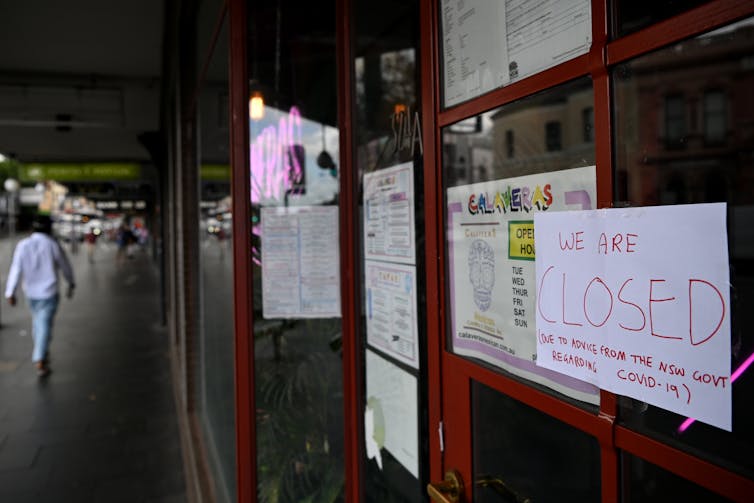 In Victoria and New South Wales, places people would normally gather are closed.
Joel Carrett/AAP
In Victoria and New South Wales, places people would normally gather are closed.
Joel Carrett/AAP
Importantly, strong social support can help us counter these negative effects. And as well as improving our mental health, being socially connected is linked to better physical health too.
One US psychologist rightly noted rather than talking about social distancing, we should be practising distant socialising.
Read more: Social distancing can make you lonely. Here's how to stay connected when you're in lockdown
Of course, this can be difficult when so much of our social closeness depends on physical closeness. Humans are innately social, and often our instinct is to reach out to touch or be close to others when we feel unwell or afraid.
This makes it all the more difficult to stay away from others right now.
Social solidarity, not social distance
Staying socially connected in times of threat has benefits beyond helping us manage our mental well-being. Other people can provide us with practical support, like picking up groceries or passing on relevant information, as well as emotional support.
Building this kind of social infrastructure, where people help neighbours and strangers as well as their friends, fosters the feeling we as Australians are all in this together.
This feeling is called social solidarity, and if we get it right we’ll be much better equipped to respond to this and other crises.
In the case of coronavirus, social solidarity may be the key to getting people to comply with public health recommendations. Recent research found if people were told distancing was important for the sake of others, they were more likely to say they would adhere to the relevant guidelines than if they were told it was to avoid negative consequences.
Read more: Coronavirus is accelerating a culture of no touching – here's why that's a problem
To mitigate the dangers of conflating physical distancing and social distancing, and to work towards social solidarity, here are three things we need to see:
1. Consistent messaging
The Victorian health department now refers to physical distancing rather than social distancing, in line with calls from experts to change the terminology.
But the federal government and most other state governments are still using the social distancing moniker.
Consistent messaging from our leaders, including an explanation of why the label must change, could serve to encourage people to adopt practices that promote social closeness while maintaining physical distance.
 We can remain socially connected using technology, even when we can’t be physically close.
Shutterstock
We can remain socially connected using technology, even when we can’t be physically close.
Shutterstock
2. Social tips alongside physical tips
Much of the current messaging from government sources focuses on maintaining physical health by washing hands with soap, practising correct cough and sneeze etiquette, and cleaning and disinfecting surfaces. These measures are undoubtedly critical.
But missing from most official advice is guidance about the importance of maintaining social connectedness. The government should add evidence-based recommendations for staying connected to its official resources.
3. Prioritising communication
Where state governments are increasingly limiting activities to allow for only essential services, phone and internet services that allow people to connect virtually should be seen through the same essential lens.
The government should consider policies which encourage providers to waive late fees or stop disconnections that may occur because of financial hardship related to the virus.
Physical distance is important, but it’s equally necessary we maintain social closeness during this time. Staying connected with others will make us happier, healthier, and more socially responsible as we continue to contend with this crisis.
Authors: Katharine H. Greenaway, Senior Lecturer, University of Melbourne


















