

Google AI


Modern Australian

Nest-building chimpanzees seem to anticipate future weather

  • Written by: Hassan Al Razi, PhD Student, School of Human Sciences, The University of Western Australia
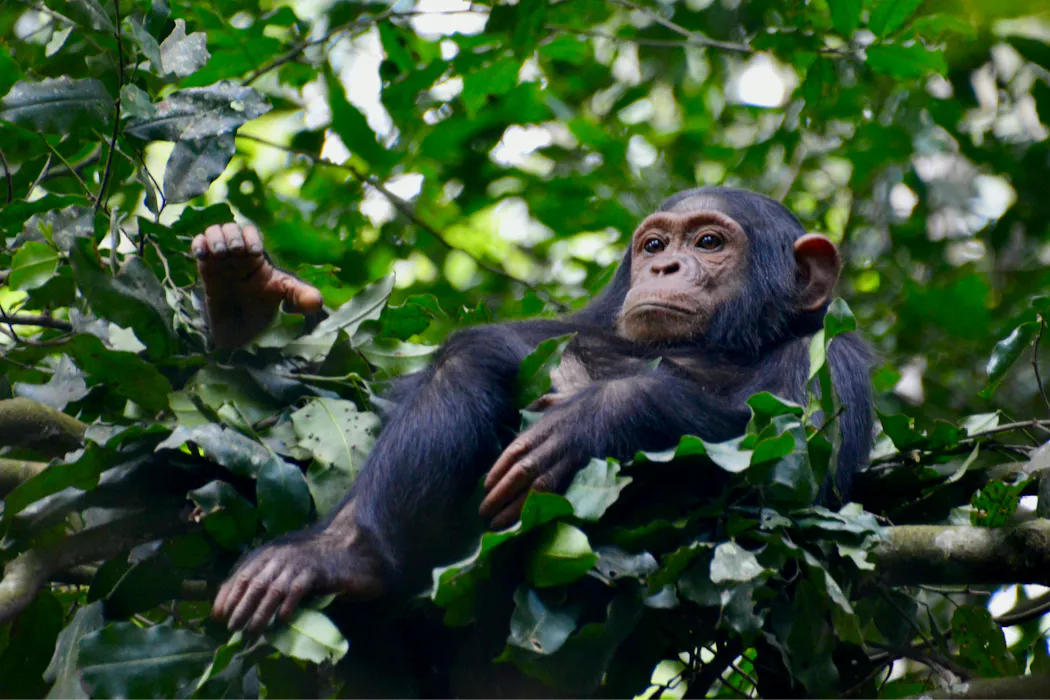
Nest-building chimpanzees seem to anticipate future weather

Every evening, as they move from place to place through the forest, chimpanzees stop to build a nest – most often in a tree – to sleep in. Using a selection of branches, leaves and twigs, they create comfortable and safe spaces to get some shuteye.

Like human beds, these are places to rest – but they also help chimps stay warm or cool and protect themselves against the weather. As you might expect, how and where chimpanzees build their nests depends on things like temperature, humidity, wind and rainfall.

But how do they make these choices? Previous research has shown the construction is related to the conditions at the time when the creatures are building the nest.

In new research, published today in Current Biology, my colleagues and I show that chimps are a little bit cleverer than you might expect: they seem to build their nests in ways that anticipate what the overnight weather will be.

A year in Rwanda

We conducted a field study on eastern chimpanzees in Nyungwe National Park, Rwanda, a cool and humid mountain forest. Over a 12-month period, we collected detailed data on the structure of nests, the characteristics of their chosen sites, and the kinds of trees the chimps chose.

We also measured how well different kinds of nests insulate against cold and heat. At the same time, we made detailed records of weather conditions when the nests were being built and throughout the night.

This let us test whether chimpanzees respond primarily to immediate environmental conditions, or whether their nesting decisions are better explained by the conditions they experience later during the night.

Chimpanzees are always adjusting their behaviour

Our results show chimpanzees consistently adjust their nesting behaviour in relation to environmental conditions. They preferred to build nests in places that were warmer, more humid and less exposed to wind than surrounding areas.

Nest structure and insulation varied systematically with environmental conditions. In cooler and wetter conditions, nests were thicker and deeper – indicating the chimpanzees put more effort into insulation when conditions are tougher.

We also found that factors such as the width and depth of the nest influenced its insulating ability.

The chimpanzees tended to build more insulating nests when weather was colder and when it was more humid, both during nest-building and overnight.

In cooler and wetter conditions, the chimps also built their nests higher, in taller trees with denser leaf cover. This makes sense: it would be a more stable microclimate with more shelter from rain.

Are chimps thinking ahead?

Importantly, nesting decisions aligned more closely with overnight environmental conditions than with those at the time of construction. When we took overnight weather into account, we found we could explain the variation in nesting behaviour much better than if we used only the current conditions.

One possible explanation is that chimpanzees use environmental cues, such as shifts in temperature, humidity or atmospheric pressure, that are linked to upcoming weather.

These cues may allow them to adjust nest-building behaviour in advance. Does this mean they predict or forecast future weather? Not quite.

But it does show their behaviour is consistent with reacting to environmental signals that are associated with later conditions. Either way, the chimps display a remarkable sensitivity to their environment – and a grasp of how to live in it.

Authors: Hassan Al Razi, PhD Student, School of Human Sciences, The University of Western Australia

Read more https://theconversation.com/nest-building-chimpanzees-seem-to-anticipate-future-weather-281537

Breach of Contract in Business: What Are Your Options?

Contracts are essential to business relationships. They establish expectations, allocate responsibilities and provide a framework for delivering goods...

How Pest Control Companies Can Rank for the Problems Customers Search First

Introduction SEO for Pest Control needs to start with the customer’s problem. Most people do not search for pest services in a neat or technical wa...

What Are the Benefits of Renovating an Older Home in Sydney?

Sydney has plenty of character homes, from Federation cottages to mid-century brick homes. Renovating rather than rebuilding can preserve what makes t...

Pool and Deck Design: How to Plan the Perfect Outdoor Living Space for Your Sydney Home

For many Australians, the backyard is where life happens. Summer barbecues, weekend swims and long evenings outdoors are all part of the lifestyle, ...

Is Solar Pool Heating Worth It? What Sydney Homeowners Should Know

There's nothing quite like a backyard pool on a hot Sydney day. But once autumn rolls in, many pools sit unused for months because the water is simp...

Planning a Luxury House Move: A Week-by-Week Timeline for Prestige Sydney Homes

Selling or buying a prestige home is a major milestone. Whether it's a waterfront residence in Birchgrove, a grand Federation home in Haberfield or ...

Downsizing or Upgrading Your Caravan? Here's How to Sell It Without the Hassle

Selling a caravan can feel like a major task, especially when you are unsure about its value, paperwork, or how to find a buyer. Whether you are dow...

The Best Overseas Adventure Holidays for Australians Who Love the Outdoors

Australia offers no shortage of incredible outdoor experiences, but sometimes the best way to satisfy your sense of adventure is to head overseas. A...

Cape Town Wine Shuttle: Winelands Tasting & Tours

Embark on an unforgettable journey through the picturesque Cape Winelands, where world-class wines and breathtaking scenery await. Our Cape Town Win...

Metal Fabrication: Choosing Metal Fabrication Melbourne Services for Custom Projects

What Modern Metal Fabrication Involves From individual components to complete structures, metal fabrication brings together processes such as desig...

Why Giant Rats Tail Grass Keeps Coming Back After Spraying

Giant Rats Tail Grass (GRT) is one of the most frustrating pasture weeds for farmers and lifestyle property owners. You spray an infested area, see th...

When Custom Cardboard Boxes Make Sense for Your Business

Custom cardboard boxes can be useful when a standard carton does not fit a product, packing method or presentation requirement particularly well. A ...

Full-Height vs. Pop-Top Caravan: Which Is Better for Family Travel across WA?

A pop-top caravan is an excellent choice for travellers who want the comfort of a caravan without committing to a larger, bulkier setup. With a lowe...

Bottle Label Printing: Key Factors for a Professional Finish

Why the Printing Method Matters When businesses need packaging or printed containers developed for a particular application, the right supplier can m...

Virtual Livestock Fencing and GPS Tracking: Improving Visibility Across Cattle Properties

What Virtual Livestock Fencing Means for Modern Cattle Management Managing cattle across extensive properties requires more than knowing where anim...

Sydney Pawnbrokers Explained: How Hocking Your Car Actually Works

Sometimes you need cash, and you need it soon. If you own a car, you may already have a way to get it. That's what people mean when they say they've...

Moving Interstate from the Gold Coast to Brisbane (or Back)? What Removalists Wish You Knew First

Have you talked to anyone who’s done the move? They say the same thing: the drive up the M1 is the easy part. It's everything around it that catches...

Why the Spring School Holidays Are a Great Time to Visit Coffs Harbour

The spring school holidays are a good time to spend a few days on the Coffs Coast. The weather is starting to warm up, there is plenty to do outdoor...

















