

how advertisers are using (and abusing) the coronavirus to sell
- Written by: Kelly Choong, Lecturer in Creative Advertising, University of the Sunshine Coast
Pete Evans came under fire again last week for fobbing off a A$15,000 machine touted to treat multiple ailments, including coronavirus. The BioCharger NG, according to Evans’s website, is a “hybrid subtle energy revitalisation platform that works to optimise your health, wellness and athletic performance”.
He posted to his 231,000 Instagram followers the machine contains thousands of different “recipes” of light and sound, which can counteract viruses, including a couple of “recipes” against COVID-19. What are Evans’ credentials again, you ask? He’s a celebrity chef.
This promotional hoodwink is tapping into consumer fears and targeting the vulnerable and desperate.
Fear in society will always exist, and it is important for consumers to look at things from a logical and practical level. Brands are not here to promote solutions to the pandemic – this should be taken from official sources.
Shifting sales
Businesses have in the past shown their versatility and ingenuity in pivoting in innovative ways. There’s nothing wrong with trying to turn a disaster into an opportunity, as John D. Rockefeller once said. It all comes down to what opportunities exist and how you can take advantage of them.
Business models must constantly evolve, and many businesses have shifted their primary presence online to overcome current operational restrictions. But there is more to it than simply going online – it is also about understanding the new modified needs and wants of the market, and how you can provide to these needs while the opportunity exists.
Major brands such as Coca-Cola, Audi and McDonald’s have reinforced medical advice of social distancing through advertising. Guinness advertised unity and hope. Social responsibility in businesses has never been more important than it is now.
But as well as selling #stayhome messages, brands still need to sell their products – and some brands are doing well in the shift to home-based life.
Desks and monitors are selling out and toy sales for the kids have skyrocketed. Sex toy sales are up, too.
Sales of loose-fitting loungewear, leggings and stretchy pants have been soaring, with companies like Myer advertising pyjamas as “Your home office dress code” – a knowing wink to consumers who will be doing away with the formal office wear for the time being.
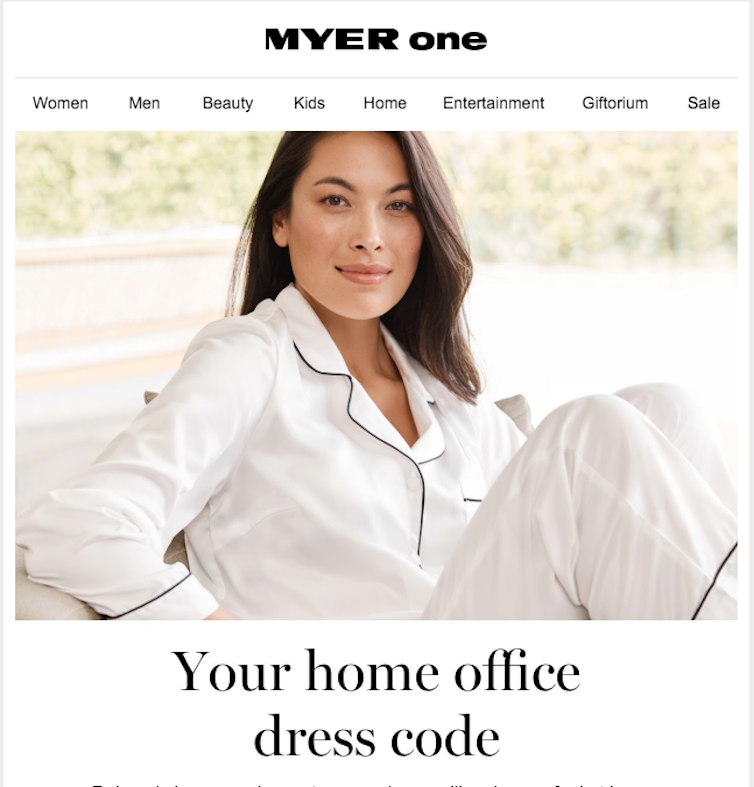 As the office has shifted to the home, what we consider acceptable (or comfortable) workwear has shifted, too.
Screenshot/Myers
As the office has shifted to the home, what we consider acceptable (or comfortable) workwear has shifted, too.
Screenshot/Myers
Food delivery sales are also growing. Restaurants are selling consumers prepared food alongside make-it-yourself kits. Fast-food chains are advertising their cashless and contactless delivery ahead of advertising their food.
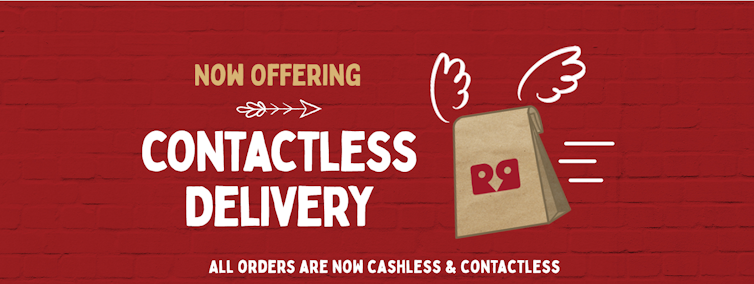 Red Rooster isn’t just selling chicken – it’s also selling safe delivery.
Red Rooster/Screenshot
Red Rooster isn’t just selling chicken – it’s also selling safe delivery.
Red Rooster/Screenshot
Selling panic
When does tapping into coronavirus fears become ethically challenged?
Bupa tried to promote its health insurance alongside advice on the importance of being prepared. But using the image of an empty shelf (and the contentious issue of toilet paper) during the pandemic is taking advantage of fear. Paralleling shortages in essential products to health insurance policies is merely creating unnecessary panic-buying among those who don’t or can’t afford private insurance.
Whether or not you have private health insurance during the pandemic is irrelevant as doctors, not insurers, determine treatment.
Tapping into panic to sell at a time when everyone feels vulnerable is unconscionable. Especially when the company sells items of need that aren’t part of their regular inventory. Fashion brands under the Mosaic parent company have crossed that line with marketing for hand sanitisers. Not only is this opportunistic profiteering, a pre-order doesn’t guarantee customers will receive the items any time soon.
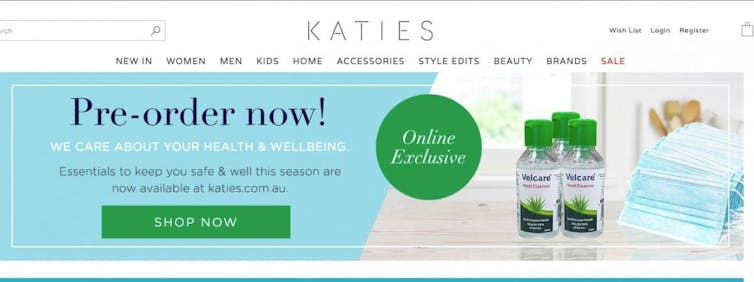 Brands like Katies are selling hand sanitiser for ‘pre-order’ – but when will consumers get their deliveries?
Screenshot/Katies
Brands like Katies are selling hand sanitiser for ‘pre-order’ – but when will consumers get their deliveries?
Screenshot/Katies
Online wine retailer Winetime.co.nz sneakily tried to pass off an advertisement that resembled the official New Zealand government’s public service announcement. The social media ad was accused of taking advantage of the COVID-19 branding to promote the retailer’s products.
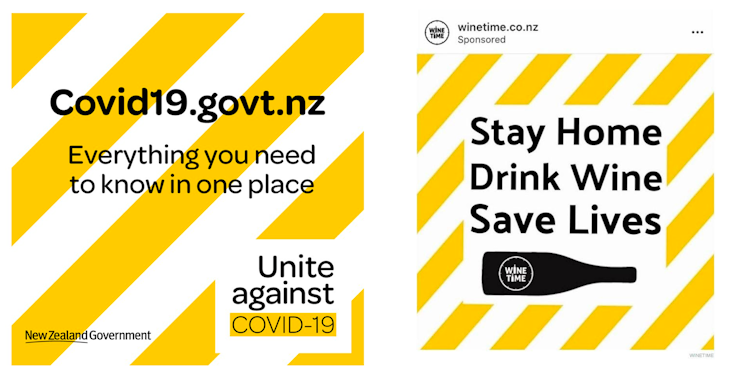 Winetime.co.nz has been criticised for using advertising that looks like government health alerts.
New Zealand Government/Winetimes
Winetime.co.nz has been criticised for using advertising that looks like government health alerts.
New Zealand Government/Winetimes
‘We live in a society’
Brands’ key responsibility here is to keep supplying what consumers want in a moral, conscientious and transparent manner. And as much as it is important for businesses to stay afloat, it is also critical for consumers to not succumb to unethical and false advertising.
As frozen meat brand Steak-umm said eloquently via its Twitter account, “we live in a society so please make informed decisions to the best of your ability and don’t let anecdotes dictate your worldview”.
Beware of advertising that taps into current fears and uncertainty. Scrutinise claims. If in doubt, discuss with family and friends.
The days of “what you see is what you get” have passed. It is now time for us to change the way we look at advertising.
Authors: Kelly Choong, Lecturer in Creative Advertising, University of the Sunshine Coast
-the-coronavirus-to-sell&media=https://www.modernaustralian.com/https://images.theconversation.com/files/327620/original/file-20200414-117593-1jww16o.png?ixlib=rb-1.1.0&q=45&auto=format&w=754&fit=clip&description=how%20advertisers%20are%20using%20(and%20abusing)%20the%20coronavirus%20to%20sell "Pin It")

















