

it's an intriguing but unproven link
- Written by: David Burgner, Clinician and Scientist, Murdoch Children's Research Institute
Doctors in the United Kingdom and other European countries have recently reported small but increasing numbers of critically ill children with features of both Kawasaki disease and toxic shock syndrome. These are uncommon conditions affecting the blood vessels.
England’s National Health Service (NHS) issued an alert to doctors as a result.
These children presented with fever, severe abdominal pain and/or a skin rash. Some also had inflammation of the coronary arteries which supply blood to the heart, and inflammation of the heart muscle itself.
Read more: Worried about your child getting coronavirus? Here's what you need to know
Some, but not all, tested positive for SARS-CoV-2, the virus causing COVID-19.
But what is Kawasaki disease, and how might these cases be related to COVID-19?
Kawasaki disease
Kawasaki disease is an uncommon disease of childhood, typically occurring between six months and five years. It occurs less frequently in older children and rarely in adults.
Initially described in Japan in 1967, it is most common in North East Asia but is seen worldwide. In Australia, on average, one child is diagnosed with Kawasaki disease every day.
Kawasaki disease is a vasculitis or inflammation of blood vessels, resulting from excessive immune activation. We don’t know what causes it and there’s no diagnostic test. Diagnosis is based on the clinical features, which include:
- prolonged fever
- rash
- red eyes
- swollen or red hands and feet
- sore, red or swollen lips or tongue
- a swollen lymph node in the neck.
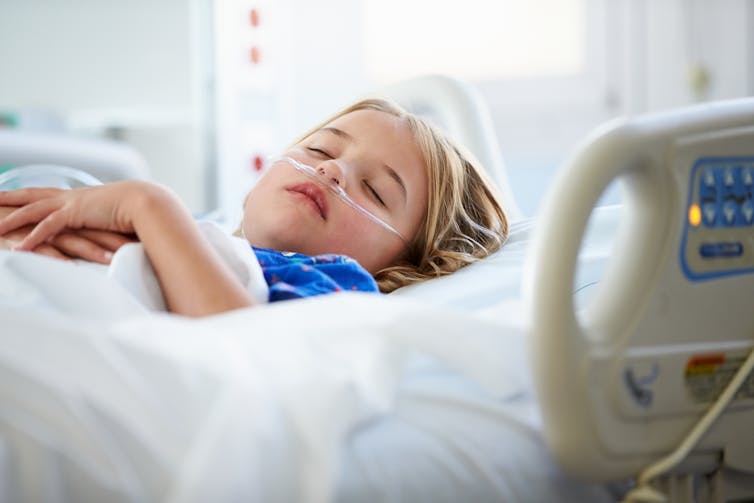 There’s about one diagnosis of Kawasaki disease in Australia every day.
Shutterstock
There’s about one diagnosis of Kawasaki disease in Australia every day.
Shutterstock
The most serious complication of Kawasaki disease is damage to the coronary arteries, which in rare cases may be life-threatening. Timely treatment with a blood product containing purified immune proteins, called intravenous immunoglobulin (IVIG), reduces the risk of this complication from 25% to 5%.
Rarely, children with Kawasaki disease can present critically unwell with shock (low blood pressure) due to impaired heart muscle function – a serious condition called Kawasaki shock syndrome.
Kawasaki shock syndrome can resemble severe infection or toxic shock syndrome, a massive inflammatory response to toxins produced by certain bacteria. Toxic shock syndrome is also treated with IVIG, along with antibiotics.
While Kawasaki disease is generally an acute inflammatory disease and rarely recurs, patients who sustain more serious coronary artery damage may carry this with them through their lives. This may mean they have to take medications and are at higher risk of events like heart attacks.
Read more: Toxic shock syndrome is rare. Be vigilant but not alarmed
So what does Kawasaki disease have to do with COVID-19?
Recently reported clusters of children with an illness resembling Kawasaki shock syndrome have emerged from the UK and other European countries.
Some of these children diagnosed with Kawasaki disease are testing positive for SARS-CoV-2, leading clinicians to consider a link between coronavirus and Kawasaki disease or Kawasaki shock syndrome.
Paediatricians have been looking for the cause of Kawasaki disease for more than 50 years. Many features of Kawasaki disease point to one or more infectious triggers; suggested causes have included common bacteria, viruses, fungi, and even carpet shampoo.
And this isn’t the first time Kawasaki disease has been linked to a coronavirus. In 2005, researchers from Yale University isolated a novel coronavirus (New Haven coronavirus, HCoV-NH) from eight out of 11 children with Kawasaki disease. But these findings couldn’t be replicated in other groups of children with Kawasaki disease.
Read more: 8 tips on what to tell your kids about coronavirus
However tempting it might be to conclude COVID-19 may trigger Kawasaki disease, we should be cautious. There are as yet few details on the cases and not all children had positive tests for SARS-CoV-2 – nor all the features of Kawasaki shock syndrome. Many children are also older than is typical of Kawasaki disease.
Further, both Kawasaki disease and COVID-19 cause illness via excessive inflammation – particularly of blood vessels. And both diseases can progress to a state of overwhelming whole-body inflammation sometimes called a cytokine storm. So it might be difficult to differentiate one disease from the other in their most severe forms.
Another possible explanation could be COVID-19 infection led to bacterial infection which then caused features similar to those of Kawasaki disease or toxic shock syndrome. (Bacterial infections may occur if a viral infection impairs the body’s defences against other infections.)
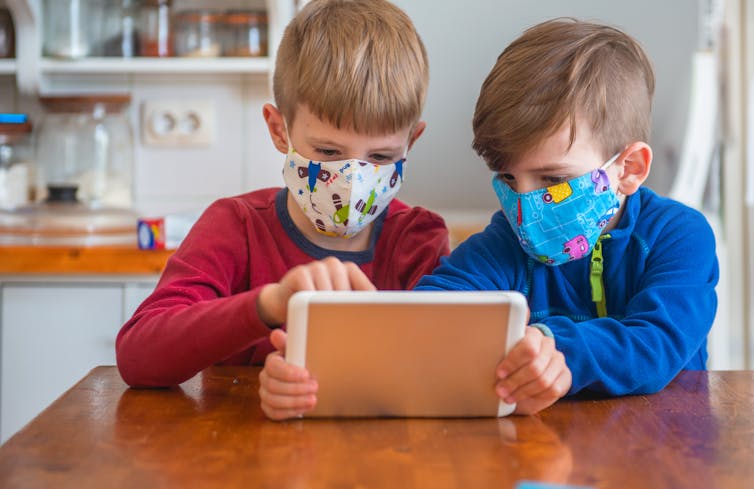 For the most part, children have escaped the more serious health consequences of coronavirus.
Shutterstock
For the most part, children have escaped the more serious health consequences of coronavirus.
Shutterstock
Should we be worried?
SARS-CoV-2 clearly hasn’t followed the textbook on how a respiratory virus “should” behave. Unlike other respiratory viruses (such as influenza) young children generally appear to have mild or no symptoms. Severe COVID-19 in children does happen, but is extremely rare.
Similarly, Kawasaki disease is uncommon – and toxic shock syndrome and Kawasaki shock syndrome even rarer still.
We may see cases of Kawasaki disease or Kawasaki shock syndrome linked to COVID-19 in Australia, but probably only a few.
Read more: How are the most serious COVID-19 cases treated, and does the coronavirus cause lasting damage?
Parents should be reassured COVID-19 is generally very mild in children. But it’s important if your child has features of serious illness you should come to hospital immediately – pandemic or no pandemic.
Clinicians should be vigilant for cases of this possible new association. As more information emerges, we’ll develop a clearer picture of whether and how SARS-CoV-2 might relate to Kawasaki disease. At present it remains an intriguing but unproven association.
Authors: David Burgner, Clinician and Scientist, Murdoch Children's Research Institute


















