

how coronavirus is reshaping how we see ourselves and the world around us
- Written by: Ben Walker, Lecturer (Management), Te Herenga Waka — Victoria University of Wellington
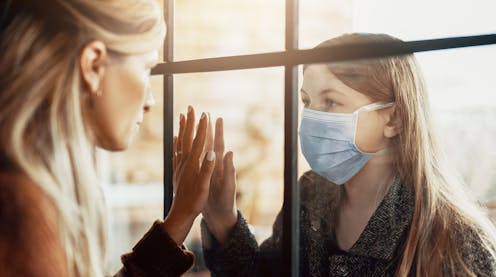
The COVID-19 pandemic is a massive public health and economic crisis, but it is also reshaping how we see ourselves and the social world around us.
As borders have tightened around most countries, we may see further surges in nationalist attitudes and political regimes. And countries’ ongoing efforts to limit the spread of infection could mean that people with immunity gain privileged access to things like insurance, work, travel and leisure.
At worst, COVID-19 may carve new (and deepen existing) social divides and inequalities. At best, it could fast-track us to a better world – one where, for instance, workers’ pay and employment conditions better reflect their contribution to society.
This makes it imperative that we think critically about the identity changes induced by COVID-19, and consider their social, political and ethical ramifications.
Mapping out identity
When it comes to defining our identity and figuring out our place in the world, we all draw on groups and categories that our culture and society deems most significant.
In this way, we build an “identity map”, which generally evolves slowly in response to gradual shifts in society. But COVID-19 is transforming many parts of our map at pace, while also forcing us to reckon with aspects of our identities that have always been with us.
Debates about locking down versus reopening countries have thrust political identities centre stage, especially in already politically divided nations such as the United States. New Zealand Prime Minister Jacinda Ardern has argued that pitting the economy against saving lives is a “false dichotomy”, yet certain commentators continue to do just that.
The crisis has also reawakened us to our national identities. The idea of “global citizenship” has gained popularity in recent decades, but COVID-19 highlights its limits, putting us all in our geopolitical places.
This year’s Olympic Games may have been postponed, but another competition of national identities is playing out online as countries’ coronavirus “curves” are compared in real time.
Tight border restrictions will likely remain for a significant time, making deeper reflection on our national identities inevitable. Considering the identity politics already associated with place and ethnicity, as evident in Brexit and the US election, the effects of COVID-19 bear careful consideration.
Read more: Reclaiming the streets? We all can have a say in the 'new normal' after coronavirus
Charting new territories
The pandemic is also putting new forms of identity on the map. In New Zealand, after five weeks in lockdown, the notion of “essential work” has become part of everyday language. As a result, workers previously classed as low skill (cleaners, supermarket workers, bus drivers) and subject to poor pay and working conditions, have been recast as heroic.
While the rest of us stay home, essential workers head to their jobs each day knowing they are at higher risk of infection, abuse and even death.
Essential work is both important and perilous, and its emergence as a new identity source presents politicians and industry leaders with an opportunity to make long-overdue improvements to pay and working conditions.
Immunity to COVID-19 also looms as a crucial identity issue. Those who develop immunity naturally (through infection and recovery) or attain it through vaccination may end up leading different lifestyles to those who don’t.
The idea that a person’s immunity status would be part of their identity would have been unthinkable a few months ago, but it is now a real possibility. The World Health Organization has cautioned against the introduction of “immunity passports” on medical grounds, but the idea of immunity-as-identity also raises tricky political, legal and ethical questions.
How can immunity be proven in a way that mitigates the risk of immunity forgery? Is there not an inherent contradiction in publicly promoting avoidance of the virus (via social distancing) while simultaneously conferring advantages (the ability to work, travel and socialise) on those exposed to it? How might old identities, such as nationality and social class, bear on the distribution of immunity on a global scale?
The COVID-19 pandemic will continue to redraw our maps of identity in unprecedented ways, leading us into unfamiliar social terrain. As it does, it is incumbent on us all to be thoughtful about these changes and alert to their consequences.
Authors: Ben Walker, Lecturer (Management), Te Herenga Waka — Victoria University of Wellington


















