

IVF is changing now clinics have reopened. Here's what to expect during the coronavirus pandemic
- Written by: Karin Hammarberg, Senior Research Fellow, Global and Women's Health, School of Public Health & Preventive Medicine, Monash University
IVF clinics are now open after a temporary closure due to the coronavirus pandemic. But in some states clinics are not yet operating at full capacity. You will also see some changes to your care.
This is what we know so far.
Read more: Good news on elective surgery, but dire warning on the economy
How events unfolded
In late March, non-urgent elective surgeries, including IVF services, were postponed. The idea was to avoid the spread of coronavirus, help the health system prepare for the expected influx of coronavirus patients, and to preserve stocks of personal protective equipment (PPE) such as masks and gowns.
Many people who were getting ready to start IVF or who were in the middle of a treatment cycle were distressed.
Some weeks later, as the famous curve had flattened, Prime Minister Scott Morrison announced IVF clinics could reopen:
[…] subject of course to capacity and other constraints that may exist in each jurisdiction.
Different rules in different states
Different states and territories implemented this announcement in different ways. In some states, IVF clinics have resumed normal services. But in others, there are restrictions on the number of egg collection procedures that can take place because they require hospital admission.
This means the number of women who can start treatment needing egg collection is limited and clinics might therefore prioritise women with the most urgent needs.
Read more: Considering using IVF to have a baby? Here's what you need to know
However, women who want to have frozen embryos transferred should be able to have that done irrespective of where they live because it doesn’t involve a surgical procedure. It’s a simple procedure, similar to a pap smear, in which a thawed embryo is inserted into the woman’s uterus.
So existing and new patients should contact their clinic or treating specialist for advice on when their treatment can start.
Here’s how your care might change
Clinics are changing the way they operate in coming months to manage the risk of coronavirus transmission.
This is not only to protect patients and staff, but to limit the use of PPE, which might be needed elsewhere in the health system.
Clinics are minimising physical contact between patients and staff. So instead of meeting face-to-face, consultations with doctors, nurses, counsellors and accounting staff will be via phone or video conferencing wherever possible.
There will be fewer visits to the clinic and fewer people in the clinic (including in the waiting room) when patients attend. Appointments will be staggered so social distancing can be maintained.
To minimise the number of people in the clinic, some clinics won’t allow partners or other people to accompany women to appointments.
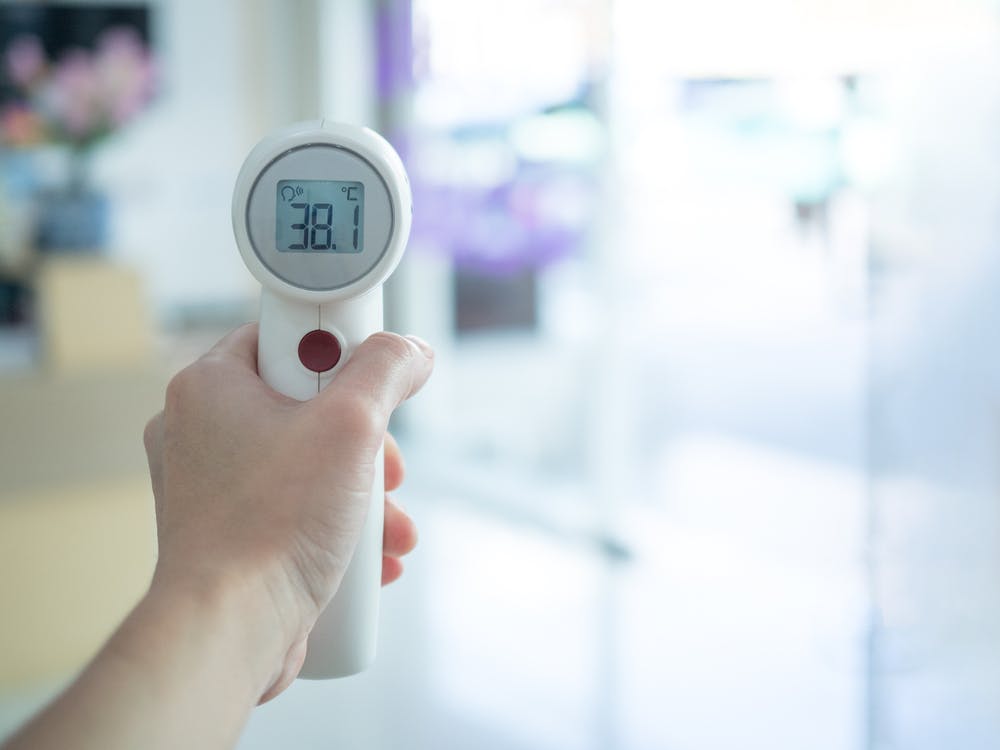 You will likely have your temperature checked before entering the clinic.
Shutterstock
You will likely have your temperature checked before entering the clinic.
Shutterstock
If patients do need to attend the clinic, they will be asked about possible coronavirus symptoms (fever, cough, shortness of breath, sore throat), whether they’ve had close contact with someone who has tested positive for COVID-19, and have their temperature checked.
The federal government’s advice on PPE in hospitals is that “it’s business as usual” and “additional COVID-19 specific precautions are not required” for procedures on patients who are not suspected of having COVID-19.
Is it safe to have IVF now?
People might worry about the risks of COVID-19 and whether it’s safe to embark on pregnancy right now.
Because COVID-19 has only been around for a short time, it’s hard to know how it might affect people’s fertility, and the health of pregnant women and their babies.
However, based on the latest evidence:
fever associated with COVID-19 can affect sperm quality for about three months, so may temporarily reduce fertility
pregnant women are not more likely to get infected by the coronavirus than other women, nor are they at higher risk for severe illness
women who become seriously ill with COVID-19 in late pregnancy are more likely than other pregnant women to deliver their babies prematurely
after birth, transmission of COVID-19 from mother to child has been reported, but there has been no indication these infants have any significant problems.
A recent study of 43 pregnant women in the USA who had been admitted to hospital and tested positive for COVID-19 found nearly nine out of 10 had mild disease.
Read more: Coronavirus while pregnant or giving birth: here's what you need to know
Ready to start IVF?
For people who have been anxiously waiting to start IVF the good news is clinics have now reopened, albeit with reduced capacity in some states.
The bad news is that for some, the financial consequences of COVID-19 might mean they cannot afford IVF.
If you decide to postpone IVF for financial or other reasons, getting into shape will increase your chance of having a healthy baby when the time is right.
Read more: Should I drop my private health insurance during the pandemic?
Authors: Karin Hammarberg, Senior Research Fellow, Global and Women's Health, School of Public Health & Preventive Medicine, Monash University


















