Museums are losing millions every week but they are already working hard to preserve coronavirus artefacts
- Written by: Anna M. Kotarba-Morley, Lecturer, Archaeology, Flinders University
The COVID-19 pandemic has no borders and has caused the deaths of hundreds of thousands of citizens from countries across the globe. But this outbreak is not just having an effect on the societies of today, it is also impacting our past.
Cultural resources and heritage assets – from sites and monuments, historic gardens and parks, museums and galleries, to the intangible lifeways of traditional culture bearers – require ongoing safeguarding and maintenance in an overstretched world increasingly prone to major crises.
Meanwhile, the heritage sector is already working hard to preserve the COVID-19 moment, predicting that future generations will need documentary evidence, photographic archives and artefacts to help them understand this period of history.
Closed to visitors
The severity of the pandemic, and the infection control responses that followed, has caused great uncertainties and potential long-term knock-on effects within the sector, especially for smaller and medium-sized institutions and businesses.
A survey published by the Network of European Museum Organisations (NEMO) and communications within organisations such as the International Committee for Archaeological Heritage Management (ICAHM) show that the majority of European museums are closed, incurring significant losses of income. By the beginning of April, 650 museums from 41 countries had responded to the NEMO survey, reporting 92% of them were closed.
Large museums such as the Kunsthistorisches Museum in Vienna and the Rijksmuseum and Stedelijk Museum in Amsterdam are losing €100,000-€600,000 (A$168,700-A$1,012,000) per week. Only about 70% of staff are currently being retained on average at most of the institutions.
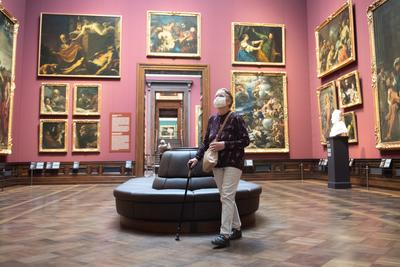
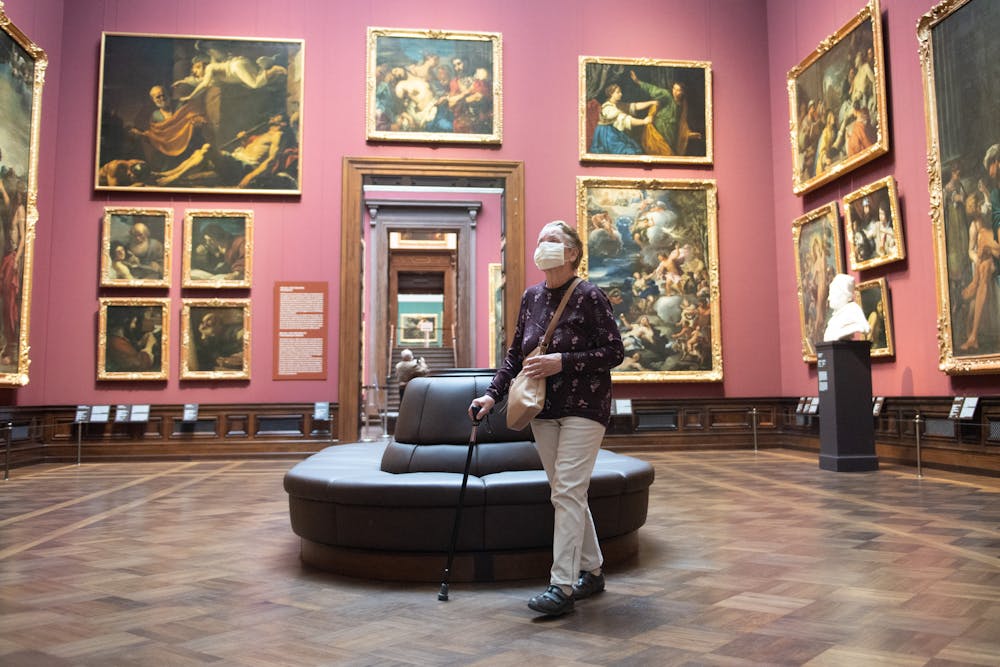 German museums have reopened but must balance safety with preservation of precious artefacts. Here, a masked visitor to the Old Masters Picture Gallery in Saxon, Dresden.
Sebastian Kahnert/dpa-Zentralbild
German museums have reopened but must balance safety with preservation of precious artefacts. Here, a masked visitor to the Old Masters Picture Gallery in Saxon, Dresden.
Sebastian Kahnert/dpa-Zentralbild
Museums (both private and national) located in tourist areas have privately reported initial losses of 75-80% income based on the Heritage Sector Briefing to the UK government. Reports are also emerging of philanthropic income fall of 80-90% by heritage charities with many heading towards insolvency within weeks.
Cambodia’s Angkor Wat heritage site has lost 99.5% of its income in April compared to the same time last year.
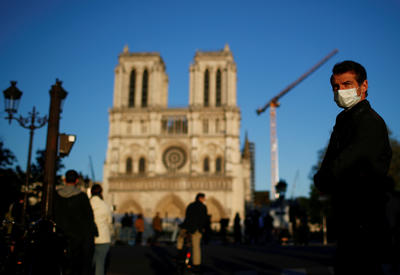
Meanwhile, restorations to the cathedral of Notre-Dame de Paris came to an abrupt halt due to coronavirus just prior to the first anniversary of the fierce fire that damaged it. Builders have since returned to the site.
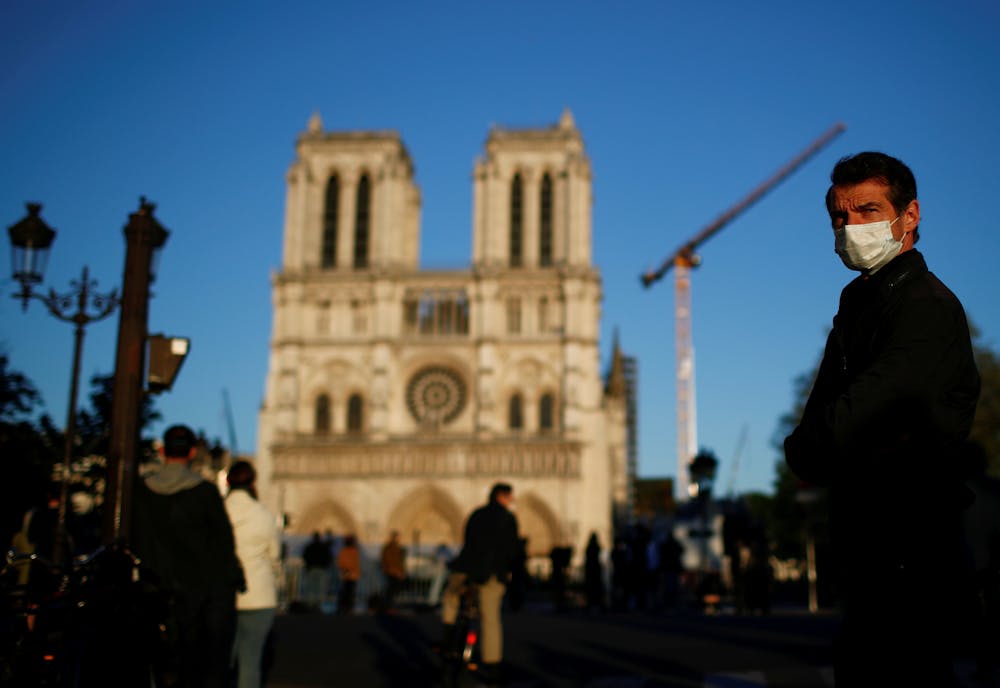 COVID-19 shutdowns pressed pause on the restoration of Notre Dame in Paris.
REUTERS/Gonzalo Fuentes
COVID-19 shutdowns pressed pause on the restoration of Notre Dame in Paris.
REUTERS/Gonzalo Fuentes
The situation is especially dire for culture bearers within remote and isolated indigenous communities still reeling from other catastrophes, such as the disastrous fires in Australia and the Amazon. Without means of social distancing these communities are at much higher risk of being infected and in turn their cultural custodianship affected.
Read more: Coronavirus: as culture moves online, regional organisations need help bridging the digital divide
The right to culture
It is interesting to think about how this crisis will reshape visitor experience in the future.
The NEMO survey reports that more than 60% of the museums have increased their online presence since they were closed due to social distancing measures, but only 13.4% have increased their budget for online activities. We have yet to see more data about online traffic in virtual museums and tours, but as it stands it is certainly showing signs of significant increase.
As highlighted in the preamble of the 2003 UNESCO Declaration:
cultural heritage is an important component of cultural identity and of social cohesion, so that its intentional destruction may have adverse consequences on human dignity and human rights.
The human right of access to and enjoyment of cultural heritage is guaranteed by international law, emphasised in the Human Rights Council in its recent Resolution 33/20 (2016) that notes:
the destruction of or damage to cultural heritage may have a detrimental and irreversible impact on the enjoyment of cultural rights.
Article 27 of the Universal Declaration of Human Rights states that:
everyone has the right freely to participate in the cultural life of the community, to enjoy the arts and to share in scientific advancement and its benefits.
Read more: Protecting heritage is a human right
In the future, generations will need the means to understand how the coronavirus pandemic affected our world, just as they can now reflect on the Spanish Flu or the Black Death.
Preserving a pandemic
Work is underway to preserve this legacy with organisations such as Historic England collecting “lockdown moments in living memories” through sourcing photographs from the public for their archive. Twitter account @Viral_Archive run by a number of academic archaeologists is following in a same vane with interesting theme of #VirtualShadows.
In the United States, the Smithsonian’s National Museum of American History has assembled a dedicated COVID-19 collection task force. They are already collecting objects including personal protection equipment such as N95 and homemade cloth masks, empty boxes (to show scarcity), and patients’ illustrations.
The National Museum of Australia has invited Australians to share their “experiences, stories, reflections and images of the COVID-19 pandemic” so curators can enhance the “national conversation about an event which is already a defining moment in our nation’s history”. The State Library of New South Wales is collecting images of life in isolation to “help tell this story to future generations”.
Citizen science is a great way to engage public and although such work is labour-intensive it can lead to more online traffic and potentially fill in financial deficits by enticing visitors back to the sites.
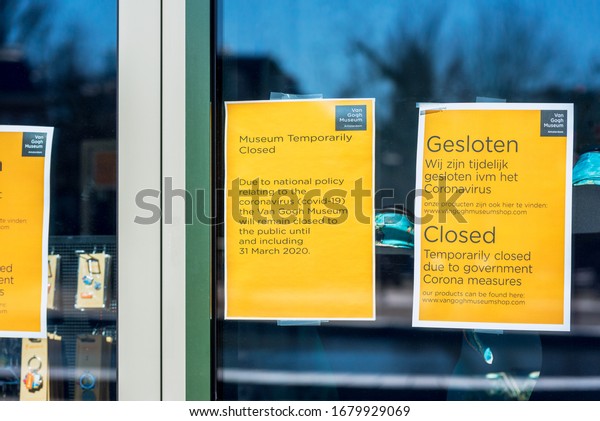
 The closed Van Gogh Museum in Amsterdam, Netherlands on March 22.
Shutterstock
The closed Van Gogh Museum in Amsterdam, Netherlands on March 22.
Shutterstock
Priorities here
The timing of the COVID-19 pandemic – occurring in the immediate aftermath of severe draught, catastrophic fire season and then floods, with inadequate intervening time for maintenance and conservation efforts – presents new challenges.
The federal government reports that in the financial year 2018-19, Australia generated A$60.8 billion in direct tourism gross domestic product (GDP). This represents a growth of 3.5% over the previous year – faster than the national GDP growth. Tourism directly employed 666,000 Australians making up 5% of Australia’s workforce. Museums and heritage sites are a significant pillar to tourism income and employment.
Even though the government assures us “heritage is all the things that make up Australia’s identity – our spirit and ingenuity, our historic buildings, and our unique, living landscapes” its placement within the Department of Agriculture, Water and Environment’s portfolio shows lack of prioritisation of the sector.
Given the struggles we are already seeing in the arts and culture sector, which has been recently moved to the portfolio of the Department of Infrastructure, Transport, Regional Development and Communications means that the future of our heritage (and our past) is far from certain.
Authors: Anna M. Kotarba-Morley, Lecturer, Archaeology, Flinders University