

what games can teach us during the coronavirus pandemic
- Written by: Heide Lukosch, Associate Professor, University of Canterbury
Most of us don’t take games too seriously. They are a way to unwind, or these days to maybe escape from the world of COVID-19 for a little while.
But games are also simulations in which real people play, make decisions and interact. This makes games powerful tools for learning and understanding complex situations, such as how diseases spread and even how to treat them.
The ‘corrupted blood’ incident
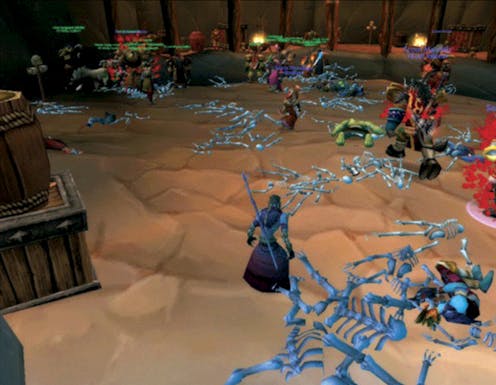
One of the first incidents that showed epidemiologists and health researchers that games could give them insight into the spread of infectious disease occurred in 2005. A bug in World of Warcraft unleashed an “infectious disease” among the game’s large community of online players.
It started with a new raid encounter in the game designed to allowed a small team of players to fight an enemy that could “infect” characters with a curse called “corrupted blood”. The curse would reduce their health over time, and spread from player to player in close proximity.
Normally, when the character either won or lost the battle, the curse would be lifted as they left the zone in which it took place. But a bug allowed players’ pets and minions to carry the curse into the game’s wider virtual world.
Suddenly the curse was spreading across nearly 4 million players, and the people who ran the game had little control. Is this starting to sound eerily familiar?
Epidemiologists had used models and simulations in their work before, but the World of Warcraft incident was unique because each avatar in the simulation was controlled by a human player. What’s more, players in the game exhibited the same behaviours that people do in response to a real-life pandemic.
Some players followed the advice of the publisher of the game to avoid infected areas. Others rebelled, some didn’t care, and some camped out in remote areas away from everyone else. These behaviours were studied in detail by Rutgers University epidemiologists Nina Fefferman and Eric Lofgren, who then published a paper on the potential using games as learning tools.
Games as simulations
There are also many other ways in which we can use games as simulations to develop our understanding of global health.
Entertainment games such as Pandemic very directly refer to what we are all experiencing right now. In this game, players collaborate in order to fight a virus –- and in its simplicity, it can illustrate why social cohesion is so vital in our global fight against the disease yet is also very difficult. The game teaches communication, collaboration, and decision-making skills in the context of crisis.
Read more: Playing Pandemic - the hit board game about the very thing we're trying to avoid
Modelling and simulation – the use of formal, mathematical and often computerised calculations – support policy makers and world leaders to make the right decisions. These models serve as tools for critical choices such as closing borders and national lockdowns. It takes huge amounts of trustworthy data and deep expertise to develop and interpret such models.
A game like Pandemic, or World of Warcraft, lets players engage in simplified versions of such crisis situations and can offer insight into human behaviour in these conditions. The simplified yet realistic scenarios allow for interaction, and learning by doing, without the risk of real-world consequences.
Games as laboratories
Games can also help us to develop new medical solutions. In Foldit, players can individually interact with protein folding, an important process in molecular biology. It is difficult to simulate with computers, but it plays a role in drug discovery and understanding certain types of diseases. The game uses a large number of individual players and the highest scoring solutions are reviewed by scientists as potential new solutions.
The game takes a distributed computational approach similar to the SETI@Home project that let people lend their computers to the search for extraterrestrial intelligence. The twist is that each node is – again – a human mind considering solutions, and this model outperforms computational algorithms attempting the same task.
In one example, players were able to find an elusive HIV enzyme in just 3 weeks. The game is now being applied directly to searching for solutions to the coronavirus.
Games are also helping researchers better understand the spread of misinformation about COVID-19, in a project of the American University Game Lab. (One of the authors of this article is affiliated with the Game Lab.)
Their game, Factitious, is a simple game that asks players to read a small article and then decide if it is real or fake news, with points awarded for each correct response. With over a million plays, the recorded dataset offers key insights into how players view and categorise information.
The new pandemic edition of the game is already informing us of dangerous trends in rumours and misleading information at this difficult time.
Read more: Gaming fosters social connection at a time of physical distance
Finding the best way forward
Games may offer some much-needed escape and social connection in this time of physical distancing, but they are also incredible tools for learning more about the real world. In areas such as global health, they can act as very human simulations that help us plan for incredible situations and test multiple competing ideas to come up with the best way forward.
Authors: Heide Lukosch, Associate Professor, University of Canterbury


















