

New Zealand’s ‘catch up, patch up’ health budget misses the chance for a national overhaul
- Written by: Robin Gauld, Pro-Vice-Chancellor and Dean, University of Otago
New Zealand’s budget brings a significant funding injection for health and disability services, amounting to around a 9% increase. It is the most substantial increase for the health sector in some time, and in this regard, aligns with the government’s 2019 well-being budget.
Overall, the budget provides an additional NZ$4.3 billion over the next four years. Most of that new investment is a welcome NZ$3.92 billion for the country’s 20 district health boards, many of which have been in perpetual deficit and haven’t received enough funding to cater for the demand on regional hospitals and community health care.
In this sense, the budget provides a long overdue catch up for the health sector, and it patches up the backlog COVID-19 created for elective medical procedures.
But unfortunately it misses the opportunity to make bigger, more systemic changes. The COVID-19 pandemic has shown the current regional approach to health care isn’t good enough to deal with a nationwide threat. So a more visionary budget would have overhauled the health system by supplementing district health boards with a central, nationwide focus.
Read more: COVID-19 has now reached New Zealand. How prepared is it to deal with a pandemic?
Key budget health initiatives
Each district health board is a local health system responsible for planning and funding services within a geographic area, including public hospitals, disability support services, public health and primary care.
The NZ$3.92 billion boost for district health boards is intended to “improve financial sustainability and clinical performance” as well as provide for population ageing and growth, wage increases and inflation.
NZ$282.5 million over the next three years is to provide around 153,000 elective and planned surgeries, radiology scans and specialist appointments that have been delayed by the COVID-19 lockdown. It will also cater for people on waiting lists – a perpetual problem.
NZ$125 million over four years is for other COVID-19 related cost increases – presumably personal protective equipment and additional testing, treatment and contact-tracing. And there’s an additional almost NZ$850 million for disability support to relieve growing pressure on the sector and improve access to services such as home-based care.
Some of the finer detail is yet to be worked out. Firstly, the finance and health ministers said district health boards will be held to account for their performance with the new spending. This means those with deficits will be expected to improve their financial standing. This implies they will be under close government monitoring.
Clinical services will similarly be expected to show improvements in the number of procedures and patients coming through. In this regard, the budget provides more funds for more of the same. Hopefully this will bring improvements for the thousands of patients who languish on waiting lists or miss out on treatment because their condition has not yet deteriorated enough to be treated in the public sector.
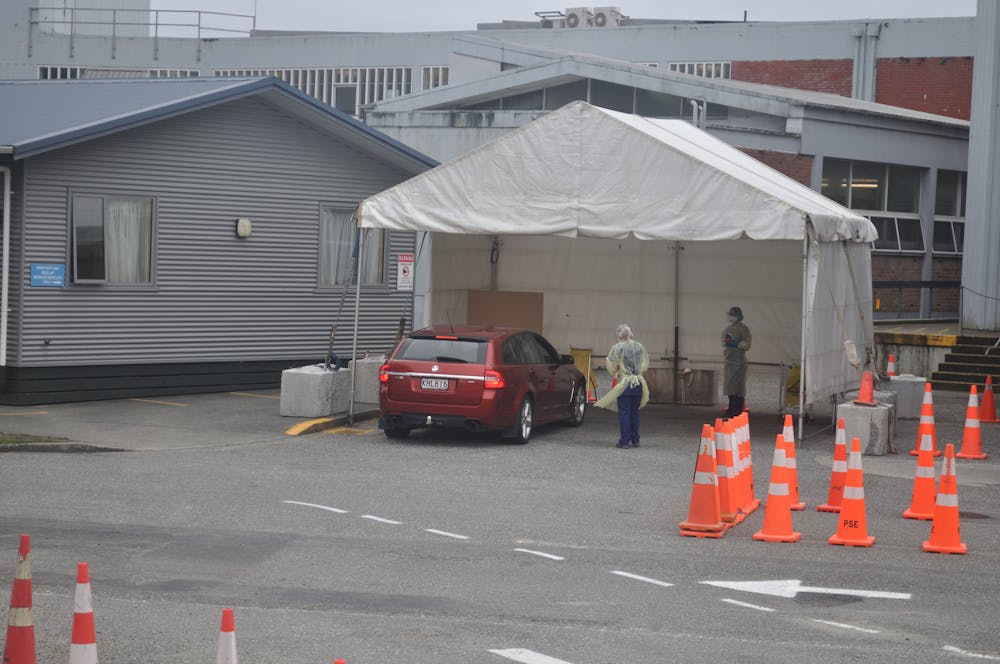 A Covid 19 testing station at Greymouth Base Hospital during New Zealand’s strict level 4 lockdown in April 2020.
Lakeview Images/Shutterstock
A Covid 19 testing station at Greymouth Base Hospital during New Zealand’s strict level 4 lockdown in April 2020.
Lakeview Images/Shutterstock
COVID-19 and what still needs to be fixed
The COVID-19 pandemic has highlighted shortcomings in New Zealand’s health system, some of which are yet to be addressed.
Initially, medical staff in each region worked to different protocols for COVID-19 contact tracing and testing, and it was difficult to combine the data in a central database. While this has now been fixed as part of the country’s pandemic response, the budget doesn’t tackle any of these deeper issues.
The budget could have been an opportunity to forge ahead with much needed health system changes. I’ve suggested elsewhere that district health boards should be abolished and replaced by 20 hospital managers (preferably qualified health professionals) who work as a team. They would run regional hospitals, but be accountable to the Ministry of Health.
Their job should be working collaboratively and strategically, taking a national approach on any issues, including identifying and disseminating best practice across the sector. At the moment, there is no way of achieving this as the district health boards largely work in silos.
Read more: Why New Zealand needs to continue decisive action to contain coronavirus
Funds should be allocated through a local alliance between primary care practitioners, hospital managers and other providers. This would increase capacity to fund innovations in care, such as investment in virtual consultation technology, which GPs have had to use during the COVID-19 lockdown. The budget was quiet on funding to allow GPs to work in more flexible ways – but the pandemic has highlighted considerable cracks and needs here.
Any such changes should be guided by two initiatives, at relatively low cost. First, investment in “operational excellence”, which research shows leads to higher overall performance. For health, this means better financial performance, quality of care and patient outcomes.
At the moment we continue to invest in a sector that undervalues management development. For this reason, we can expect future budgets to replicate the “catch up, patch up” approach.
Second, we need a national clinical leadership initiative. As with the first point, we have long undervalued the potential for our health professionals to provide leadership.
Studies show that medical services and hospitals led by health professionals perform better. There have been failed attempts in New Zealand to develop a leadership initiative, but it is time to revisit this and train health professionals to be excellent, both as clinicians and managers.
Stay in touch with The Conversation’s coverage from New Zealand experts by signing up for our weekly NZ newsletter – delivered to you each Wednesday.
Authors: Robin Gauld, Pro-Vice-Chancellor and Dean, University of Otago


















