

Quality of life in high-density apartments varies. Here are 6 ways to improve it
- Written by: Hazel Easthope, Scientia Associate Professor, City Futures Research Centre, UNSW
We’re building a lot of apartments in Australia. High-density precincts are being developed across our major cities. But these buildings and neighbourhoods are often not designed and managed in ways that meet the needs of lower-income residents.
Our research released today identifies five key problem areas. We also propose a broad range of solutions, including six outlined in this article. Some are easy to apply and others will require more effort and funding.
Read more: This is why apartment living is different for the poor
Business as usual, however, will result in increasing social and economic costs. This is because the proportion of Australians living in apartments, now one in ten, continues to increase. In recent years, we’ve been building bigger apartment complexes and creating more high-density precincts (buildings of four storeys or more).
Apartments house a broad cross-section of the population. However, they are more likely than other dwelling types to house people on lower incomes, especially in Sydney and Melbourne. Over 70% of Australia’s high-density dwellings are in these two cities.
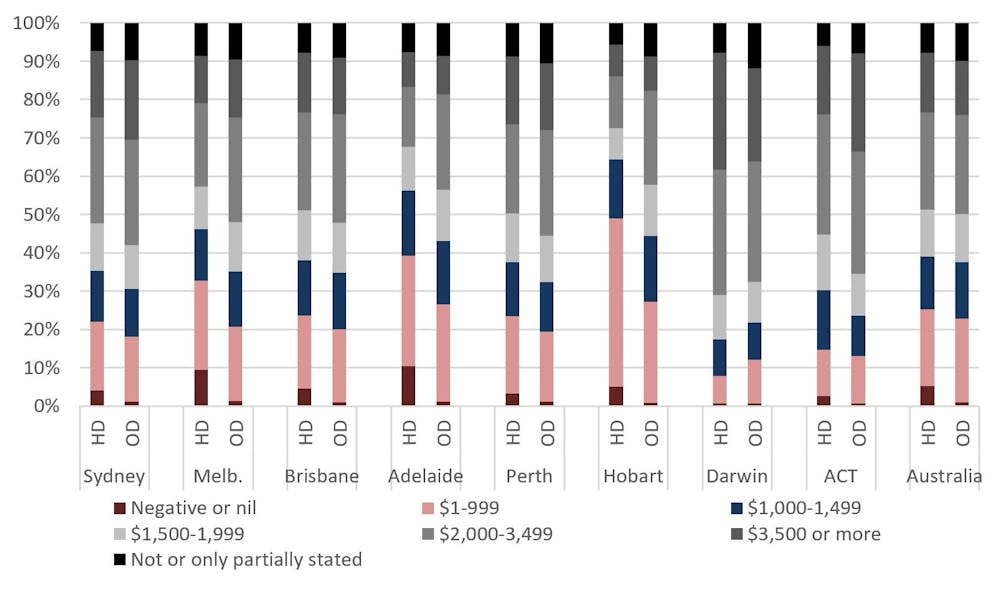 Income distribution of households in high-density (HD) dwellings (4+ storeys) and in all other dwelling types (OD).
Data from ABS Census 2016
Income distribution of households in high-density (HD) dwellings (4+ storeys) and in all other dwelling types (OD).
Data from ABS Census 2016
Lower-income households have less choice about their living situation. This means they’re particularly affected if their building or neighbourhood is poorly designed or managed. It’s especially important, then, for our planning and development processes to consider their needs.
So how can we make sure the apartments and neighbourhoods we’re building meet the needs of lower-income households (the bottom 40% of incomes)?
What are the problem areas?
Our research investigates this issue. It included case studies across four high-density neighbourhoods in Sydney and Melbourne.
These four neighbourhoods house lower-income residents with varying degrees of success. We found notable differences between the outcomes of urban redevelopment that was co-ordinated and redevelopment that was ad hoc.
Residents of Upper Strathfield in Sydney were living next to an empty development site, without the street upgrades or park they’d been told was coming. The development had been delayed, which also delayed the contributions needed to provide this infrastructure. One grandmother we spoke with walks past the site with her grandchildren to catch a train to go to a park in another suburb.
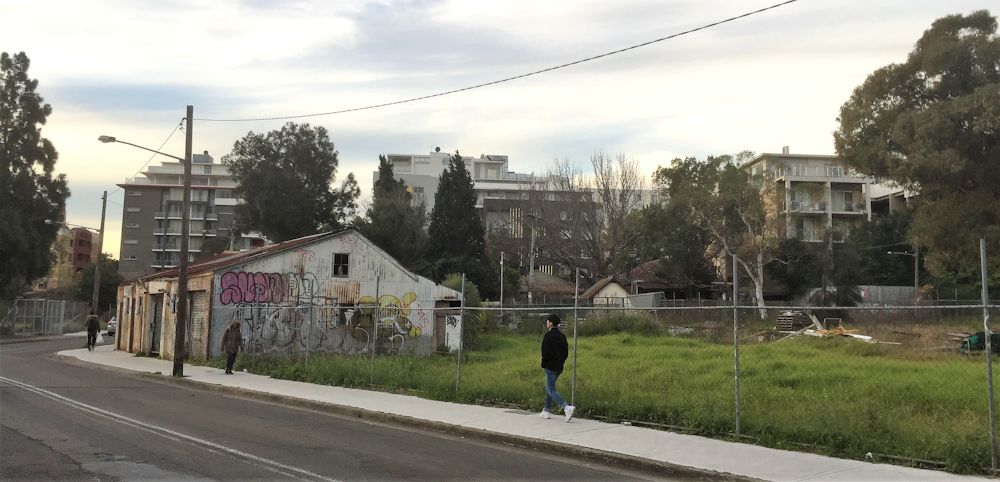 Still waiting for the promised park: the vacant lot in Upper Strathfield.
Gethin Davison, Author provided
Still waiting for the promised park: the vacant lot in Upper Strathfield.
Gethin Davison, Author provided
Read more: 'I need nature, I need space': high-rise families rely on child-friendly neighbourhoods
In the same local government area, Rhodes West has fantastic local parks and a multipurpose community centre. It was designed with community input and funded through negotiated developer contributions.
These neighbourhoods provide a notably different quality of life, even though lower-income residents live in both precincts and both are in the same local government area. This highlights why improved policy responses, applied consistently across cities, are needed.
We identified five main points of tension in delivering high-density buildings and precincts that meet the needs of lower-income residents. These were:
competing incentives between the development and operational phases of a new development, including poor development decisions affecting building operations (such as unnecessarily inflating maintenance costs)
concerns over the boundaries between private buildings and the public domain, including unclear divisions of responsibilities for maintenance between private and public entities, challenges associated with privately owned public spaces, and a lack of street life when street-level shops remain empty
challenges in aligning infrastructure needs and delivery, such as ensuring developer contributions are used effectively to fund the local infrastructure that is actually needed
tensions between the roles of local and state government
difficulties meeting the needs of both current and future residents. In our Melbourne case studies in North and South Carlton, for example, gentrification created new challenges, such as some residents having to travel outside the area to get affordable groceries.
Read more: Why investor-driven urban density is inevitably linked to disadvantage
What are the solutions?
Our AHURI report, Improving Outcomes for Apartment Residents and Neighbourhoods, proposes priorities for policy and practice to help resolve these tensions and guide future high-density development.
Implementing these recommendations will require strong co-ordination by government agencies in partnership with private developers. Ensuring developments are both publicly beneficial and privately profitable is challenging for planning authorities.
More funding for public infrastructure is essential. Lower-income residents rely greatly on services and facilities like community centres, libraries and parks.
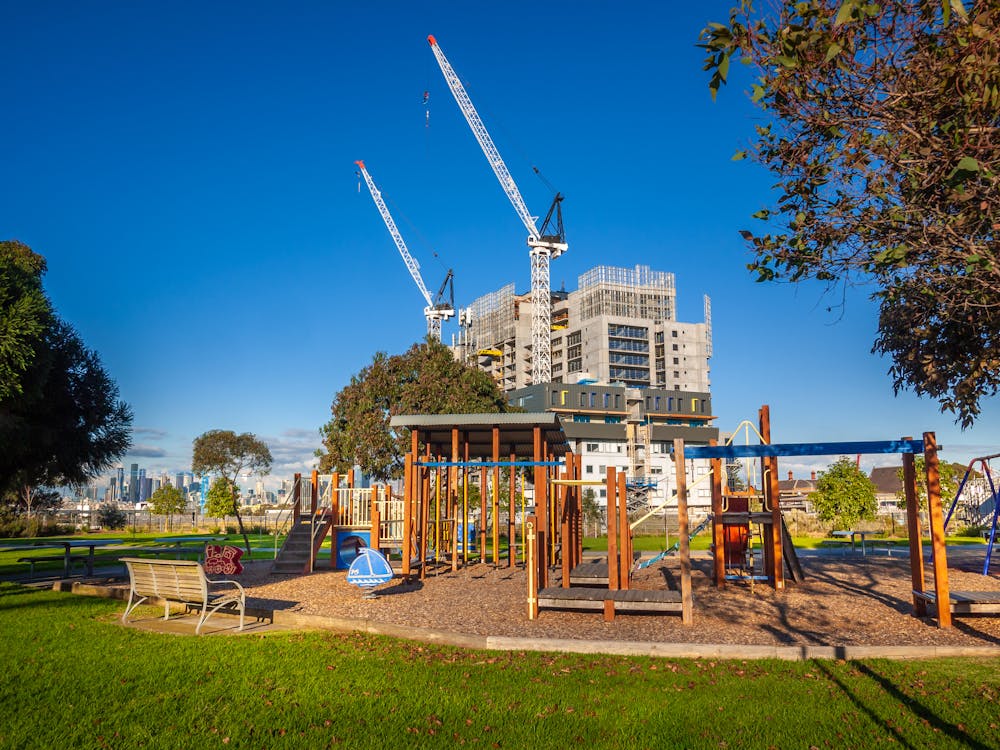 Having a park nearby will greatly improve the quality of life for residents of these apartments in Melbourne.
Shuang Li/Shutterstock
Having a park nearby will greatly improve the quality of life for residents of these apartments in Melbourne.
Shuang Li/Shutterstock
Read more: What's equity got to do with health in a higher-density city?
Relying on development contributions to provide these facilities can be risky. In some case studies we found developer contributions did fund parks and community centres. In others, stalled developments left residents with poor local services.
Some of our proposals are relatively easy to apply. Examples include:
giving residents clear and detailed information about their rights and responsibilities
focusing more on the needs of families and children in the design process
better co-ordinating neighbourhood services.
Others proposals will require significant effort and funding by both government and industry. Examples include:
building more affordable and social housing
hiring dedicated place managers to oversee neighbourhood redevelopments
redesigning how local infrastructure is funded.
Read more: How to turn a housing development into a place where people feel they belong
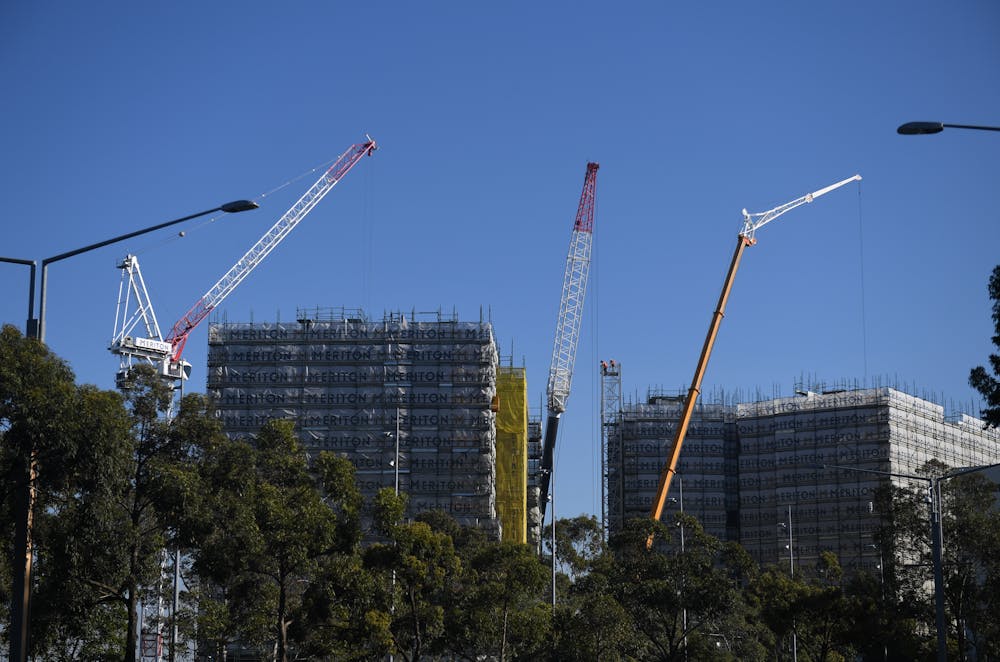 The scale of the shift to high-density apartment living in Australia means not getting developments right creates significant costs.
Brendan Esposito/AAP
The scale of the shift to high-density apartment living in Australia means not getting developments right creates significant costs.
Brendan Esposito/AAP
We need to prioritise these changes to ensure our high-density neighbourhoods meet the needs of all residents, not just the wealthy. If we don’t, there will be social and economic costs.
Apartment living is growing fast, meaning more people will experience the pros and cons of high-density living in coming years. Failure to cater for this shift, and to reduce the inequities lower-income residents face, risks undermining the prosperity and social cohesion of our cities.
Authors: Hazel Easthope, Scientia Associate Professor, City Futures Research Centre, UNSW


















