

A time to embrace the edge spaces that make our neighbourhoods tick
- Written by: Rachel Iampolski, PhD Candidate, Centre for Urban Research RMIT, RMIT University
As we emerge from COVID-19 lockdowns, it is timely to reflect on how the design of our neighbourhoods and the ways we interact with them affect our lived experience.
A clear lesson from the many conversations across fencelines, waves from porches, teddy bears in windows and chalk art on footpaths is the need for our cities to better embrace edge spaces between private property and the public realm.
These edge spaces, such as porches, balconies, front boundaries and footpaths, have been key to maintaining social connectedness amid physical distancing around the world; so much so that this week has been declared an international week dedicated to better activating them.
Read more: Reconnecting after coronavirus – 4 key ways cities can counter anxiety and loneliness
Australian cities and neighbourhoods have rarely embraced edge spaces well. This neglect is to all our detriment: many housing developments lack porches, front yards often seem like an afterthought, and most nature strips fail to live up to their name. As a result, talking to our neighbours can be a rarity.
Re-engaging with ‘living on the edge’
Action to embrace these spaces starts at the community level, through the practice of placemaking. It draws on the work of planners and designers and their understanding of the importance of “living on the edge”.
Typically, we regard our neighbourhoods as being divided between public and private spaces. But as many a front-yard conversation or colourful display on a wall has shown us during the recent lockdown, it’s the spaces of transition that bring us together, even when we are apart.
Compared to other types of urban space, edge spaces can provide more opportunity for people to build a sense of identity and community through creative expression.
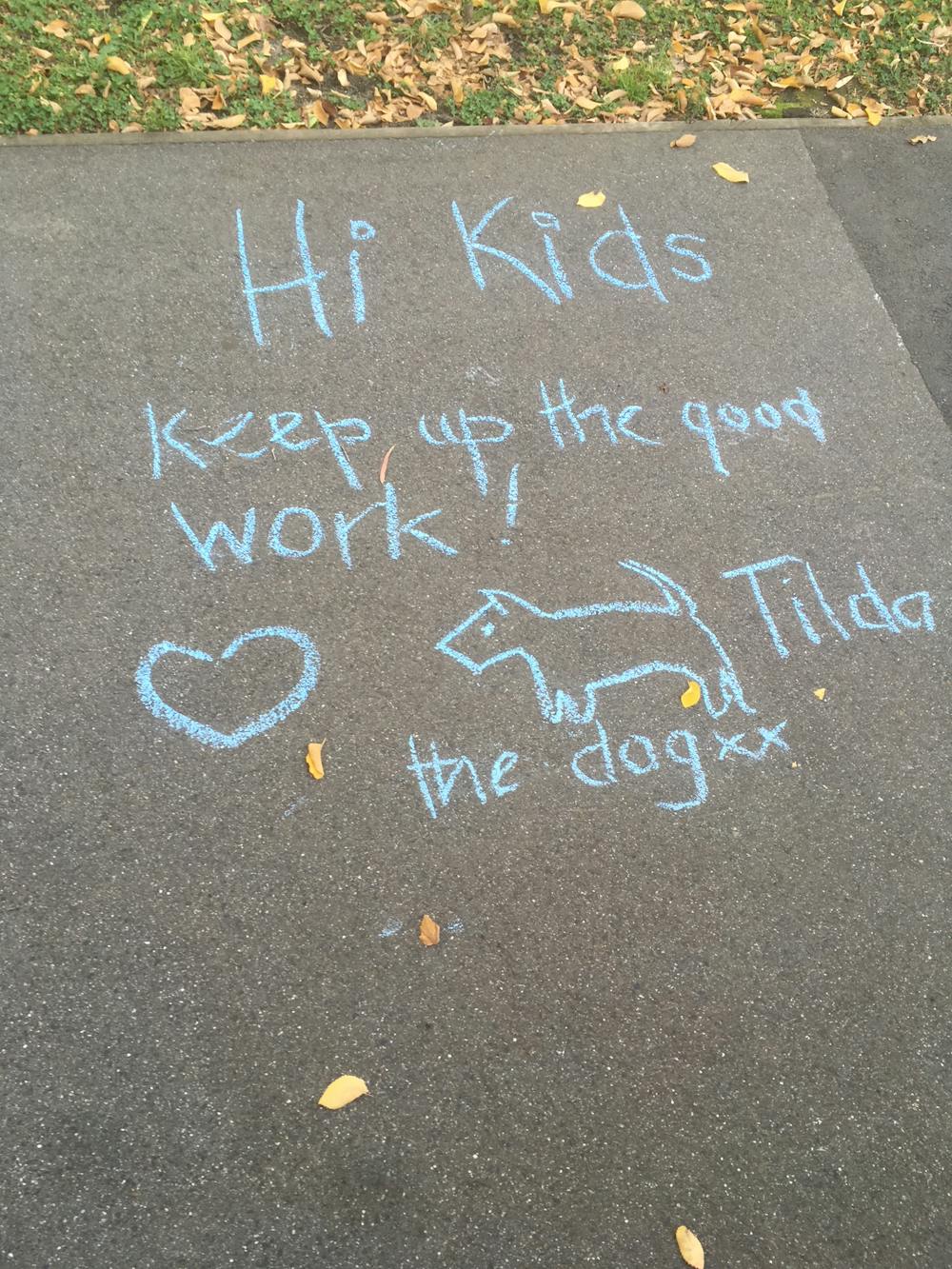 Pedestrians and residents have re-envisaged the footpath as a canvas for chalk and a way to communicate with the street.
Matt Novacevski. Author provided
Pedestrians and residents have re-envisaged the footpath as a canvas for chalk and a way to communicate with the street.
Matt Novacevski. Author provided
Read more: Playing with the 'new normal' of life under coronavirus
Edge spaces are critical to the success of both public and private spaces, as urban designers and theorists like Christopher Alexander and Jan Gehl point out.
Edges that work can be described as “soft edges” or “active edges”. We can see through them and interact across them – they are comparatively porous. There is also life along them: plants, artwork or variations in colours or building materials.
Edges that are cold and unwelcoming, or comparatively “hard”, such as spaces dominated by tall fencing or blank walls, generate feelings of discord, coldness and even perceptions of danger.
Indeed, whole cities and neighbourhoods can succeed and fail at their edges, particularly at street level.
Read more: Contested spaces: living off the edge in a city mall where design fuels conflict
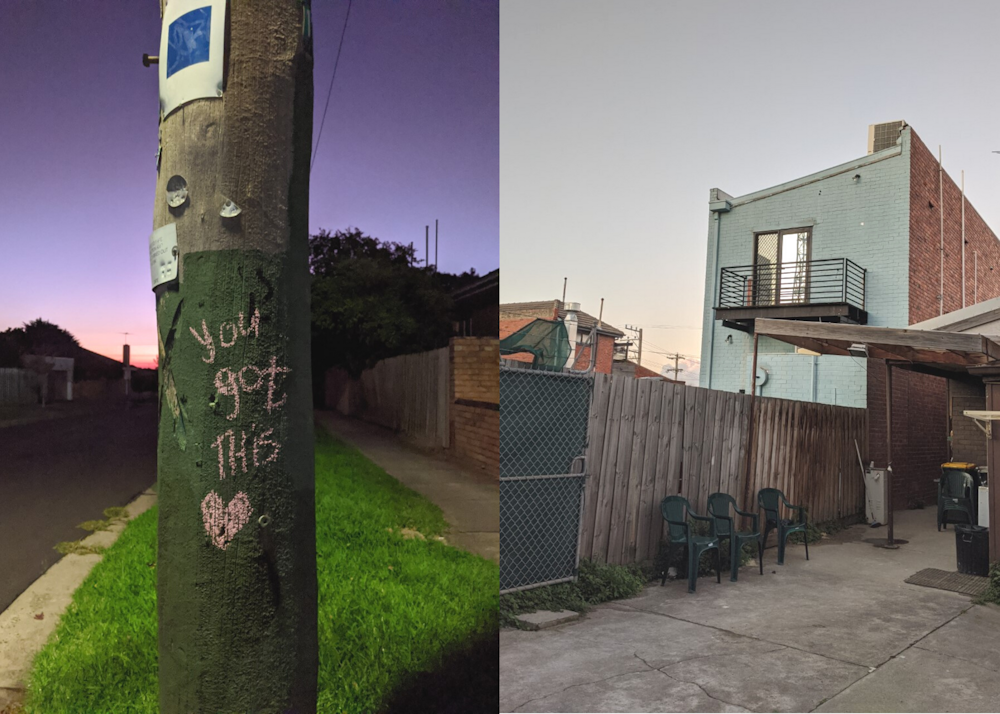 Even seemingly small interventions can turn a bland edge into a space that gives.
Rachel Iampolski, Author provided
Even seemingly small interventions can turn a bland edge into a space that gives.
Rachel Iampolski, Author provided
Reclaiming the edge through placemaking
So, what can we do about it? Well, quite a bit. Over recent weeks, many of us will have enjoyed the whimsy and wonder of chalk art on paths, teddy bears in windows and other warming trends that have lifted our neighbourhoods.
These visible expressions of joy create community in hard times. The edges between public and private space are reclaimed and made welcoming in ways that create conviviality and a sense of shared identity.
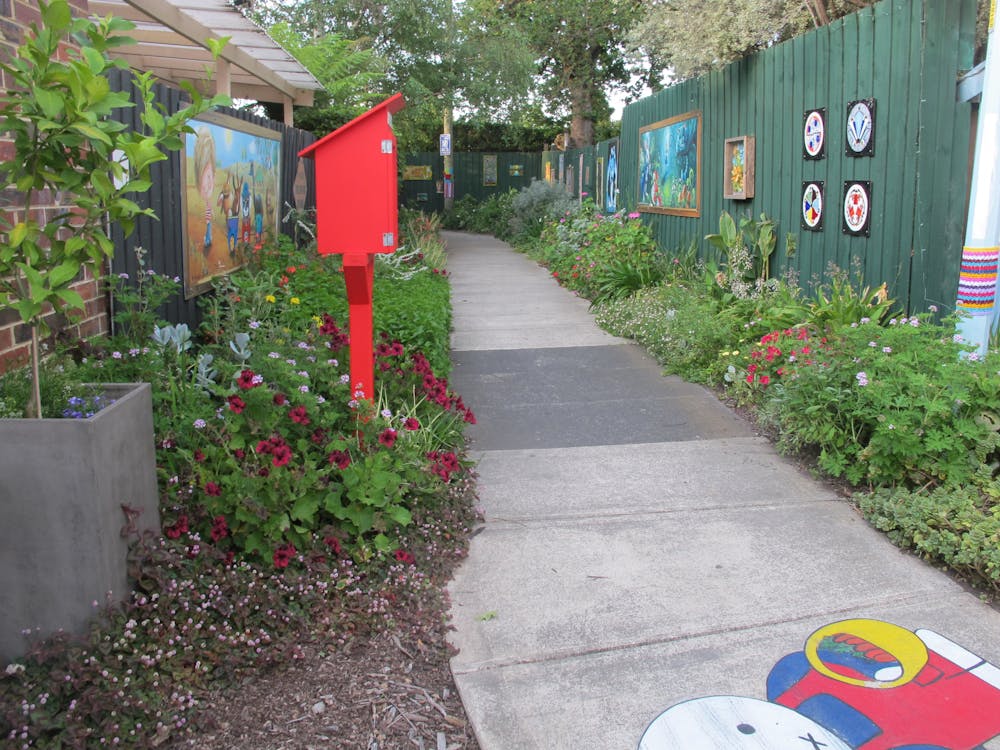 Residents in Carnegie have used art, plants and a street library to soften hard edges and make them more inviting.
Rachel Iampolski, Author provided
Residents in Carnegie have used art, plants and a street library to soften hard edges and make them more inviting.
Rachel Iampolski, Author provided
These practices are an example of what is often described as citizen placemaking, where citizens create a sense of community through gestures of creativity and support.
Read more: Coronavirus has changed our sense of place, so together we must re-imagine our cities
Planning for welcoming, active edges
So why don’t we more often design our edges in ways that invite this kind of activity? For too long, policy, legislation and regulation have variously neglected the importance of edge spaces, or sought to actively limit activity within them.
In Victoria, for example, ResCode policies for housing design seek to regulate viewlines from balconies. These policies and others in Victorian planning schemes do little to encourage the return of the porch or balcony in housing or apartment design.
 Chairs at the front of the house allow for contact with passersby – and the gnome is a friendly presence even when the chairs are empty.
Matt Novacevski, Author provided
Chairs at the front of the house allow for contact with passersby – and the gnome is a friendly presence even when the chairs are empty.
Matt Novacevski, Author provided
In the public realm, instances of over-zealous enforcement of regulation have closed down activities that bring life to footpaths and bring residents together. This risks promoting bland, homogenised streets that lead to social isolation.
We wonder how our neighbourhoods might change if planning policy, design and regulation were put to work, opening up possibilities to encourage softer and more active edges?
Read more: We can't let coronavirus kill our cities. Here's how we can save urban life
These opportunities bleed out from the front fence into the footpath and streets. As cities overseas have started to use tactical urbanism to promote safer social interaction, the task for government is two-fold: to enable tactical approaches that allow communities to shape spaces to meet their own needs, and to focus governance on making better places.
Whatever happens next, as citizens, we would all do well to use our imagination and remember the power and potential of the edge spaces where we live.
A map of projects being run around the world as part of Porch Placemaking Week, May 30-June 5.
Authors: Rachel Iampolski, PhD Candidate, Centre for Urban Research RMIT, RMIT University


















