

We don't know if breastfeeding is rising or falling in Australia. That's bad for everyone
- Written by: Lisa Amir, Professor in Breastfeeding Research, La Trobe University
As the COVID-19 pandemic has taught us all too well, good health policy depends on prior planning, decisive action, and a willingness to spend money.
But there’s another area where Australia’s willingness to plan and spend has fallen far short: monitoring breastfeeding rates.
A newly released international report reveals that 41% of babies worldwide are exclusively breastfed for their first six months – well short of the World Health Assembly’s target of 50% by 2025. Australian data are missing from the latest report because the infant feeding data have not been collected.
Breastfeeding is important, just like immunisation. It protects children against illness and disease, such as gastroenteritis and later life diabetes. Women who breastfeed are less likely to suffer breast cancer in later life. Investing in breastfeeding will save the health system money in years to come.
Read more: Want to breastfeed? These five things will make it easier
In 2019 a long-awaited Australian National Breastfeeding Strategy proposed a national monitoring system for breastfeeding rates.
Governments have been talking about this for nearly two decades. Yet still there is no funding available for a national data collection network, despite its importance for women and children.
Without rigorous data, we can’t tell whether Australia’s breastfeeding rates are improving or getting worse, which groups of people need help, or whether existing programs to encourage breastfeeding are working.
Good data is crucial for good health care
Some local data in NSW and Victoria suggest that in recent years fewer women get off to a good start with exclusive breastfeeding.
The percentage of babies fully breastfed at the time of discharge from hospital in NSW fell from 82.1% in 2011 to 72.6% in 2018.
We also don’t know how COVID-19 has affected breastfeeding rates. Some women have been hindered by reduced access to breastfeeding support, as hospitals and community services divert resources towards dealing with the pandemic. On the other hand, there are anecdotal reports of mothers enjoying the less hectic pace of life during lockdown to establish breastfeeding.
But the problem is, without routine surveys of breastfeeding rates among large samples of the population, we just don’t know.
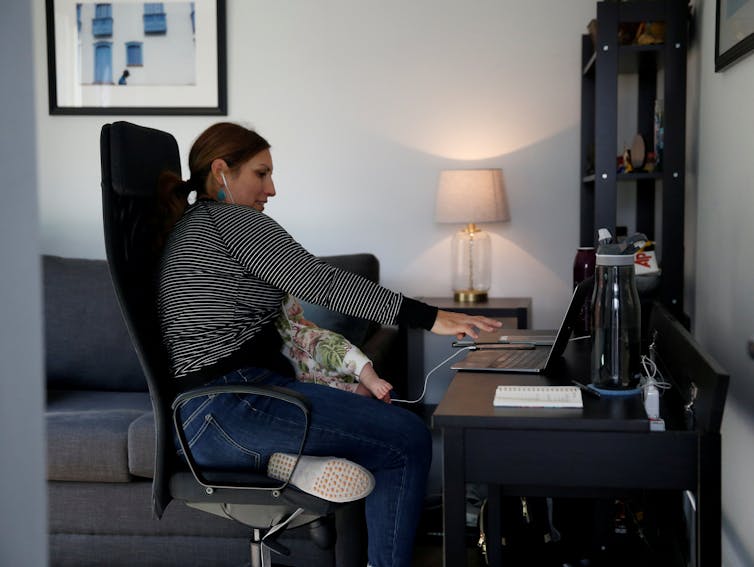 We don’t know how the coronavirus pandemic has affected breastfeeding rates.
Lindsey Wasson/Reuters
We don’t know how the coronavirus pandemic has affected breastfeeding rates.
Lindsey Wasson/Reuters
In 1995, 2001 and 2005, National Health Surveys collected data on infant feeding. In 2008 one of us (Lisa), together with colleague Susan Donath, used these data to show that breastfeeding rates did not improve, and the gap between high- and low-income families had widened during the decade spanned by these surveys. It was a shocking indictment.
Despite this, the 2007-08 National Health Surveys did not collect infant feeding data. The 2014-15 and 2016-17 surveys each only collected infant feeding data on about 1,500 children – not enough for a rigorous analysis of the nationwide trend.
Australia’s first and only comprehensive infant feeding survey happened in 2010, in response to a recommendation from the Parliamentary Best Start Inquiry.
This survey sampled 52,000 infants aged up to 24 months. It was intended as a baseline for future surveys, but the follow-up surveys never happened.
The National Breastfeeding Strategy released last year by federal, state and territory governments pledged to routinely collect data on breastfeeding rates via the Child Digital Health Record program, which is still under development. It also promised to deliver a full nationwide survey every five years.
Knowledge is power
Routine data collection has several advantages. It is more cost-effective than standalone surveys, and it is population-wide, meaning it can include people who are otherwise under-represented in survey data.
It is also a powerful research tool. Routine data on preterm versus full-term births in Belgium, for instance, revealed the dramatic effect of tobacco control policies on preventing premature births.
Australia already routinely collects childhood health data, perhaps most notably on immunisation rates. Policy-makers can use this valuable data to ensure adequate coverage against childhood infections and to ensure existing policies are effective.
Read more: Breastfeeding improves IQ – now have we got your attention?
The first step to investing in breastfeeding will be to fund proper data collection – both via routine data collection and regular in-depth national surveys. But so far no one has backed breastfeeding with the necessary dollars.
This article is based on a presentation hosted by the Crawford School of Public Policy, Australian National University, and Save the Children.
Authors: Lisa Amir, Professor in Breastfeeding Research, La Trobe University

















