

Antibacterial activewear? The claim is just as absurd as it sounds
- Written by: Catherine Burke, Senior Lecturer, University of Technology Sydney
Lorna Jane recently launched an “antiviral” line of its activewear, called “LJ Shield”, generating significant backlash from medical professionals.
The popular activewear brand has now pedalled back and removed any mention of LJ Shield being antiviral from its marketing. But it still claims the product is “antibacterial”.
Labelling it antibacterial may have marginally more merit than the antiviral claims, but either way, the evidence antibacterial fabric could stop you from getting sick is pretty slim.
Read more: What is a virus? How do they spread? How do they make us sick?
How does the product ‘work’?
LJ Shield is said to be sprayed onto the fabric as a lightweight mist, and then permanently adheres to the surface of the product, acting as a shield of protection.
This coating they describe is marketed by a company called Fuze Biotech, whose website says it can reduce the growth of bacteria on fabric and surfaces by more than 99%.
There’s not a lot of detail given on how this technology works, except that it’s based on nanoparticles that can break open and kill bacterial cells. Fuze has some data on their website showing their coating can prevent bacterial growth.
A range of approaches used to coat fabrics with chemicals or metal nano-particles like silver have demonstrated antimicrobial activity in laboratory tests. But antibacterial activity in a controlled laboratory environment doesn’t always translate to antibacterial activity on our bodies.
Read more: Silver makes beautiful bling but it's also good for keeping the bacterial bugs away
Whether it makes a difference to the likelihood of disease transmission is the important question here — and the answer, in all likelihood, is no.
One study showed bacteria from sweat can multiply on synthetic materials (although the researchers incubated the material in almost 100% humidity which is not very close to real-world conditions). Sweat and skin bacteria are a normal part of our biology and are unlikely to cause an infection anyway.
In health-care settings like hospitals, pathogenic bacteria can survive on fabrics for many days, with synthetic fabrics and humid conditions favouring their growth. But it’s not clear how much of a risk transmission via fabric is versus other modes of transmission, such as via a person’s hands.
As for whether antimicrobial materials can offer protection in this context, one randomised trial found these were not effective at reducing the numbers of bacteria on hospital scrubs.
So even in a health-care environment where the risk of infection is higher than in the community, the effectiveness of antimicrobial materials for reducing transmission remains to be confirmed.
 There’s little to suggest this LJ Shield technology could stop you getting sick.
Shutterstock
There’s little to suggest this LJ Shield technology could stop you getting sick.
Shutterstock
What about viruses?
Viruses generally survive on fabric for shorter times than bacteria, with a SARS coronavirus isolate from the 2003 coronavirus outbreak found to survive less than 24 hours on cotton.
So it’s possible that if a pathogenic bacteria or virus landed on your clothes, it could survive there for one or more days. Whether that would result in an infection would depend on a number of other factors, like the infectious dose (the number of cells or viral particles needed to cause an infection) and the route of transmission (how it enters your body).
Read more: Why is it so hard to stop COVID-19 misinformation spreading on social media?
While the ability to survive on fabrics may lead to disease transmission in a hospital setting, you’re far more likely to contract a respiratory infection like COVID-19 by breathing in contaminated droplets or touching a contaminated surface.
So even if this technology was proven to prevent bacteria or viruses from growing on your clothes, it isn’t likely to have much impact on your risk of getting sick.
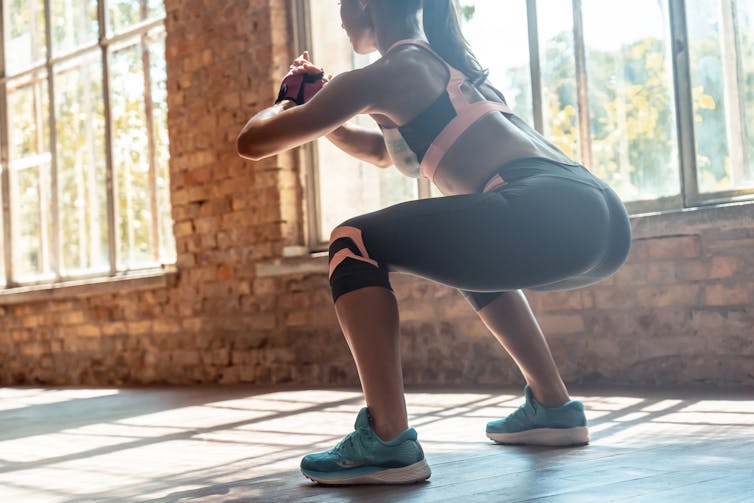 Claims activewear can protect against viral or bacterial infections could do more harm than good.
Shutterstock
Claims activewear can protect against viral or bacterial infections could do more harm than good.
Shutterstock
There’s no evidence it will work against viruses
According to a Lorna Jane spokesperson:
Our testing shows that LJ Shield is an important part of stopping the spread of both bacteria and viral infections and should be used in combination with other precautionary measures such as face masks and thorough and frequent hand washing.
So, despite removing the word “antiviral” from promotional materials, it seems Lorna Jane is still claiming this product could help prevent the spread of viral infections.
Even if the LJ Shield fabric is antibacterial, there’s no evidence to suggest this product affects the survival of viruses, including the one that causes COVID-19. Viruses are not the same kind of organisms as bacteria, which is why antibiotics (which kill bacteria) don’t work for viral infections.
Many antimicrobial products exist on the market. The important question for me isn’t so much whether they can kill microorganisms, but whether using those products actually reduces your risk of getting sick. In many cases, the answer is no.
Lorna Jane’s LJ Shield technology is no different. Promoting this clothing as antiviral was reckless. In the age of COVID-19, it might give people a false sense of security, leading them to believe they don’t need to practise social distancing, use face masks or wash their hands. These proven methods of limiting the spread of infectious disease are far more important.
Authors: Catherine Burke, Senior Lecturer, University of Technology Sydney
Read more https://theconversation.com/antibacterial-activewear-the-claim-is-just-as-absurd-as-it-sounds-142828


















