

No rehab and little chance of appeal for the Christchurch terrorist jailed for life without parole
- Written by Kris Gledhill, Professor of Law, Auckland University of Technology
There was public celebration of the sentence of life without parole for the Christchurch terrorist Brenton Tarrant who admitted murdering 51 people and attempting to murder 40 others.
Aged 29, the convicted mass murderer and terrorist is still relatively young, meaning he could well spend several decades in custody.
A life sentence, as with a preventive detention sentence, normally has two elements. The first is the period that must be served for punishment purposes before an application can be made for parole. The second is based on risk and is assessed by the Parole Board: only if a life-sentence prisoner is an acceptably low risk will they be released during this second period.
In short, life can always mean life. But usually, because risk is reduced, an indeterminate sentence is the period set for punishment plus any extra period when the risk remains too high. A whole life sentence means the second stage is never reached.
Is this problematic from the perspective of human rights? This was an argument addressed to the judge.
Are human rights an issue?
The guiding principle behind how we deal with prisoners is the need to attempt rehabilitation.
But if there is no incentive to rehabilitate from the prisoner’s perspective, they are effectively warehoused for the rest of their life. This means, some might argue, the detention risks becoming arbitrary. In addition, it could be said to be inhuman and degrading not to allow some hope for the inmate.
Some nations, such as Norway, do not permit life imprisonment precisely because it is seen to breach those standards.
The world’s busiest human rights court, the European Court of Human Rights, has added its support to the view that prisoners must be left with some mechanism to ensure hope is not extinguished.
But the cases before the European Court have not involved an atrocity of this nature. It may be that the judges of that court would reach a different conclusion based on the extreme facts of the Christchurch mosque attacks.
There is a powerful argument that the importance of protecting the human rights of victims and potential future victims requires denunciation through the most severe sentence available in the hope that others will not follow in the defendant’s perverted footsteps.
Why an appeal is unlikely
In the event of an appeal, our Court of Appeal could consider whether there must be some prospect of release to encourage rehabilitation.
There is also another significant point of law it could consider.
It is normal that guilty pleas can receive credit. The sentencing hearing necessarily brought back the horrors of the events in Christchurch last March. But how much worse would it have been if there had been a trial and the victims and the wider community had had to relive every shot in detail?
Saving that trauma can be reflected in a reduced sentence. The only reduction from a whole life sentence is to allow an application for parole, even at some far-distant time.
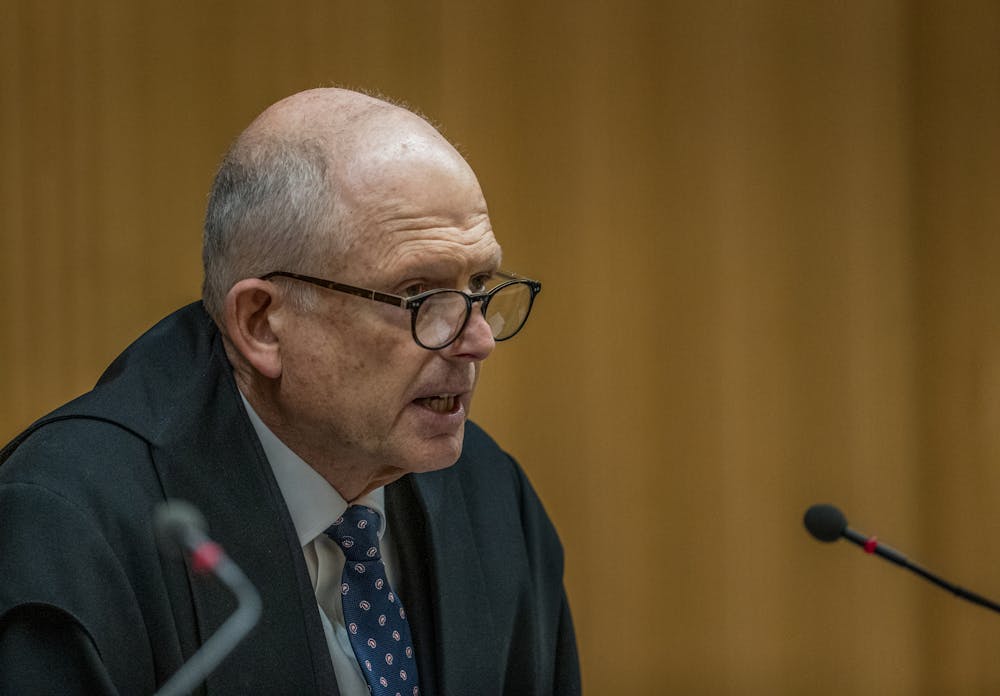 Justice Cameron Mander sentences Brenton Tarrant to life without parole.
John Kirk-Anderson/The Press Pool/AAP
Justice Cameron Mander sentences Brenton Tarrant to life without parole.
John Kirk-Anderson/The Press Pool/AAP
But in his sentencing remarks at the High Court in Christchurch, Justice Cameron Mander said the relatively late plea of guilty, in March this year, did not displace the need for a whole life sentence. He added:
There is little to indicate that your pleas denote any deeply held sense of remorse for your victims or that you are particularly distressed at having caused such terrible grief.
He attached much more weight to another principle of sentencing, which is that the maximum sentence should be used for the worst possible example of offending.
The depravity of this atrocity qualified for designation as the worst possible example of offending. A terrorist mass murder is clearly the sort of offending that should lead to life without parole, the most severe sentence in our justice system.
Notably, the lawyer for the defendant accepted life without parole was appropriate. The defendant represented himself during the hearing but made no interventions.
The judge had sensibly appointed a lawyer to be available should the defendant change his mind and wish representation. He did so, but only to have this stand-by counsel accept that the maximum available sentence was proper.
Lawyers are bound by the instructions of their clients, so the defence lawyer was unable to put any counter arguments before the judge. Those instructions are significant in that an appeal will occur only if the defendant wishes to appeal. The defendant’s surprising acceptance of the sentence suggests he will not appeal.
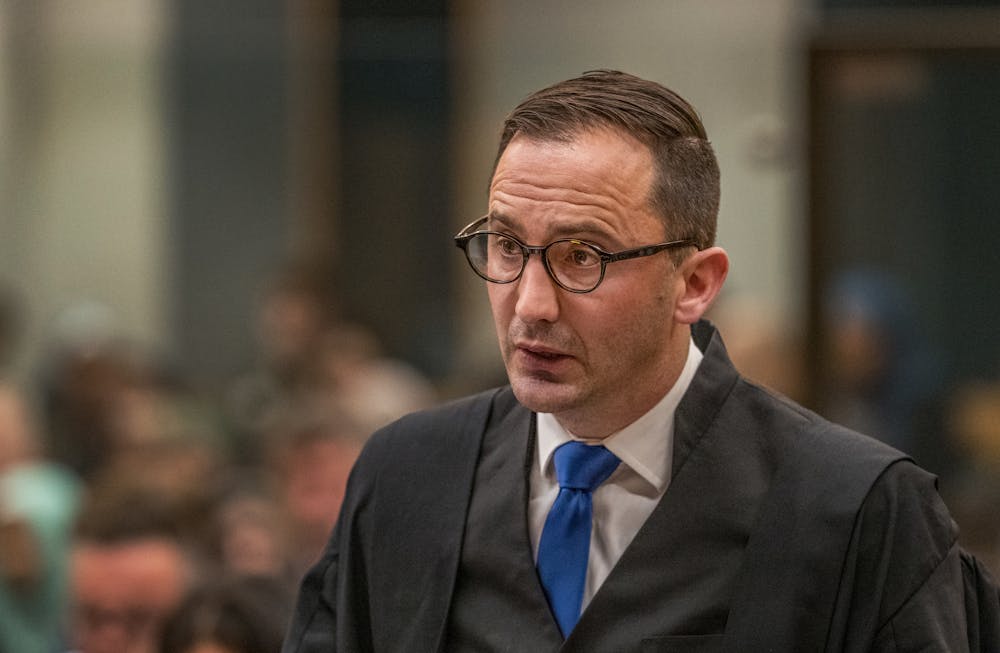 A lone voice in court for mass killer Brenton Tarrant: Kerry Cook was the court-appointed lawyer.
John Kirk-Anderson/The Press Pool/AAP
A lone voice in court for mass killer Brenton Tarrant: Kerry Cook was the court-appointed lawyer.
John Kirk-Anderson/The Press Pool/AAP
So who made the counter arguments? The judge ensured fairness in the process by having another lawyer, Kerry Cook, make counter submissions on the law. This lawyer did not represent the defendant but appeared as an amicus curiae, Latin for “friend of the court”.
Given all of this, the only mechanism to avoid death in prison for New Zealand’s only convicted terrorist is release on compassionate grounds. The Parole Act 2002 allows this only if someone is seriously ill and unlikely to recover. Even then, it is for the Parole Board’s discretion.
As it stands, life in this case does mean life.
Authors: Kris Gledhill, Professor of Law, Auckland University of Technology

















