

No, Prime Minister, gas doesn't 'work for all Australians' and your scare tactics ignore modern energy problems
- Written by: Samantha Hepburn, Director of the Centre for Energy and Natural Resources Law, Deakin Law School, Deakin University
The federal government today announced it will build a new gas power plant in the Hunter Valley, NSW, if electricity generators don’t fill the energy gap left by the Liddell coal-fired station when it retires in 2023.
The government says it’s concerned that when the coal plant closes, there’ll be insufficient dispatchable power (that can be used on demand) because the energy sector is focused on accelerating renewable energy at the expense of reliability. So electricity generators are required to come up with a plan to inject 1,000 megawatts of new dispatchable energy into the national grid.
This is tantamount to an ultimatum: if we must have renewables, then prove they generate the same amount of electricity as fossil fuel or we will go back to fossil fuel.
The government’s joint media release has this to say:
This is about making Australia’s gas work for all Australians. Gas is a critical enabler of Australia’s economy.
But under a rapidly changing climate, the issue is not just about keeping the lights on. We not only want energy, we also want to breathe clean air, have enough food, have clean and available water supplies, preserve our habitat and live in a sustainable community. So no, gas doesn’t “work for all Australians”.
Adapting to a new energy future is a complex process our national government must not only support, but progress. It should not be hijacked by fossil fuel politics.
Scare-tactics won’t resolve the climate emergency
The government’s scare tactic completely ignores the two fundamental imperatives of modern energy.
Read more: 4 reasons why a gas-led economic recovery is a terrible, naïve idea
The first is the critical importance of decarbonisation. Energy production from fossil fuels is the most carbon intensive activity on the planet. If we are to reach net zero emissions by 2050 and stay within 2℃ of global warming, we cannot burn fossil fuels to produce energy.
The government shouldn’t revert to outdated fossil fuel rhetoric about “reliable, dispatchable power” during an accelerating climate emergency.
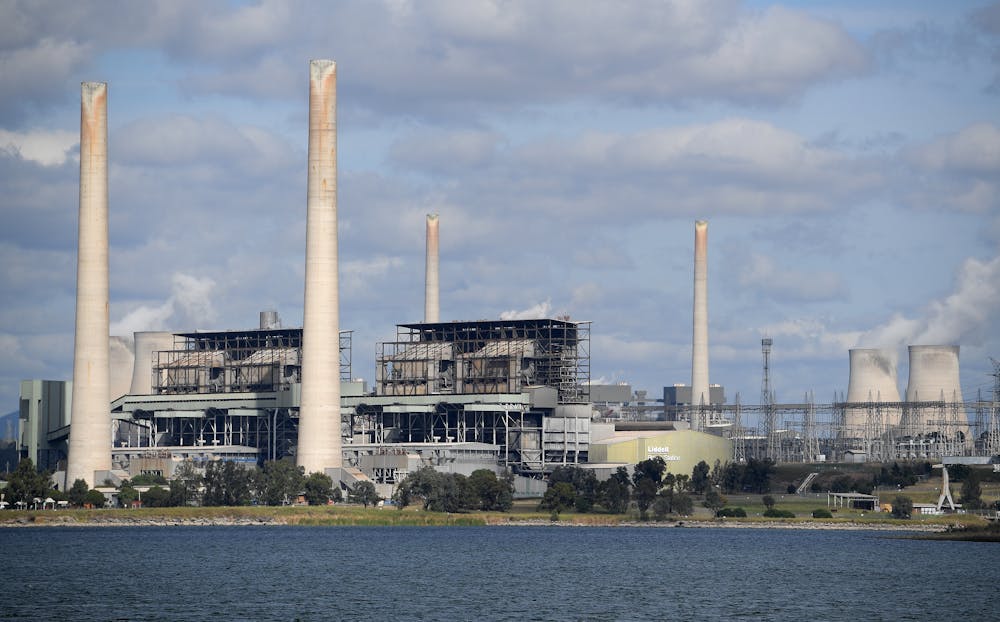 The government will build a new gas power plant if the electricity sector fails to fill the gap left by the Liddell power plant when it closes in 2023.
AAP Image/Dan Himbrechts
The government will build a new gas power plant if the electricity sector fails to fill the gap left by the Liddell power plant when it closes in 2023.
AAP Image/Dan Himbrechts
The second is it’s in the public interest to support and invest in energy that’s not only environmentally sustainable for the future, but also economically sustainable. Demand for fossil fuels is in terminal decline across the world and investing in new fossil fuel infrastructure may lead to stranded assets.
We need to address the ‘energy trilemma’
The question the government should instead focus on is this: how can the government continue to supply its citizens with affordable, reliable electricity but also maintain a reduction in greenhouse gas emissions and high air quality standards?
Answering this question involves addressing a three-part set of tensions, known as the “energy trilemma”:
- sustainable generation that is not emission intensive
- infrastructure reliability and
- affordability.
The energy trilemma is a well-known tool in the sector that powerfully communicates the relative positioning of each tension. No single axis is necessarily more important than the other two. The aim is to try to balance all three.
Constructing a new gas plant seeks to address the second pillar at the expense of the first. This isn’t good enough in the face of the climate emergency.
Gas fired electricity can emit methane. Over a 20-year period, methane is 84 times more effective than carbon dioxide in trapping heat, and 28 times more effective over 100 years.
Read more: Australia has plenty of gas, but our bills are ridiculous. The market is broken
The affordability pillar is also important. Morrison says constructing the plant will prevent energy price spikes. But research clearly confirms renewable energy generation is cheapest.
What is it with the federal government and gas?
After first informing us gas will help bolster the economy after the COVID-19 pandemic, this new announcement makes it clear the federal government is firmly wedded to gas.
This may be because the federal government regards adherence to gas as a compromise between the renewable sector and the demands of the fossil fuel industry.
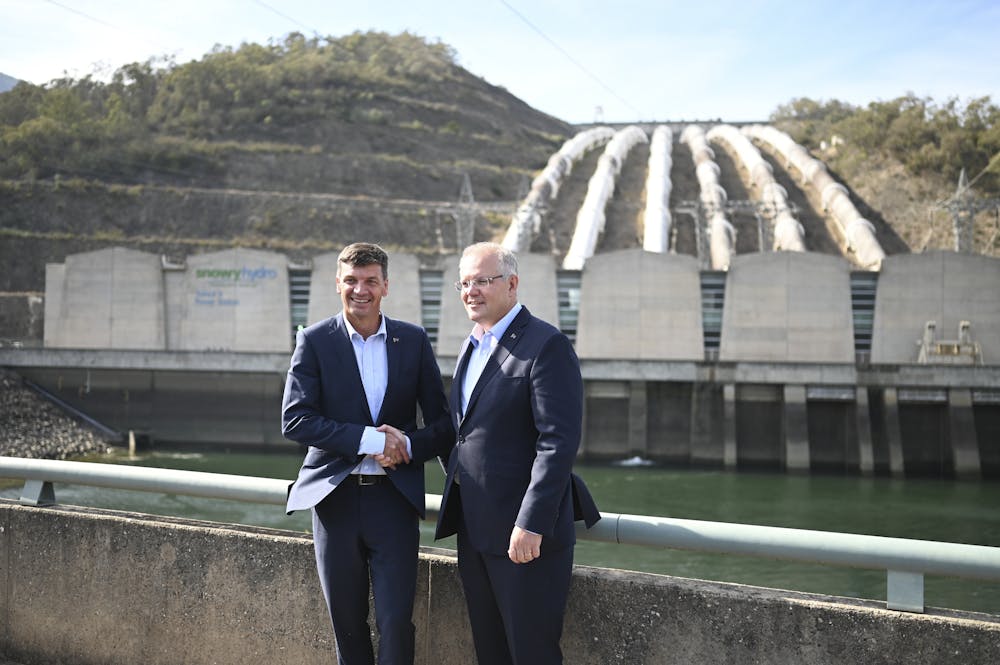 Scott Morrison says the government will use Snowy Hydro to build the gas plant.
AAP Image/Lukas Coch
Scott Morrison says the government will use Snowy Hydro to build the gas plant.
AAP Image/Lukas Coch
In any case, we cannot and must not revert to fossil fuel energy generation. We must abandon past behaviours if we’re to adapt to a changing climate, which is set to hit the economy much harder than this pandemic.
Most Australians have derived their assumptions about energy security from fossil fuel dependency, because this is what they have known. The good news is this is changing.
Increasingly, the global community understands it’s not sustainable to burn coal or gas to generate energy just because we want to be “sure” we can turn the lights on. Consumer preference is shifting.
Read more: Why it doesn't make economic sense to ignore climate change in our recovery from the pandemic
This is something BP recognises in its 2020 Energy Outlook report, which outlines three scenarios for the global energy system in next 30 years.
Each scenario shows a shift in social preferences and a decline in the share of hydrocarbons (coal, oil and natural gas) in the global energy system. This decline is matched by an increase in the role of renewable energy.
I’ll say it again: renewable energy is the future
The technology underpinning renewable energy production from clean, low-cost generation such as wind, solar, hydro-electricity, hydrogen and bio-mass is advancing.
Renewable energy generation is sustainable, better for the environment, low in emissions, and affordable. Reliability is improving at a rapid rate. A recent report indicates electricity generated by solar photovoltaic (PV) and onshore wind farms from 2026 will overtake the combined power production from coal and gas.
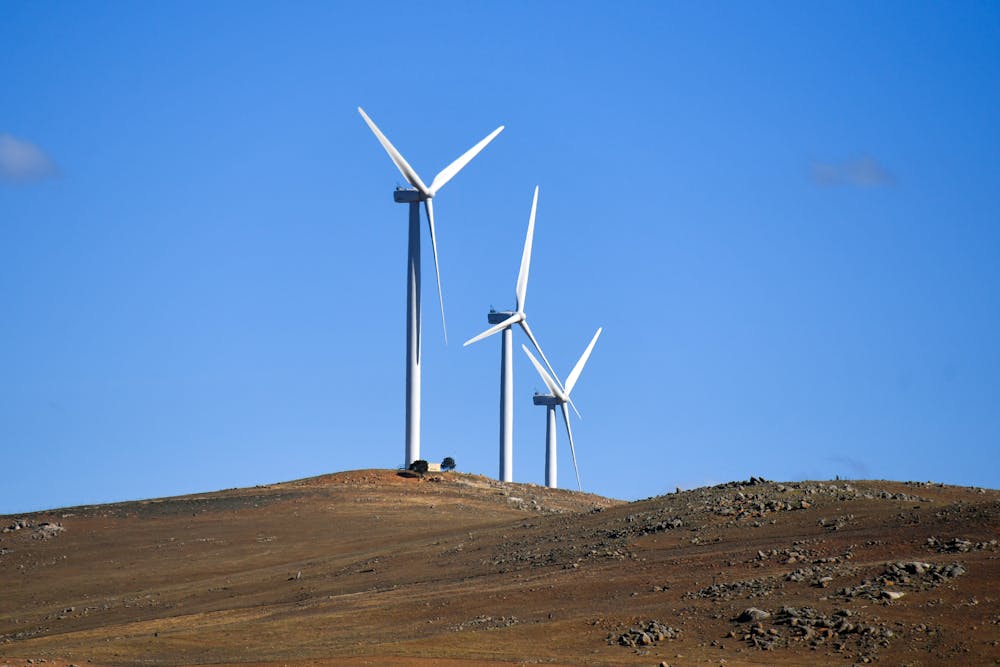 A wind farm near Bungendore, 40km East of Canberra. Investing in clean energy is the obvious solution to the energy trilemma.
AAP Image/Mick Tsikas
A wind farm near Bungendore, 40km East of Canberra. Investing in clean energy is the obvious solution to the energy trilemma.
AAP Image/Mick Tsikas
The combined solar and wind capacity will grow to an estimated 41.4 gigawatts in 2023 from 26.4 gigawatts this year. By contrast, coal and gas capacity will shrink to 35.3 gigawatts in 2023 from 39.1 gigawatts this year.
The report is based on the Australian Energy Market Operator (AEMO) Step Change Scenario, which models a shift to renewables. It includes rapid adjustments in technology costs and a “well below 2℃” scenario as part of its 20-year planning blueprint.
Read more: Here's what the coronavirus pandemic can teach us about tackling climate change
Yes, there are challenges in shifting from a centralised grid and developing new transmission capacity.
But these are the challenges we need to be investing in. Not a new gas plant that’s likely to be a stranded asset in the not-too-distant future.
Authors: Samantha Hepburn, Director of the Centre for Energy and Natural Resources Law, Deakin Law School, Deakin University


















