Modern Australian
The Times

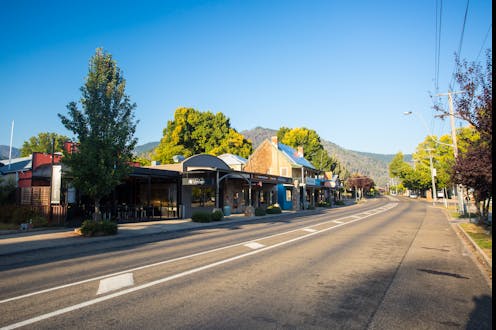
the easing of regional Victoria's restrictions signals hope for Melbourne too

  • Written by Adrian Esterman, Professor of Biostatistics and Epidemiology, University of South Australia
the easing of regional Victoria's restrictions signals hope for Melbourne too

From 11.59pm tomorrow (September 16), regional Victoria will take the third step out of COVID-19 restrictions, Premier Daniel Andrews announced today.

According to the roadmap revealed last weekend, the move to step 3 in regional Victoria could happen when the daily average number of cases for the previous 14 days was less than five, and there were zero community cases without a known source for 14 days.

Regional Victoria actually reached the 14-day moving average target on September 10, with 4.5, and by today the average had dropped to 3.6. They were just waiting to hit the mystery cases target.

Among the restrictions to be eased under step 3, up to ten people will be allowed to gather outdoors, and hospitality venues will be able to open again for sit-down service. Beauty salons and hairdressers will also reopen, and people who live in regional Victoria will be able to travel to other regional areas in the state.

Heading in the right direction

This easing of restrictions is undoubtedly good news for regional Victoria. But it’s also reason for people in Melbourne to be optimistic.

Certainly, regional Victoria and metropolitan Melbourne are quite different in terms of the epidemiology of their respective second waves. But the targets set out in the roadmap do appear to be achievable.

The 14-day moving average of daily case numbers for Melbourne is currently at 52.9, and needs to drop below 50 to reach the target for step 2.

Based on my modelling of the 14-day moving average, Melbourne could reach this target as early as Thursday.

This model takes the 14-day moving average for the last 30 days, and it assumes the continuing downward trend is exponentially decreasing. That is, it plots a slow downward curve that approaches zero.

The target to move to step 3 is a 14-day moving average of fewer than five cases per day statewide. A similar modelling strategy shows this is likely to occur on about October 22.

Save the date (or don’t)

Notably, there was no date set for the move to step 3 in regional Victoria, which is very different to the roadmap set out for metropolitan Melbourne.

In Melbourne, the second step is not due to occur until September 28, and the third step not until October 26 – and only then if case numbers have dropped below designated thresholds.

The key question for the Victorian government is whether to stick to this time frame, or allow for an earlier move to the second and third steps if Melbourne achieves the moving average targets ahead of time.

Read more: Victoria's path out of COVID-19 lockdown – quick reference guides

In a recent article on The Conversation, I called for a more nuanced approach to lifting restrictions. In other words, the government shouldn’t be too rigid with the roadmap.

The people of Victoria have been asked to make enormous sacrifices to get the outbreak under control, and it’s working. I believe the Victorian government should be willing to reward Melburnians by moving to the third step when they reach the relevant case threshold, regardless of the date.

What now?

It’s essential that over the next few weeks, Melbourne residents continue to stick to the restrictions, to help hit the targets as soon as possible.

The numbers of COVID-19 tests has dropped off in the past few days, averaging about 14,000 tests a day. With the lower number of cases and fewer people with respiratory symptoms now winter is over, this is not really surprising. But it’s vital high rates of testing continue, with a focus on hotspot areas, such as the Casey local government area.

Read more: 'Slow and steady' exit from lockdown as Victorian government sets sights on 'COVID-normal' Christmas

As for regional Victoria, people there must also stick to the remaining restrictions. This will give them the best chance of moving towards step 4 and beyond.

Authors: Adrian Esterman, Professor of Biostatistics and Epidemiology, University of South Australia


Read more https://theconversation.com/on-the-road-to-covid-normal-the-easing-of-regional-victorias-restrictions-signals-hope-for-melbourne-too-146203

How An Asbestos Removalist Ensures Safe And Compliant Property Environments in Melbourne

Maintaining a safe environment within residential and commercial properties requires careful management of hazardous materials, which is why engaging ...

Why Protein Bars Are A Convenient Option For Daily Nutrition And Energy

Maintaining balanced nutrition throughout the day can be challenging, especially for individuals with busy schedules, which is why protein bars hav...

Property Settlements After Separation: Key Considerations

Dividing assets after a separation is one of the more complex and emotionally charged aspects of the process. Understanding how property settlements...

Why Dust Control Matters During Bathroom Demolition

People usually expect bathroom demolition to be noisy.  No one thinks of dust — but it turns up everywhere. Inside cupboards. On couches. Along...

Why Roller Shutters And Outdoor Blinds Are Popular For Modern Properties

Many homeowners and businesses now install roller shutters to improve security, privacy, insulation, and weather protection across residential and ...

Slushie Machine Hire for Events: What to Check Before Booking

There's a moment at every great event when guests stop what they're doing and just enjoy something. A slushie machine is often that moment. It draws p...

Why AS/NZS Certified Sunglasses Are Essential for Australian Kids

Australia has some of the highest UV radiation levels in the world. That's not a warning label exaggeration; it's a measurable, documented fact that s...

Why People Regain Weight After Weight Loss?

Losing weight is hard; keeping it off is harder; and regaining it after all that effort is something many people go through more than most realise. ...

10 Benefits of Having a Frozen Yoghurt Machine for Your Business

Frozen yoghurt is a commercially viable dessert option for a wide range of food service businesses due to its versatility, efficiency, and consisten...

Why Slurry Hose is Essential For High-Performance Material Transfer

Handling abrasive and dense materials efficiently requires specialised equipment, which is why a slurry hose is a critical component in industries ...

Why Coworking Spaces In Melbourne Are Transforming The Way Professionals Work

The modern workforce is evolving rapidly, with flexibility, collaboration, and efficiency becoming central to how people work, which is why a coworkin...

The Everyday Wear and Tear Most Warehouse Storage Systems Experience

The modern warehouse is a dynamic, high velocity environment where industrial storage structures are subjected to immense, continuous physical stres...

Why Pendant Lights Continue To Be A Popular Choice In Modern Interiors

Lighting has become an essential design element in modern homes, influencing both the appearance and functionality of interior spaces. Many homeowne...

How Whiteboard Supports Structured Communication In Work And Learning Environments

Clear communication and structured planning are essential in both professional and educational settings, which is why a whiteboard remains a practi...

How A Cardboard Box Manufacturer Supports Modern Packaging Needs

Packaging has become an essential part of modern business operations across retail, manufacturing, logistics, and e-commerce industries. Many busine...

How Pallet Racking Helps Businesses Improve Warehouse Operations

Efficient warehouse management depends on reliable storage systems that support organisation, safety, and productivity. Many businesses use pallet rac...

Why I/O Controller Is Essential For Efficient Industrial Automation Systems

Modern industrial systems rely heavily on automation and precise data exchange, which is why an I/O controller plays a critical role in ensuring sm...

Why Modern Traffic Management Systems Are Important For Safer Roads

Cities and industrial facilities increasingly rely on advanced Traffic Light System technology to improve road safety, traffic flow, and operationa...