

easy solutions to a hard problem
- Written by: Ian A. MacKenzie, Senior Lecturer in Economics, The University of Queensland
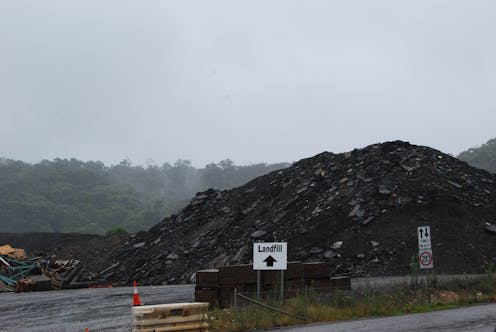
Ipswich residents have been told their recycling waste will now be dumped into landfill because it is too expensive for the local council to recycle.
This is a result of Australia’s recycling industry crisis. China’s recent ban on imported solid waste means that most of our waste has been stockpiled domestically and is not being recycled.
Last year alone we exported more than 600,000 tonnes of waste to China. Australia does not currently have the capacity to handle this volume.
Read more: Curious Kids: Where do my recycled items go?
In Queensland, this could not be happening at a worse time, given that the state will soon launch its own container refund scheme in a bid to boost recycling rates.
Unfortunately, the case of Ipswich Council is likely to be repeated around Australia. Many local councils will be feeling the strain and considering their options as they face their own recycling mess.
Use a stick
A crude, but ultimately effective, strategy would be to increase landfill levies to make this option more expensive.
This would create a clear and immediate incentive for businesses to consider exactly how much material they need to send to landfill. Until recently, Queensland had no levy on landfill. This prompted many New South Wales businesses to send their waste across the border for cheaper dumping.
Queensland recently re-introduced a levy to deter this practice, which will presumably normalise the amount of waste going into its landfills.
Increasing levies will mean a movement towards the correct cost of landfill while at the same time generating revenue than can be used to improve recycling infrastructure or, fingers crossed, even cut council tax rates.
Use a carrot
It’s hard to say exactly how much recycling is processed in Australia, as there’s no coherent national database of facilities. But, according to a 2011 government report, Australia generates roughly 50 million tonnes of waste a year, around 50-60% of which is recycled.
Read more: Australian recycling plants have no incentive to improve
It is clear the domestic market is currently too small to increase the percentage of recycling it handles. To solve this, another simple solution would be to subsidise the cost of recycling this waste.
Subsidies would provide immediate incentives for local recycling plants to increase their processing of this material. In the long run, this may result in more investment in local recycling infrastructure that will be essential to cope with the volume of waste.
Subsidies are not new for Australian environmental policy. Indeed, we subsidise the reduction of greenhouse gases using the A$2.5 billion Emissions Reduction Fund. The same logic could be used for recycling.
A savvy policymaker could implement a recycling subsidy that is fully funded by the revenue generated by a waste levy, thus requiring no additional taxpayer funding.
Use a second, different, stick
So far the proposed polices have focused on the existing problems within the landfill and recycling industries, but we need to look more closely at the root of the problem: the generation of waste.
Effective policies could reduce excessive packaging by encouraging companies to rethink their product delivery.
One could tax product packaging, just as policymakers have done with the use of successful plastic bag taxes. In 2015 England adopted a 5p charge for plastic bags and their use fell by 85% in just six months.
Use a mirror
Understandably, implementing tax and subsidy policies may not please everyone. Luckily, changing patterns of behaviour to reduce waste without levies and subsidies is often quite easy and relatively cheap.
Some councils are taking the step of monitoring the contents of bins. This is done either by sending employees to physically inspect wheelie bins, or fitting garbage trucks with cameras to check what’s dumped into their trays. Some parts of Perth are trialling clear wheelie bins to encourage homeowners to reflect on what they’re putting in them.
Read more: Why you're almost certainly wasting time rinsing your recycling
We may instinctively object to being named and shamed for poor waste disposal habits, but it’s certainly a relatively cheap and effective way of changing community habits.
In a similar approach on the ABC’s War on Waste, a street of neighbours communally exposed the amount of rubbish they each generated, then pledged to reduce it.
Taking ownership of – and responsibility for – your own waste may prove an unlikely yet effective policy.
Don’t panic! We have options
All in all, we have plenty of options for dealing with our recycling. Now that China is no longer offering a cheap and convenient option to push our waste problems offshore, we have an opportunity to make positive and long-lasting change.
Read more: We can't recycle our way to 'zero waste'
Using sensible policies, most effectively in combination, could make this a defining opportunity for our local recycling industry with great benefits for the Australian environment.
What we need most is strong and consistent leadership from policymakers who can imagine a low-waste Australian society.
Authors: Ian A. MacKenzie, Senior Lecturer in Economics, The University of Queensland
Read more http://theconversation.com/the-recycling-crisis-in-australia-easy-solutions-to-a-hard-problem-95231


















