How to reduce COVID-19 risk at the beach or the pool
- Written by Brett Mitchell, Professor of Nursing, University of Newcastle
Australians are emerging from winter and, where possible, enjoying trips to beaches and public pools. Beach-side picnics, barbecues and get-togethers are back on the cards for many of us.
While daily COVID-19 case numbers have been looking promising in most places lately, we are still very much in a pandemic; your spring and summertime social activities might look a little different this year.
Here’s how to stay safe if you’re planning a trip to the beach or public pool.
Read more: Heading back to the gym? Here's how you can protect yourself and others from coronavirus infection
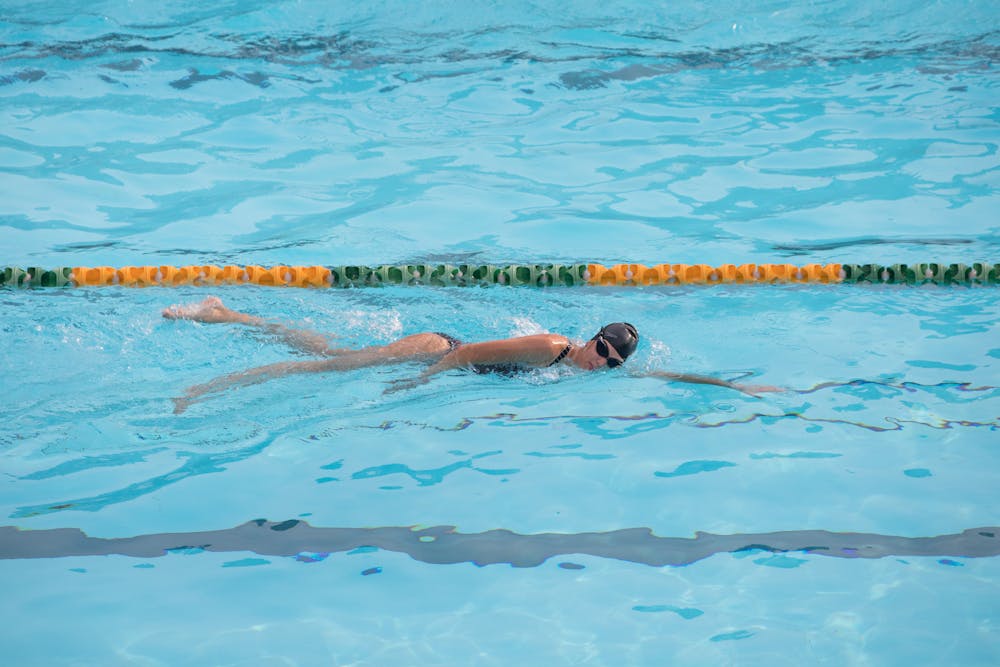 Your spring and summertime social activities might look a little different his year.
Shutterstock
Your spring and summertime social activities might look a little different his year.
Shutterstock
The three golden rules
Outdoor activities are associated with reduced COVID-19 transmission risk compared to indoor activities. That said, whatever your plans, the three golden rules still apply: stay home if you are sick, keep up the hand hygiene and maintain physical distancing from others.
If you’re sick, you shouldn’t be socialising at all. You should be getting a COVID-19 test and self-isolating while you wait for results. Even outdoors, one sick person can spread COVID-19 to a large number of people.
Going to the beach
Firstly, pick a quieter beach. The extra time it takes to research and travel to a more secluded beach may be a hassle, but it’s less risky than going to a crowded beach (and often nicer, too).
Consider driving or cycling to the beach (if possible) rather than taking public transport. If you do use public transport, pick an off-peak time of day and wear a mask — avoid rush hour.
When you arrive, put your towels down in a spot on the sand at least 1.5m away from others — more is better, if you can. You should still swim between the flags, but you don’t need to be sitting close to other people.
 Pick a quieter swim spot or go at a less busy time.
Shutterstock
Pick a quieter swim spot or go at a less busy time.
Shutterstock
When swimming between the flags, it might feel crowded in the water during busy times or at busy beaches. If you are in that situation, think about reducing the time spent in the water — go in for five minutes, then come out for a bit, then go back in for another five, so you are not having prolonged contact next to another person.
If you see someone expelling mucus into a wave, try to avoid that wave and person if you can.
Remember to stay COVID-safe if you’re at a cafe for a post-swim snack or ice-block. Don’t bunch up in lines close to other people and maintain physical distance from others if you are sitting down for a meal.
In the past, it might have felt normal to share a plate of hot chips with mates or even offer a friend a sip of your drink — but we don’t do that anymore. If you’re having a beach-side picnic, make sure you’re not sharing utensils, double-dipping in the hummus or sticking your fingers into a shared bowl of olives.
Of course, all these general principles also apply to other outdoor swimming locations, such as rivers and dams.
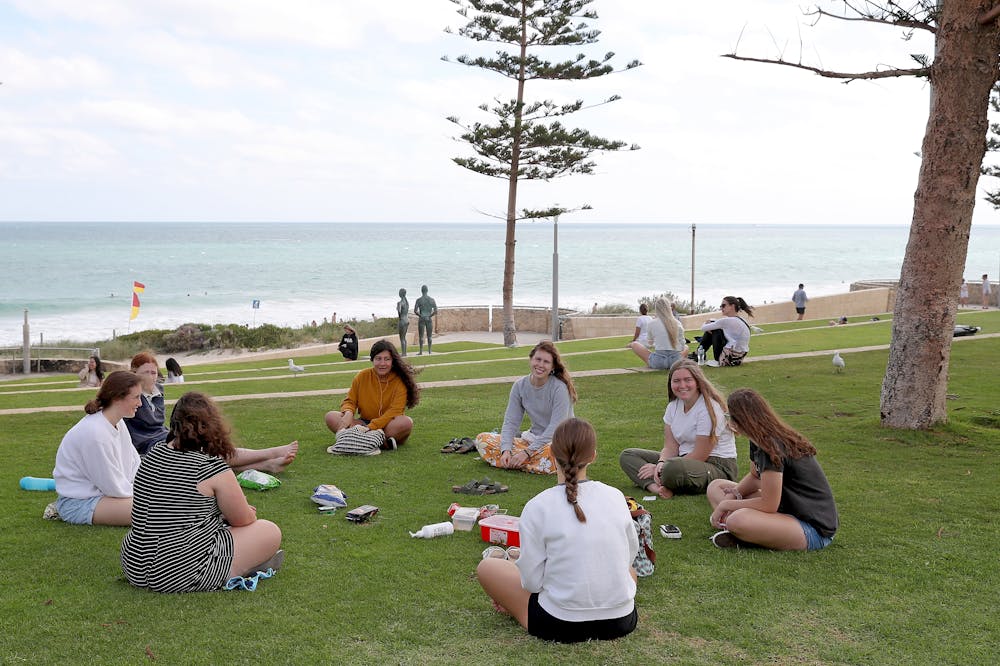 Maintain physical distance at your beach-side picnics.
AAP/RICHARD WAINWRIGHT
Maintain physical distance at your beach-side picnics.
AAP/RICHARD WAINWRIGHT
Going to the pool
The ocean is probably less risky than going to the pool, because there’s more movement of water and a high level of dilution.
So you need to approach public pools with a degree of caution.
But if you have no choice, are living away from the coast and want a swim, it’s probably fine to go to an outdoor pool — especially if you are living in an area with a low level of community transmission. You can find out community transmission rates in your area from your state health department website.
Outdoor pools are less risky than indoor pools because of increased air flow. Confined spaces are associated with increased risk of COVID-19 transmission.
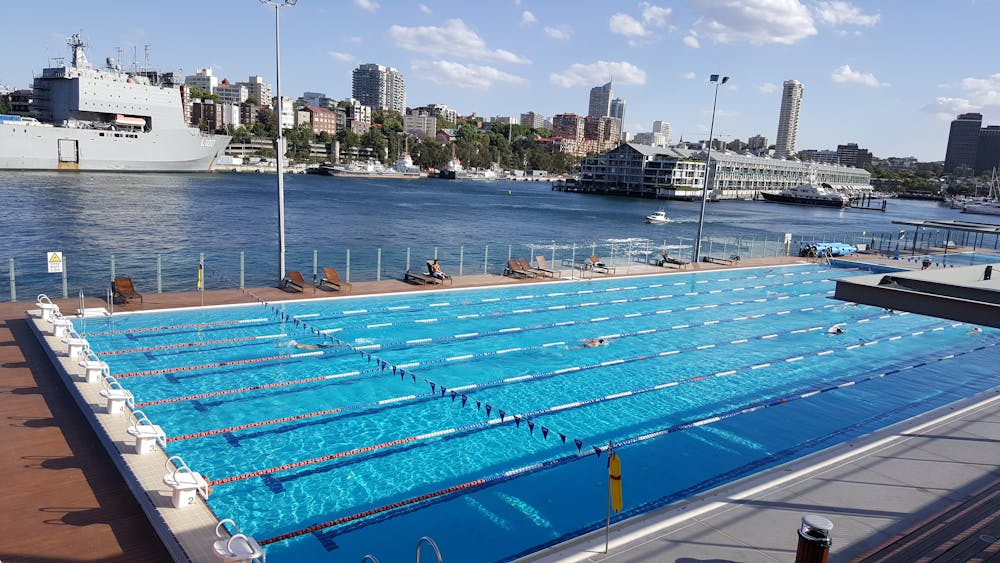 Outdoor pools are less risky than indoor pools,
Shutterstock
Outdoor pools are less risky than indoor pools,
Shutterstock
Choose the right time to go a pool. Transmission risk decreases with fewer people, so try to go at less busy times. In the morning, the pool water has likely had time to be well-filtered and well-chlorinated overnight and not many people have swum in it yet that day.
Chlorine kills coronavirus. The CDC says it is
not aware of any scientific reports of the virus that causes COVID-19 spreading to people through the water in pools, hot tubs, or water playgrounds […] including saltwater pools.
The risk of transmission, albeit potentially low, would also depend on how chlorinated the pool is and how long any coronavirus that may be in the water is exposed to chlorine before coming into contact with another person.
Theoretically, if someone is carrying the virus and some mucus goes out of their mouth and into the pool, there might be a certain period of time before any virus in that mucus is inactivated by the chlorine. If it gets to you before that inactivation happens, then it is possibly a bit more risky.
 Whatever you have planned this summer, think about the local risks and what you can do to reduce them.
Shutterstock
Whatever you have planned this summer, think about the local risks and what you can do to reduce them.
Shutterstock
Avoiding the change-rooms is another way to reduce risk, as these rooms are often in a confined space. Being careful to maintain physical distancing in the pool, poolside and at the cafe are also important measures.
In general, it should be fine to take the kids to the pool but, if there was a degree of community transmission in your area, perhaps reconsider. There is growing evidence kids are less susceptible to COVID-19 compared to adults but it doesn’t necessarily mean they are not transmitting it.
Whatever you have planned this summer, think about the local risks and what you can do to reduce them.
Read more: As coronavirus restrictions ease, here's how you can navigate public transport as safely as possible
Authors: Brett Mitchell, Professor of Nursing, University of Newcastle
Read more https://theconversation.com/how-to-reduce-covid-19-risk-at-the-beach-or-the-pool-147088