

Australia, the climate can't wait for the next federal election. It's time to take control
- Written by: Tim Flannery, Professorial fellow, Melbourne Sustainable Society Institute, University of Melbourne
It is difficult to know what to do when governments fail us. But there’s no need to wait until the next election to deal with the climate crisis, we can act now.
An overwhelming majority of Australians want action on climate change. And the federal government’s response to the COVID-19 pandemic shows governments can act decisively and effectively on imminent threats. But on climate action, there is a lack of political will.
So in the absence of federal leadership, what should be done? And who must do what?
Those questions are already being answered by state governments, councils, researchers, entrepreneurs and financiers who understand the climate problem. Their actions are slowing our slide to disaster – but they need others to step up.
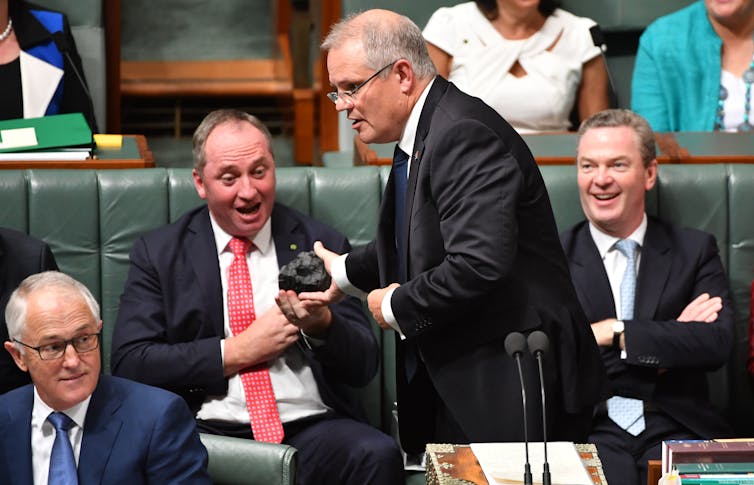 There is an absence of will in federal parliament to deal with climate change.
Mick Tsikas/AAP
There is an absence of will in federal parliament to deal with climate change.
Mick Tsikas/AAP
States are filling the gap
Among the most important entities in climate action in Australia are the state and territory governments. The ACT was the first to eliminate fossil fuels for electricity generation. Tasmania is on track to be there by 2022, and has now set a 200% renewable energy target by 2040, with the additional clean energy to be used to produce hydrogen.
South Australia is also set to be powered solely by renewables by the 2030s. These jurisdictions show what can be done in Australia if there’s a political will, and successive governments stick with a plan.
Some larger states are catching up fast. New South Wales has recently gone from being one of the worst performers to among the best. The Berejiklian government has a ten-year plan to reach net-zero emissions by 2050, and the first stage prioritises the uptake of electric vehicles. It will change building codes to make it cheaper and easier to install electric charging points, encourage the uptake of electric vehicles by fleets, and change licensing and parking regulations to encourage their uptake.
If the states worked together to pursue the most ambitious targets and programs, Australia could do its bit to solve the climate problem.
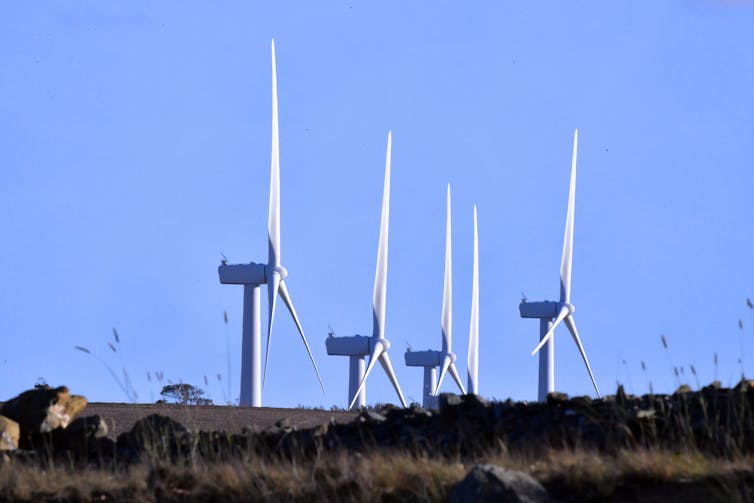 The ACT now runs on 100% renewable energy.
Mick Tsikas/AAP
The ACT now runs on 100% renewable energy.
Mick Tsikas/AAP
Going local
Australia’s local councils have become powerhouses of innovative climate solutions. In June 2017 I attended the Climate Council’s Cities Power Partnership at Parliament House in Canberra. Some 34 mayors and councillors attended, and I listened with interest as one after another described the projects they were working on.
The breadth was astonishing, from promoting bulk buys of solar panels for disadvantaged residents to making low-carbon road surfaces at local plants. Many councils were planting trees, assisting with energy efficiency measures or converting waste to energy. Since that first meeting the Cities Power Partnership has grown hugely. It now includes more than 120 local governments, representing half of all Australians.
Read more: People power: everyday Australians are building their own renewables projects, and you can too
It is not just Australia’s local councils forging ahead with climate action. Individual households lead the world in producing clean energy. More than two million households — 21% of the nation’s total — have now installed solar panels. This, of course, was supported by the federal government’s renewable energy target. But it wouldn’t have happened without Australians paying good money for their rooftop solar panels.
Movements aimed at building momentum will doubtless continue. In September 2019, hundreds of thousands marched during the school climate strikes. The movement grew from a one-person protest by Swedish activist Greta Thunberg, which took place just a year earlier. In Australia the crowds were unprecedented, as was their passion.
The demonstrations have had limited impact on the federal government, but people are also organising in different ways. Extinction Rebellion, an group just two years old, is one of the potentially more potent. Its members are committed to breaking the law peacefully. Part of their power lies in the fact that they keep reminding the police, courts and politicians that their actions aim to save everybody’s children, not just their own.
An Extinction Rebellion video calling on leaders to save the future of today’s children.But what of national politics?
Action by state governments, councils, individuals and groups will be critical to tackling climate change. But that still leaves the problem of federal parliament.
More pro-climate independents in federal parliament would shift our politics in the right direction. At the last election, voters in the northern Sydney seat of Warringah dispensed with incumbent Tony Abbott, in favour of independent candidate Zali Steggall (who won an astonishing 58% of the two-party preferred vote). It shows what’s possible when traditionally conservative voters get sick of being held to ransom by climate deniers in parliament.
But other deniers in the parliamentary party remain influential. Their modus operandi, as former prime minister Malcolm Turnbull has said, is that of terrorists threatening to blow the place up if they don’t get their way.
Read more: New polling shows 79% of Aussies care about climate change. So why doesn't the government listen?
Getting more independents into parliament will not be easy. The major political parties, which have many millions of dollars to spend at elections, will fiercely oppose any challengers.
But imagine if the Liberal-Nationals were forced to rid themselves of denialists to head off challenges by independents. What if they could once more implement rational, enduring energy and climate policies? Well, we are at a moment in time where this might be possible.
Membership of both the Labor and Liberal parties has dwindled in recent decades. That means a tiny, self-selected portion of Australia’s population chooses the candidates we vote for.
This has exposed the Liberals, in particular, to hijack by climate deniers – given the small membership numbers, it’s not hard for denialist candidates to win preselection. But if party members let these wreckers run the show, Australia will continue on the path to catastrophe.
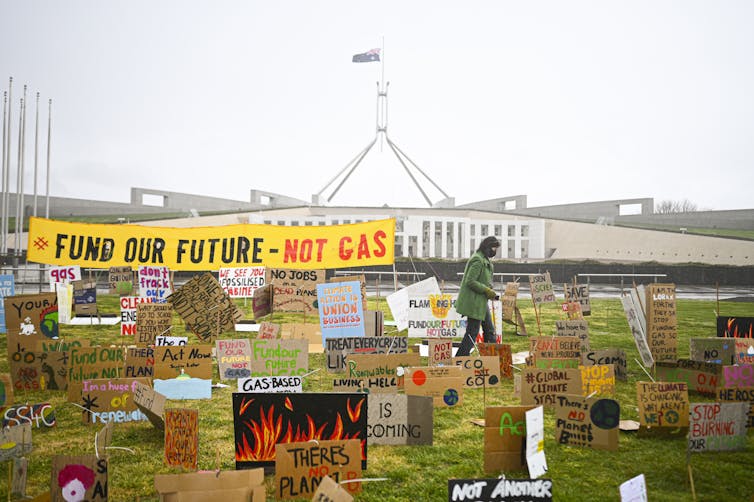 More pro-climate independents are needed to help shape national policy.
Lukas Coch/AAP
More pro-climate independents are needed to help shape national policy.
Lukas Coch/AAP
Time to step up
Australians have become used to living with governments that don’t serve our interests. Many people are rightly cynical and disengaged from politics. And that’s exactly where the climate deniers would like us to be.
But to effect real change, we must shake free of apathy. New people will have to step up and join those who have been persevering in pushing for climate action for years.
With enough momentum, we can embark on the cure for this most wicked of problems.
This is an edited extract from The Climate Cure: Solving the Climate Emergency in the Era of COVID-19 by Tim Flannery (Text Publishing).
Read more: Distress, depression and drug use: young people fear for their future after the bushfires
Authors: Tim Flannery, Professorial fellow, Melbourne Sustainable Society Institute, University of Melbourne


















