

NSW has joined China, South Korea and Japan as climate leaders. Now it's time for the rest of Australia to follow
- Written by: Tim Nelson, Associate Professor of Economics, Griffith University
It’s been a busy couple of months in global energy and climate policy. Australia’s largest trading partners – China, South Korea and Japan – have all announced they will reach net-zero emissions by about mid-century. In the United States, the incoming Biden administration has committed to decarbonising its electricity system by 2035.
These pledges have big implications for Australia. With some of the best renewable resources in the world, we have much to gain from the transition. And this week, the New South Wales government embraced the opportunity.
Its new A$32 billion Electricity Infrastructure Roadmap will, among other things, support the construction of 12 gigawatts of new renewable energy capacity by 2030. This is six times the capacity of the state’s Liddell coal-fired power station, set to close in 2023.
The roadmap was developed by NSW Environment Minister Matt Kean through extensive consultation with industry and others, including ourselves. While we believe a national carbon price is the best way to reduce emissions, the NSW approach nonetheless sets an example for other states looking to increase renewable energy capacity. So let’s take a closer look at the plan.
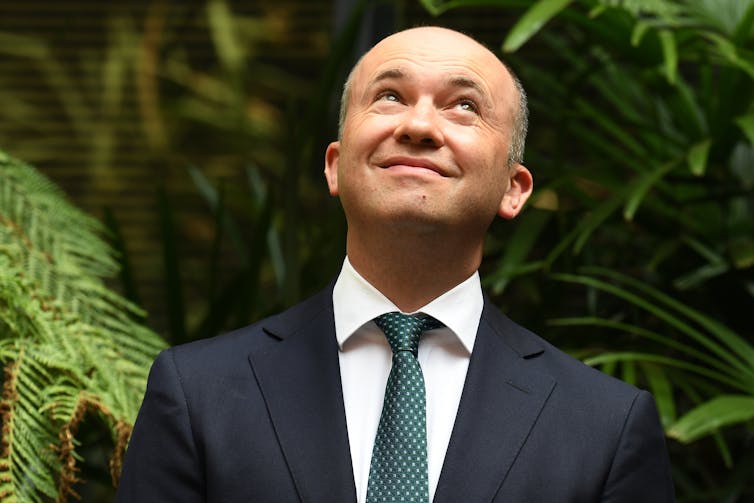 The authors worked with NSW Environment Minister Matt Kean, pictured, to help devise the policy.
Dean Lewins/AAP
The authors worked with NSW Environment Minister Matt Kean, pictured, to help devise the policy.
Dean Lewins/AAP
What’s the roadmap all about?
The roadmap acknowledges that within 15 years, three-quarters of NSW’s coal-fired electricity supply is expected to reach the end of its technical life. It says action is needed now to ensure cheap, clean and reliable electricity, and to set up NSW as a global energy superpower.
The plan involves a coordinated approach to transmission, generation and storage. By 2030, the government aims to:
deliver about 12 gigawatts of new transmission capacity through so-called “renewable energy zones” in three regional areas by 2030. It would most likely be generated by wind and solar
support about 3 gigawatts of energy storage to help back up variable renewable energy supplies. This would involve batteries, pumped hydro, and “hydrogen ready” gas peaking power stations
attract up to A$32 billion in private investment in regional energy infrastructure investment by 2030
support more than 6,300 construction and 2,800 ongoing jobs in 2030, mostly in regional NSW
reduce NSW’s carbon emissions by 90 million tonnes.
The plan also aims to see the average NSW household save about A$130 a year in electricity costs, although this might be hard to achieve in practice. And regional landholders hosting renewable projects on their properties are expected to earn A$1.5 billion in revenue over the next 20 years.
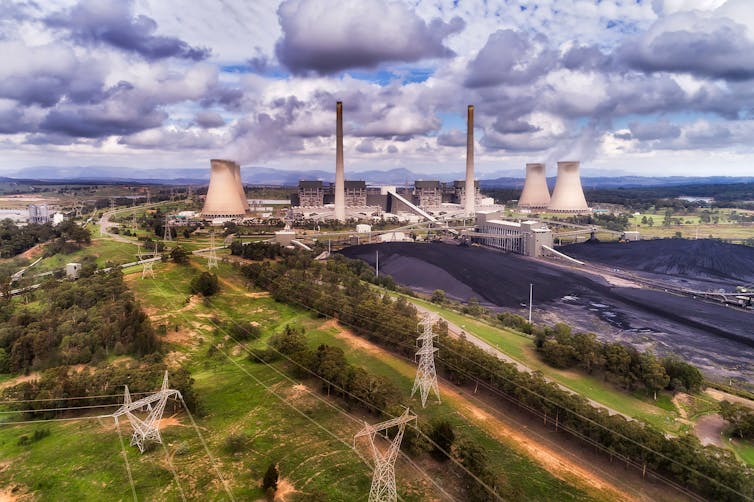 12 gigawatts of new renewables capacity is about six times the capacity of NSW’s Liddell coal-fired power station.
Shutterstock
12 gigawatts of new renewables capacity is about six times the capacity of NSW’s Liddell coal-fired power station.
Shutterstock
Giving generators options
One of the most innovative aspects of the NSW proposal is that generators will have two options when it comes to selling their electricity.
First, the government will appoint an independent “consumer trustee” to purchase electricity from generators at an agreed price – giving the generators the long-term certainty they need to invest. The trustee would then sell this electricity either directly to the market, or through contracts to retailers.
But the trustee will encourage generators to first seek a better price by finding their own customers, such as energy consumers and other electricity retailers.
Read more: Zali Steggall's new climate change bill comes just as economic sectors step up
This system is different to the approach adopted in Victoria and the ACT, where government contracts remove any incentive for generators to participate in the energy market. Over time, this limits market competition and innovation.
The NSW plan improves on existing state policies in another way – by aligning financial incentives to the physical needs of the system. The Consumer Trustee will enter into contracts with projects that produce electricity at times of the day when consumers need it, and not when the system is already oversupplied.
While this won’t be easy for the trustee to model, this approach is likely to benefit consumers more than in other jurisdictions where lowest-cost projects seem to be preferred, irrespective of whether the energy they produced is needed by consumers.
One shortcoming of the roadmap is it does not financially reward existing low-emissions electricity generators in NSW, nor does it charge carbon-heavy electricity producers for the emissions they produce. This could be corrected in the future by integrating the policy into a nationally consistent carbon price, which transfers the cost of carbon pollution onto heavy emitters.
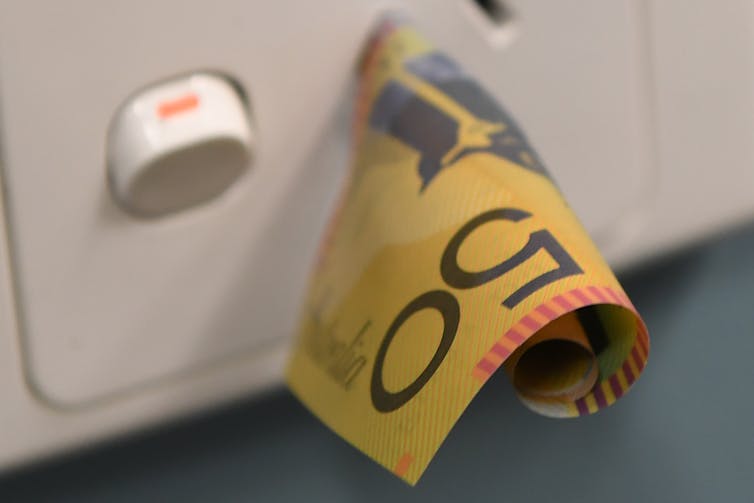 Electricity generators will be guaranteed a floor price for their electricity.
Julian Smith/AAP
Electricity generators will be guaranteed a floor price for their electricity.
Julian Smith/AAP
Why is all this so important?
NSW’s ageing coal-fired power stations are chugging along – albeit with ever-declining reliability. But it’s only a matter of time before something expensive needs fixing. This was the case with Hazelwood in Victoria: the old walls of the boilers had thinned to less than 2 millimetres. The repair cost was prohibitive and the station closed with just five months’ notice. Electricity prices shot up in response to unexpectedly reduced supply.
In NSW, the consumer trustee will be tasked with helping ensuring replacement generation is delivered in a timely way. This means developing new generation capacity well ahead of announced coal plant closures.
This is a helpful development. But ultimately a stronger measure will be needed to ensure coal plants give early notice of their intention to exit the market. The Grattan Institute has previously suggested coal generators put up bonds that are forfeited if they close early. We think this model is worth considering again.
Seize the opportunity
As the world’s largest exporter of coal and LNG, Australia has much to lose as global economies shift to zero emissions. But our renewable energy potential means we also have much to gain.
Australia needs a durable, nationally consistent policy framework if we’re to seize the opportunities of the global transition to clean energy. The NSW roadmap is a significant step in the right direction.
Authors: Tim Nelson, Associate Professor of Economics, Griffith University


















