

where Australia's foreign relations attention will be in 2021
- Written by: Melissa Conley Tyler, Research Fellow, Asia Institute, University of Melbourne
Most of us can’t wait to see the back of 2020, a year that has been memorable for all the wrong reasons. While 2020 provided the ultimate stress test for countries to discover their vulnerabilities, we can confidently predict the New Year will bring its own challenges.
So what will dominate international affairs in 2021? I’m expecting to be watching four Cs: coronavirus, China, climate and crises.
Coronavirus
It should start to get easier, but the pandemic still has a way to play out. 2021 will be about adapting to living with the virus.
We’ll be hoping countries that managed the pandemic well can keep it up, and those that didn’t are helped by the roll-out of vaccines.
We’ll be watching who gets a vaccine and whether access is equitable. How effective the various vaccines are. And how quickly international travel recovers.
Australia will be focused on recovery. It dealt with the health challenge of COVID-19 well, but in the process it has cut itself off from the world. There’s been significant damage to major industries like education and tourism. And terrible experiences for international students, temporary visa holders and Australians stranded overseas.
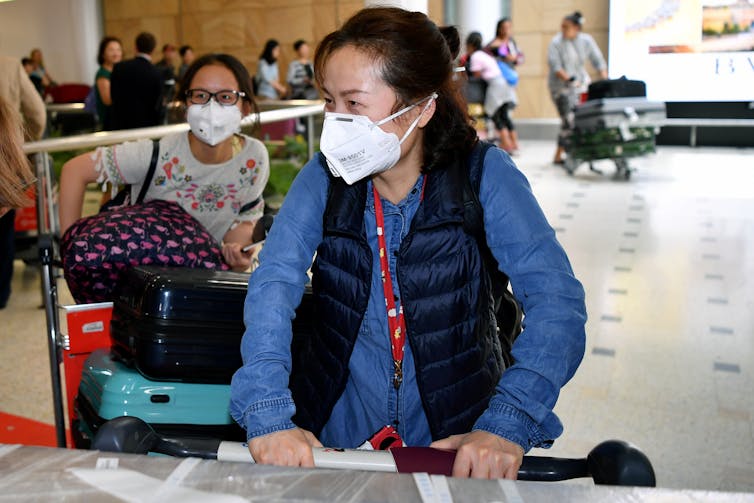 Coronavirus has shaken many Australian industries, including tourism and education - it will be a long recovery starting in 2021.
AAP/Joel Carrett
Coronavirus has shaken many Australian industries, including tourism and education - it will be a long recovery starting in 2021.
AAP/Joel Carrett
While other countries have been worse affected – for example India’s growth trajectory has been knocked years off track – the effects on Australia will be long-lasting. With net negative migration this year, Australia is projected to be more than half a million smaller in 2022, with flow-on effects from construction to retail.
Australian Institute of International Affairs National President Allan Gyngell thinks Australia will be “poorer, weaker and more isolated” in the new COVID-19 world.
The Independent Panel for Pandemic Preparedness and Response will give us a first draft of the history of the COVID-19 virus, with discussion at the World Health Organization executive board in January, and a substantive report to the World Health Assembly in May.
In the best case scenario, the delayed Tokyo Olympics in July 2021 may be a symbol of renewal, with the global community united in relief and optimism having weathered the worst of the pandemic.
China
China will continue to be a preoccupation for Australia. According to former Department of Defence Secretary Dennis Richardson, Australia can expect to be in the dog house for all of 2021. There’s no sign the Australian government has a plan to repair the relationship.
We’re likely to see further deterioration after a new law was passed this week giving the foreign affairs minister the power to cancel international agreements by state governments, local councils and public universities. If, as expected, Canberra uses this to cancel Victoria’s agreement with China on the Belt and Road Initiative, Beijing will see this as another instance of anti-China paranoia.
Read more: Morrison's foreign relations bill should not pass parliament. Here's why
Continuing tensions around foreign investment are built into the system. If Australia follows through on taking China to the World Trade Organization, it will be protracted. The trade war is unwinnable for both countries.
There will continue to be human rights issues, with attention on Xinjiang and Hong Kong, as well as on the cases of detained Australians such as Wang Hengjun and Cheng Lei.
Australian public opinion on China will likely continue its steep decline.
Once President-elect Joe Biden is inaugurated in January, we’ll be watching to see the impact on US-China relations. I think it will be continued contestation, on which there is a bipartisan consensus, but with foreign policy conducted more normally and with more focus on areas of potential collaboration, particularly climate change.
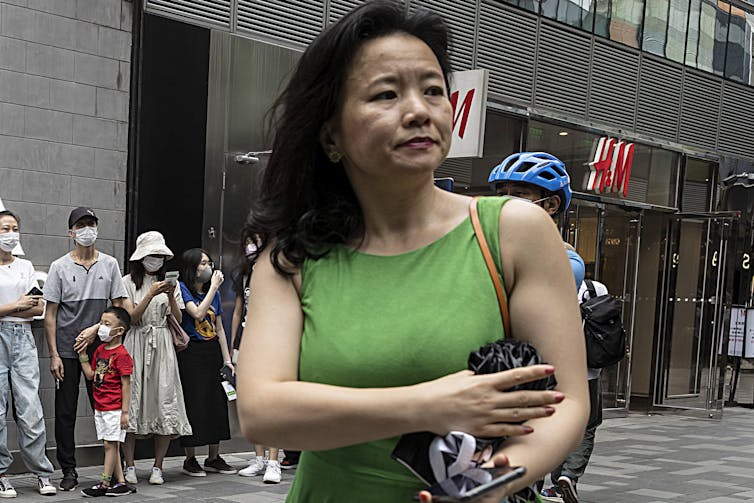 With China-Australian relations taking a nose-dive, what will happen to detained Australian citizens such as Cheng Lei (pictured) and Wang Henjun?
AAP/AP/Ng Han Guan
With China-Australian relations taking a nose-dive, what will happen to detained Australian citizens such as Cheng Lei (pictured) and Wang Henjun?
AAP/AP/Ng Han Guan
Climate
This is where the US election result will have the greatest effect on Australia. The Biden administration has pledged to rejoin the Paris Agreement and convene a world climate summit in its first 100 days to persuade the leaders of carbon-emitting nations to make more ambitious national pledges. When it says it will “stop countries from cheating”, it’s thinking of us.
Australia will be increasingly isolated if it doesn’t fall into line, with its major trading and strategic partners – such as the US, UK, EU, China, Japan and South Korea – all having committed to net zero carbon targets. There will likely be pressure as negotiations for an Australia-EU free trade agreement head towards a conclusion, and negotiations for a post-Brexit Australia-UK agreement commence in earnest.
Read more: What would a Biden presidency mean for Australia?
There are already signs Australia is recognising it can no longer be such an outlier.
The next conference of the parties to the UN Framework Convention on Climate Change (COP26) in Glasgow in November is likely to capture public attention, like Copenhagen in 2009, as countries with higher ambition push for greater action.
The results at Glasgow will have a huge impact on the trajectory of climate change globally. It’s not an exagerration to say it will be one of the most important international summits in history.
Crises
Beyond these focus areas, there will always be things boiling over. For people who work in international affairs, it feels like it’s always “Events, dear boy, events”: a quote attributed to UK Prime Minister Harold Macmillan when asked what blows governments off course.
We don’t know where or when, but we know there will be natural disasters. People fleeing. Massacres and terrorist attacks. These events draw attention away from slower-moving changes like some countries’ ongoing decline and others’ steady improvement.
There are plenty of situations that could reach a tipping point in 2021 – or stay where they are a bit longer. Unrest in Thailand. A China-India border standoff. Disputes in the South China Sea (or East China Sea). The flashpoint of Taiwan.
North Korea is capable of manufacturing a crisis any time it thinks it is to its advantage. Russia will stir the pot. Things will be delicate as the new US administration engages with Iran. There is a small but ineradicable risk of nuclear terrorism. Disinformation wars will continue.
Closer to home, Australia knows that it will be drawn into any significant regional crisis, whether that’s Bougainville or a PNG political crisis. Mass unrest in West Papua would be particularly challenging.
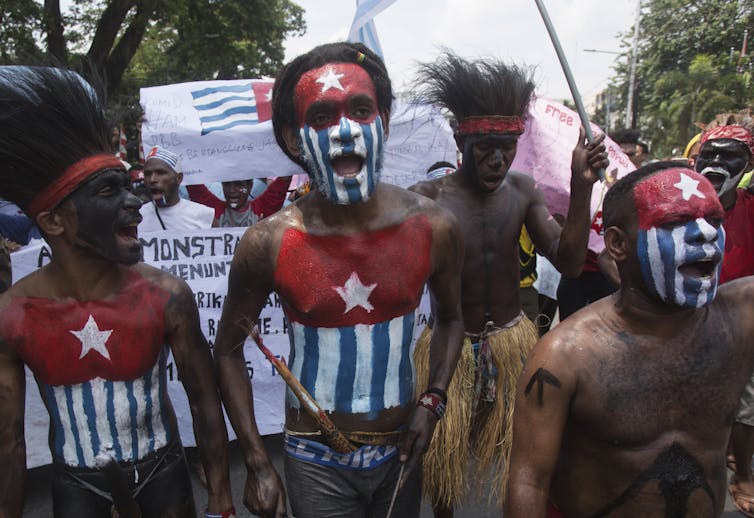 West Papua will continue to present one of the greatest foreign policy challenges for Australia.
AAP/AP/ Binsar Bakkara
West Papua will continue to present one of the greatest foreign policy challenges for Australia.
AAP/AP/ Binsar Bakkara
There are not too many elections that could trigger crises, with Japan and Iran the major elections in 2021. (Australia’s next federal election can be called from August 2021).
Challenging assumptions - and inequities
It’s worth thinking about where our attention might not be in 2021: on the chronic problems that we’ve grown used to. Like more than 2 billion people who don’t have access to safe water and sanitation. Or the nearly 11 million children under five who die each year, mostly from preventable causes.
Ours is still a world of deep inequality. The massive improvements in human well-being over recent decades show that we have the tools to address the remaining pockets of misery. The start of this is to challenge the things we implicitly accept.
If you’re reading this, you’re in the group of people with relative advantage. Think about how you can contribute – whether that’s through your work, donating money or volunteering your time. Find something you think can be improved and decide to make a contribution.
We’re not just spectators in the world of 2021.
Authors: Melissa Conley Tyler, Research Fellow, Asia Institute, University of Melbourne


















