

NZ's Climate Change Commission needs to account for the huge potential health benefits of reducing emissions
- Written by Nick Wilson, Professor of Public Health, University of Otago
The Climate Change Commission’s recent draft report and recommendations has helped to kick-start an extremely important process.
But, as others have argued, there remain serious questions about its narrow view and lack of ambition in key areas.
In particular, the commission has not adequately considered the potential health benefits of climate change mitigation — that is, how reducing emissions involves changes in behaviour and environments that would significantly improve people’s general health.
The evidence for these co-benefits — dietary changes, increased physical activity and reductions in air pollution — is substantial.
Indeed, extrapolating recent international evidence to the New Zealand setting suggests these could ultimately prevent thousands of premature deaths per year. Unfortunately, despite this evidence and the likely impact of those health co-benefits, the commission makes no such estimates.
But there is still time to influence its final report. Submissions to the commission close on March 28.
In the table below we summarise our assessment of the draft report’s attention to the co-benefits in key health areas.
Major gains from a dietary shift
While the report considers some aspects of inequality, this relates mainly to income. It does not touch at all on health inequalities, despite these already being a major concern practically, ethically and from the perspective of our obligations under Te Tiriti o Waitangi (which the report mentions only twice).
The most important gap in the report is arguably the large health gains that could arise from shifts to a more plant-based diet, with reduced consumption of ruminant meat and dairy products.
The report may actually be misleading when it says: “Red meat and dairy products from Aotearoa are already some of the least emissions intensive in the world.”
As one government study last year countered, such claims don’t adequately account for “carbon losses arising from forest harvesting, deforestation and scrub clearance”.
We should also account for the carbon costs of drying milk and the biodiversity damage of importing palm kernel for stock feed.
The report also overlooks specific New Zealand research showing major scope for a shift to dietary patterns that are healthier, cheaper, lower in greenhouse emissions and which could reduce overall health-care costs.
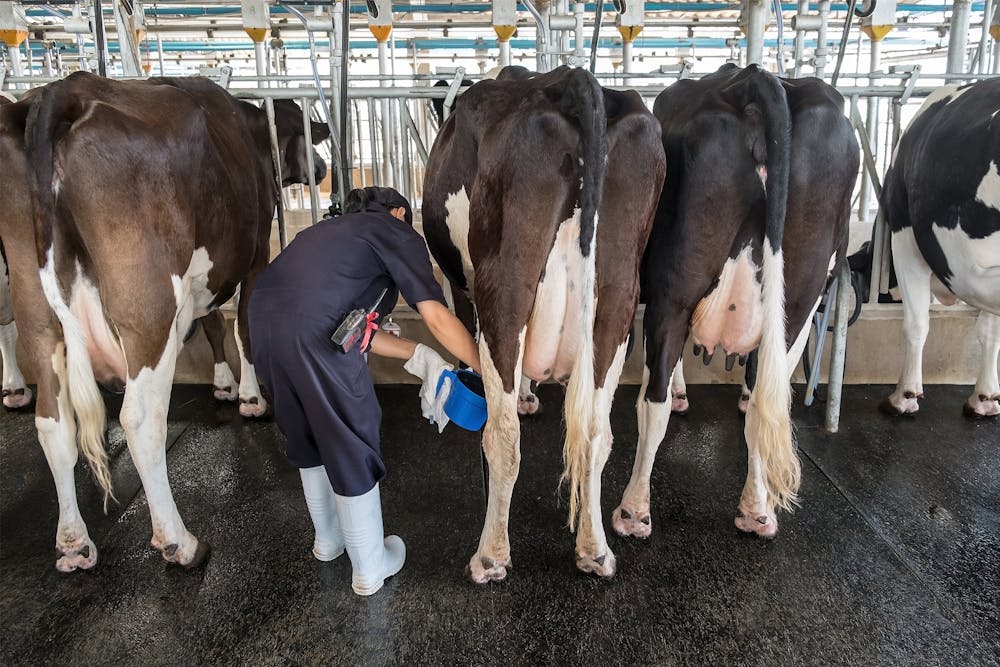 The commission must account for the hidden climate costs of dairy farming and other forms of agriculture.
www.shutterstock.com
The commission must account for the hidden climate costs of dairy farming and other forms of agriculture.
www.shutterstock.com
Recommendations to the commission
It seems clear the health co-benefits of reducing emissions should be used as an explicit unifying theme in the commission’s final report. Identifying meaningful value for the public has the advantage of increasing support for meaningful action.
The idea we can reduce emissions and be happier and healthier (with immediate and local effect) is far more appealing than a technical and industry approach to reducing emissions.
The commission should include reducing health inequalities as a co-benefit. It should also do more to ensure the government’s treaty obligations are met in all significant areas.
To help with that, the commission should include both public health expertise and Māori health expertise among its commissioners.
Read more: Why we should release New Zealand's strangled rivers to lessen the impact of future floods
The commission should also build on the experience of New Zealand’s successful response to the COVID-19 pandemic. This response has shown the benefits of rapid, science-informed and vigorous all-of-government action — and delivered public health and economic benefits.
The final report should explain the likely cost savings of health co-benefits. By reducing health-care costs, the economic impact of responding to climate change might be even less than the commission has estimated, already under 1% of projected GDP.
Combined with the benefits of preventing potentially catastrophic disruptions to planetary systems, the health co-benefits of combating climate change represent a bargain.
Authors: Nick Wilson, Professor of Public Health, University of Otago

















