

Climate policy that relies on a shift to electric cars risks entrenching existing inequities
- Written by: Alistair Woodward, Professor, School of Population Health, University of Auckland
At the end of this month, the Climate Change Commission will deliver its final advice to government, outlining how New Zealand can reach its climate targets.
New Zealand has committed to reaching net zero emissions of long-lived greenhouse gases (carbon dioxide and nitrous oxide) and reducing methane emissions from animals by 24-47% by 2050.
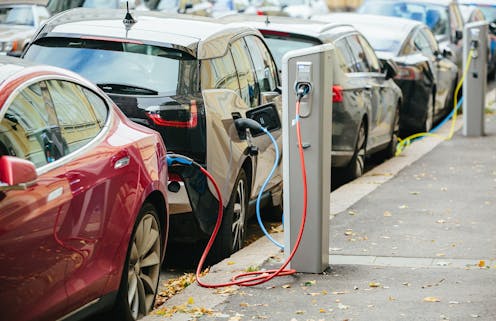
The commission’s draft advice proposed electrifying the country’s car fleet as the best way of reducing transport emissions.
There are a number of reasons to question this course of action. One is equity — relying on electric cars to meet climate targets runs the risk of embedding existing health inequities.
Our first concern is that electric cars won’t reduce transport emissions quickly enough to meet our 2050 net zero carbon target. And without rapid cuts in emissions, climate change will continue largely unchecked, hitting disadvantaged populations hardest.
According to the commission, domestic transport emissions must be halved by 2035, and the pathway the commission favours relies on shifting 40% of light vehicles from fossil fuels to electricity. Others argue bigger cuts are needed, sooner, given the slowness of emission reduction in other sectors.
Even with the commission’s (relatively) modest goal for electrification, there are two problems.
First, it is doubtful the target can be achieved. Obstacles include the low starting point (electric cars currently make up about 2% of the vehicle fleet), international competition for supplies and the high cost of EVs, slow turn-over of the old fleet (the average life span of cars in New Zealand is about 14 years), no obvious source of suitable second-hand vehicles, and the work required to build a comprehensive charging infrastructure.
Second, as the recent Ministry of Transport green paper demonstrates, even if the goal of 40% electric cars was met, this wouldn’t bend the emissions curve far enough to reach the 2050 target.
Fundamentally, the number of private vehicles must reduce, the distance travelled must shrink, and alternative forms of transport (including electric buses and electric bikes) must substitute for car trips. Making towns and cities more attractive for walking and cycling is also necessary to take serious amounts of carbon out of transport.
Unchecked climate change amplifies disadvantage
If emissions continue to rise, climate change unfolds unchecked. This is inherently unfair because climate change amplifies social disadvantage, including the conditions that lead to poorer health outcomes for Māori and Pacific populations. Examples include infectious diseases, mental health problems and chronic respiratory diseases.
Climate change will sharpen the threat of food insecurity, which currently affects Māori and Pacific peoples disproportionately as a result of pressures on food production worldwide. Living in more marginal areas in poorer-quality housing means Māori and Pacific communities are more severely affected by extreme storms and floods.
People in lower socioeconomic groups also face greater exposure to climate risks, for example due to outdoor work, and are less able to afford measures such as air conditioning to adapt to the impacts of climate change.
Penalties in a car-dominated world
The electric car might be an energy solution, but it is definitely not a transport solution. If New Zealand relies on this technology to reduce emissions, the price will be perpetuating an unfair and damaging transport system.
People without cars (10% of Māori households compared with about 5% of non-Māori) find it more difficult to access vital goods and services, and are more likely to be socially excluded.
A high volume of fast motor traffic, encountered more commonly in low-income communities because they tend to be closer to busy roads, deters walking and cycling. It also reduces neighbourhood social interactions and causes health-damaging air and noise pollution.
Electric engines will not prevent social severance, and will not get rid of noise and air pollution. Road crash injuries, known to occur more commonly among disadvantaged groups, will not be reduced by electric cars.
Indeed, there are concerns road trauma will be more common because of increased distances travelled, the greater weight of electric vehicles compared to petrol or diesel equivalents, and increased risk to pedestrians due to the quiet and rapid acceleration of electric cars.
Missing out on co-benefits
A transport system that relies on cars discourages physical activity, one of the cheapest and most effective means of preventing diseases such as type 2 diabetes, heart disease and many types of cancer. These are the commonest causes of death in New Zealand and affect Māori, Pacific and low-income New Zealanders particularly severely.
A narrow focus on changing what is under the bonnet from petrol to electric means we miss the opportunity for win-win outcomes.
It is not clear yet how the shift to electric cars will be paid for, but it is likely the cost will not be evenly shared. Indeed a climate policy that relies on individual households paying for new technology will always run the risk of aggravating inequities.
Car dependence is socially patterned, shaped by the geography of affordable housing, the demands of work and access to alternative transport. This means those with low incomes rely particularly heavily on cars, but will not have the means to transition to electric vehicles unless there are large subsidies or a source of cheap second-hand cars.
To sum up, a climate policy that relies heavily on electric cars will do little to improve poor health outcomes and ensure a just transition. Health, equity and sustainability require bigger changes, more transport choices and environments with less need to travel by car.
Authors: Alistair Woodward, Professor, School of Population Health, University of Auckland


















