

Australia has not learned the lessons of its bungled COVID vaccine rollout
- Written by: Stephen Duckett, Director, Health Program, Grattan Institute
Australia is now over four months into its COVID vaccine rollout, and it’s still not going well.
At the six-week mark, I wrote about four ways the vaccine rollout had been bungled: the wrong pace, phasing, model, and messaging.
Nearly three months on, sadly none have been fixed, and new symptoms of these blunders are emerging.
With higher rates of vaccination, Australia’s current COVID outbreaks may have been more easily managed. Sydney, Perth, Darwin and now Brisbane are all in lockdown, and Victoria just exited one.
Bungle 1: the wrong pace
In April, I identified the first bungle as the federal government’s assertion the rollout was “a marathon not a sprint”. The government then said the rollout was “not a race”, but has since backed away from that message.
Despite abandoning the “not a race” excuse, the government hasn’t displayed a new sense of urgency. More doses are on order, but they won’t flow until September.
The continuing effects of the “stroll-out” are there for everyone to see. Only about 5% of the population is fully vaccinated, way behind the proportion in similar countries.
Bungle 2: the wrong phasing
At the three-month mark it was clear the phasing was wrong. Vaccination of quarantine and health workers, supposedly in phase 1a, was not completed before other phases were rolled out.
A driver transporting international arrivals appears to have been the vector for the current break out in NSW.
He was unvaccinated, yet he should have been in phase 1a.
The rollout to aged-care residents and workers, and people with a disability, is still not complete.
Bungle 3: the wrong model
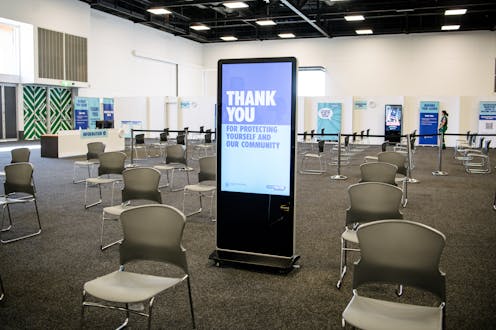
Mass vaccination requires mass vaccination centres. The original federal government model placed almost sole reliance on GPs for the rollout. That didn’t work.
Although thousands of general practices are providing vaccines, they only provide about half of all vaccinations. A mixed model — both GPs and mass centres — seems to be working now and should continue.
Unfortunately, planning for the next stage — when more Pfizer doses start to flood into the country — seems to be going back to the old model of a GP emphasis.
This isn’t consistent with a speedy mass rollout and harks back to the lethargic approach of the start of the year. The wrong pace still appears to be creating another bungle, the wrong model.
Bungle 4: the wrong messaging
The early stages of the rollout were characterised by optimistic political messaging, complete with photos of the prime minister jumping the queue to get his Pfizer doses.
The biggest problem with the relentlessly optimistic political messaging is that it made it harder for the government to admit its mistakes, learn from them, and reset the rollout.
The wrong messaging continues on four fronts, albeit different from the earlier bungles.
First is the militarisation of the rollout. A navy commander, then an army general, and now the national security committee of cabinet have all been brought into the rollout fold.
Read more: Calling in the army for the vaccine rollout and every other emergency shows how ill-prepared we are
The military men are no doubt competent people, but the signal the government is sending to the public service is appalling: that it’s not up to the task.
Unfortunately, that signal is consistent with the government’s undermining of the public service and its love of flags, military men, and labelling everything as “Operation” something, as if a new militaristic label will somehow overcome the government’s mishandling, or perhaps simply distract people’s attention.
The second messaging bungle has been about vaccine hesitancy. When the present outbreak-induced vaccine demand dies down, the government should mount a series of media campaigns to address vaccine hesitancy properly.
The third messaging bungle was with AstraZeneca restrictions: first to people over the age of 50 and then to people over 60.
And last night, the prime minister back-flipped on all of this and announced AstraZeneca would be available to anyone who wants it, of any age, if they request it from their GP. Unfortunately, many Australians appear to have voted with their feet (or arms) and are not interested in AstraZeneca so the take up of this option is likely to be trivial.
The tighter restrictions were about keeping people safe, but they were not marketed as such. As a consequence, the AstraZeneca vaccine now seems to be indelibly tarnished and will be phased out from about October, according to the government’s 2021 vaccination schedule.
The final contemporary messaging problem is about reopening borders. Obviously, now is not the right time to talk about opening borders, while COVID is spreading rapidly throughout the country.
But eventually we will need to have that conversation. Head-in-the-sand denialism — that the border reopening is far off in the future — is not good leadership. Even NSW Liberal premier Gladys Berejiklian argues we need to set a threshold for vaccinations for when opening up might happen. The federal government must lead this conversation, setting out the options and the timelines.
Over four months into the vaccine rollout, the bungling continues. It’s still too slow and badly managed, with devastating consequences for individuals and the economy. Can rollout 2.0 get it right? We can live in hope.
Authors: Stephen Duckett, Director, Health Program, Grattan Institute


















