

Poor sleep is really bad for your health. But we found exercise can offset some of these harms
- Written by: Bo-Huei Huang, PhD candidate, University of Sydney
Despite the well-known links between poor sleep and poorer health, getting enough good quality sleep has become a luxury in modern society.
Many of us struggle to improve our sleep, while amid the COVID pandemic and recurring lock-downs, our sleep has deteriorated.
Read more: We're sleeping more in lockdown, but the quality is worse
But our new study, published today in the British Journal of Sports Medicine, bears some encouraging news.
We found doing enough physical activity (including exercise such as running or going to the gym) may counter some of the adverse health effects of unhealthy sleep patterns.
Let us explain.
Does poor sleep really harm our health?
Unhealthy sleep patterns include:
not sleeping for long enough (less than seven hours per night for adults)
sleeping for too long (more than nine hours per night for adults)
snoring
insomnia
being a night owl, also known as “late chronotype”. This is people who naturally feel most awake and motivated in the evening, and are sluggish in the morning.
They are all associated with poorer health.
Recent research shows poor sleep may:
Read more: Why sleep is so important for losing weight
However, very few studies have examined how sleep and physical activity interact and impact our health.
We set out to answer the question: if I have poor sleep but I do quite a lot of physical activity, can that offset some of the harms of my poor sleep in the long-term? Or would this not make any difference?
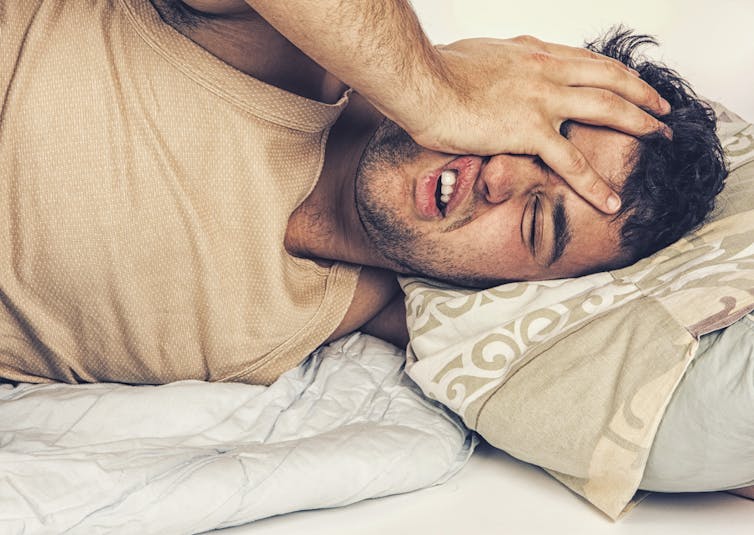 Unhealthy sleep is associated with poorer health.
Shutterstock
Unhealthy sleep is associated with poorer health.
Shutterstock
What did we do?
We analysed the information provided by 380,055 middle-aged adults in the UK Biobank study, recruited between 2006 and 2010. Participants reported their level of physical activity and five aspects of their sleep.
We grouped people based on their sleep behaviour into healthy, intermediate or poor.
We categorised people’s level of physical activity based on the World Health Organization (WHO) guidelines. People who met the upper bounds of the guidelines did 300 minutes of moderate intensity physical activity a week, or 150 minutes of vigorous exercise, or a combination of both. Those who met the lower bound did 150 minutes of moderate intensity exercise a week, or 75 minutes of vigorous exercise, or a combination.
Moderate intensity physical activity usually makes you slightly out of breath if sustained for a few minutes and includes brisk walking or cycling at a leisurely pace.
Vigorous exercise usually makes you breath hard and can include running, swimming, and playing sports like tennis, netball, soccer or footy.
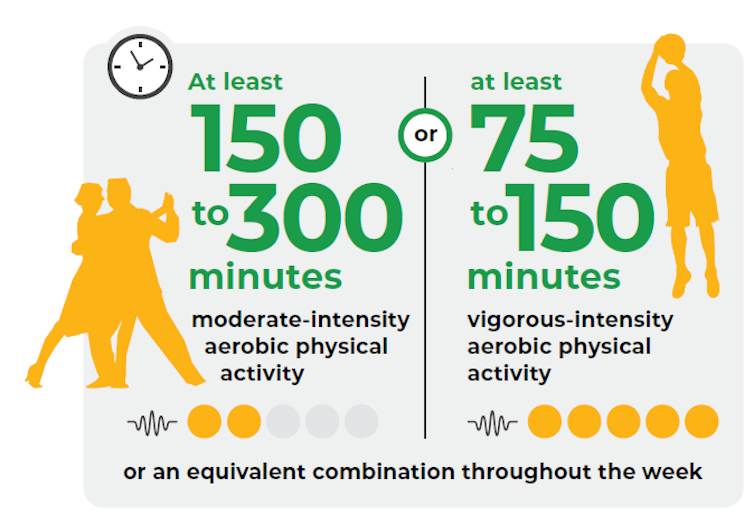 Doing at least 150 minutes of moderate intensity physical activity a week, or 75 minutes of vigorous exercise, can offset some of the health harms of poor sleep.
World Health Organization, CC BY-NC-SA 3.0 IGO
Doing at least 150 minutes of moderate intensity physical activity a week, or 75 minutes of vigorous exercise, can offset some of the health harms of poor sleep.
World Health Organization, CC BY-NC-SA 3.0 IGO
What did we find?
We followed up with the participants after 11 years. By May 2020, 15,503 participants had died, of which 4,095 died from heart disease and 9,064 died from cancer.
We found that, compared to healthy sleepers, people with poor sleep had a 23% higher risk of premature death, a 39% higher risk of dying from heart disease, and a 13% higher risk of dying from cancer.
We then compared the data of people who slept well with those who slept poorly, and how much they exercised. We found people who had the highest risk of dying from heart disease and cancer were those who had poor sleep and didn’t meet the WHO physical activity guidelines. On the other hand, those who had poor sleep but did enough physical activity to meet the WHO guidelines didn’t have as high a risk of dying from heart disease or cancer, compared to those who slept poorly and didn’t meet the physical activity guidelines.
For example, let’s look at the risk of dying from cancer. Those who had poor sleep and did no physical activity had a 45% higher risk of dying from cancer compared to those who had healthy sleep and exercised a lot. But among those who met the physical activity guidelines, despite poor sleep, they didn’t really have a higher risk of dying from cancer any more.
We found physical activity levels which met at least the bottom threshold of the WHO guidelines could reduce or eliminate some of the health harms of poor sleep. So people who did at least 150 minutes of moderate intensity or 75 minutes of vigorous intensity exercise per week were to some extent protected against the detrimental health effects of poor sleep.
Read more: How much sleep do you really need?
Those who had both poor sleep and did no moderate-to-vigorous intensity physical activity had the highest risks of premature death.
Our study wasn’t designed to find out how and why physical activity may counteract some of the bad physiological impacts of poor sleep. But other research provides theories. For example, adequate physical activity may reduce inflammation, help maintain a healthy glucose metabolism, and increase the number of calories burned.
It’s important to note our study was what’s called an “observational study”. It shows an association between adequate physical activity and reduced harms from poor sleep, but we must be careful in interpreting causation. It can’t conclusively say adequate physical activity causes the reduction of harms from poor sleep, though there’s strong evidence for an association in the right direction.
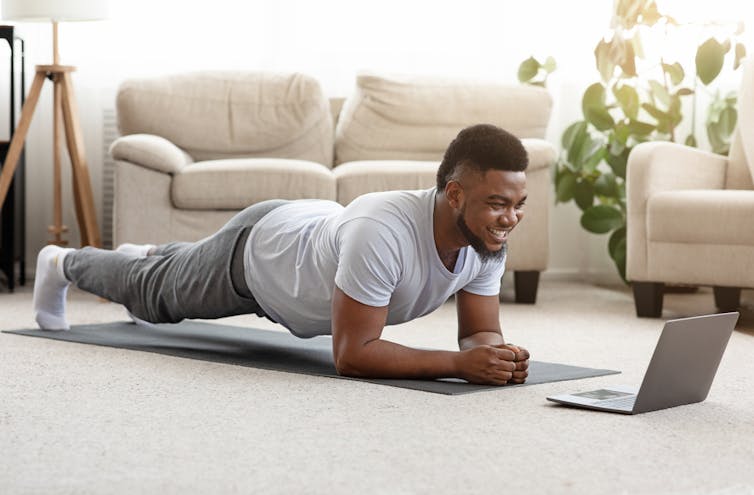 There are many ways to work out even if coronavirus restrictions mean you can’t enjoy your favourite activity.
Shutterstock
There are many ways to work out even if coronavirus restrictions mean you can’t enjoy your favourite activity.
Shutterstock
Our study offers a hopeful message, that even if you haven’t been able to improve your sleep, you can still offset some of the health harms by doing enough exercise. Our previous research has also shown physical activity may help improve poor sleep patterns, which are a serious health problem across the world.
In addition to combating some of the negative outcomes of poor sleep, physical activity can also provide many other health benefits and extend our lives. For example, a 2019 study found people who met WHO’s physical activity target above lived three years longer on average than those who didn’t.
During lockdowns, access to parks, gyms, and swimming pools might be limited in many places. But there are still many ways to to stay fit and active at home during the coronavirus.
Authors: Bo-Huei Huang, PhD candidate, University of Sydney


















