

is New Zealand losing or gaining native forests?
- Written by: Sebastian Leuzinger, Professor, Auckland University of Technology
 CC BY-ND
Climate explained is a collaboration between The Conversation, Stuff and the New Zealand Science Media Centre to answer your questions about climate change.
If you have a question you’d like an expert to answer, please send it to climate.change@stuff.co.nz
In recent decades, has New Zealand lost forest (both native and exotic) or gained it, courtesy of the One Billion Trees programme? What about natural habitats like wetlands?
Apart from wetlands, land above the treeline, coastal dunes and a few other exceptions, New Zealand was once covered in forests from Cape Reinga to Bluff.
So was Europe, which basically consisted of a single forest from Sicily in southern Italy to the North Cape in Norway, before human intervention.
But since people arrived in New Zealand some 850 years ago, about three quarters of the country’s native forest area has been lost. About half of the loss happened before Europeans arrived, mostly through burning to clear large areas of native bush.
CC BY-ND
Climate explained is a collaboration between The Conversation, Stuff and the New Zealand Science Media Centre to answer your questions about climate change.
If you have a question you’d like an expert to answer, please send it to climate.change@stuff.co.nz
In recent decades, has New Zealand lost forest (both native and exotic) or gained it, courtesy of the One Billion Trees programme? What about natural habitats like wetlands?
Apart from wetlands, land above the treeline, coastal dunes and a few other exceptions, New Zealand was once covered in forests from Cape Reinga to Bluff.
So was Europe, which basically consisted of a single forest from Sicily in southern Italy to the North Cape in Norway, before human intervention.
But since people arrived in New Zealand some 850 years ago, about three quarters of the country’s native forest area has been lost. About half of the loss happened before Europeans arrived, mostly through burning to clear large areas of native bush.
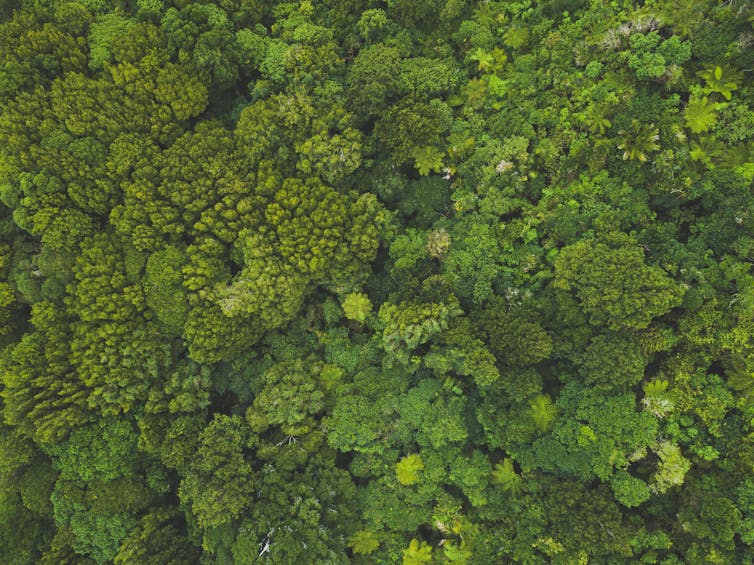 Most of New Zealand was once covered in native forest.
Shutterstock/Latitude Creative
In recent decades, the loss of native forest has slowed down. For example, in the first decade of the 21st century, we lost roughly 16,000 hectares of native forest, which translates to a loss of about 0.2% of the remaining total area covered in native forest (about 7.5 million hectares). The error associated with such estimates is considerable, though, because land cover is complex and highly fragmented.
Read more:
As extreme fires transform Alaska's boreal forest, deciduous trees put a brake on carbon loss and how fast the forest burns
A billion trees
According to Global Forest Watch, the drivers behind the more recent losses of native forests include exotic plantation forests, urban developments and wildfires. Indeed, the total land area dedicated to exotic plantation forests increased by about 200,000 hectares per decade between 1990 and 2017.
Most of New Zealand was once covered in native forest.
Shutterstock/Latitude Creative
In recent decades, the loss of native forest has slowed down. For example, in the first decade of the 21st century, we lost roughly 16,000 hectares of native forest, which translates to a loss of about 0.2% of the remaining total area covered in native forest (about 7.5 million hectares). The error associated with such estimates is considerable, though, because land cover is complex and highly fragmented.
Read more:
As extreme fires transform Alaska's boreal forest, deciduous trees put a brake on carbon loss and how fast the forest burns
A billion trees
According to Global Forest Watch, the drivers behind the more recent losses of native forests include exotic plantation forests, urban developments and wildfires. Indeed, the total land area dedicated to exotic plantation forests increased by about 200,000 hectares per decade between 1990 and 2017.
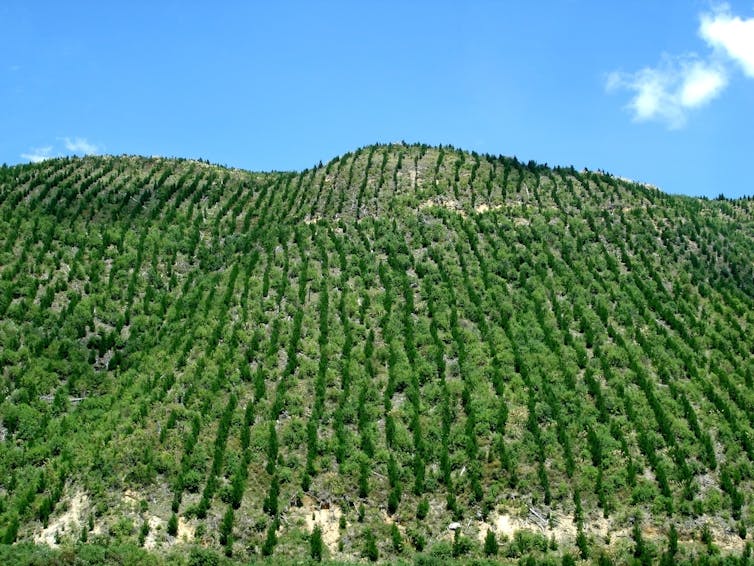 Commercial plantations of exotic pines have replaces native forests.
Shutterstock/Cloudia Spinner
So what has the One Billion Trees Programme achieved in comparison to these changes?
The project’s aim is to double the current planting rate and plant one billion trees between 2018 and 2028. The latest report shows about a quarter of this goal has been achieved in terms of the number of trees planted. In regards to forest area, 25,557 hectares have been reforested, about half of it with natives.
This is a remarkable achievement in light of the losses cited above and the short duration of the programme.
Commercial plantations of exotic pines have replaces native forests.
Shutterstock/Cloudia Spinner
So what has the One Billion Trees Programme achieved in comparison to these changes?
The project’s aim is to double the current planting rate and plant one billion trees between 2018 and 2028. The latest report shows about a quarter of this goal has been achieved in terms of the number of trees planted. In regards to forest area, 25,557 hectares have been reforested, about half of it with natives.
This is a remarkable achievement in light of the losses cited above and the short duration of the programme.
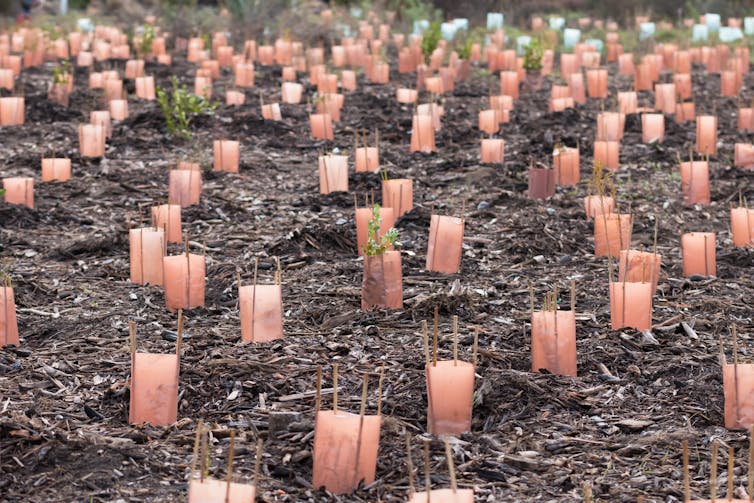 About a quarter of a billion trees have been planted so far, half of it native species.
Shutterstock/Kira Volkov
Saving remaining peat bogs
We think of forests as our guardians of carbon — and indeed, an aged New Zealand forest can hold about 350 tonnes of carbon per hectare. But intact peat bogs, such as the Kopuatai dome in the Waikato region, can hold up to 1,400 tonnes of carbon per hectare.
But peat bogs only store carbon if they remain wet. Once drained, they begin to emit carbon dioxide. Almost half of New Zealand’s peatlands are in the Waikato, but of a total of 89,000 hectares only 19,400 hectares remain in a natural state.
About a quarter of a billion trees have been planted so far, half of it native species.
Shutterstock/Kira Volkov
Saving remaining peat bogs
We think of forests as our guardians of carbon — and indeed, an aged New Zealand forest can hold about 350 tonnes of carbon per hectare. But intact peat bogs, such as the Kopuatai dome in the Waikato region, can hold up to 1,400 tonnes of carbon per hectare.
But peat bogs only store carbon if they remain wet. Once drained, they begin to emit carbon dioxide. Almost half of New Zealand’s peatlands are in the Waikato, but of a total of 89,000 hectares only 19,400 hectares remain in a natural state.
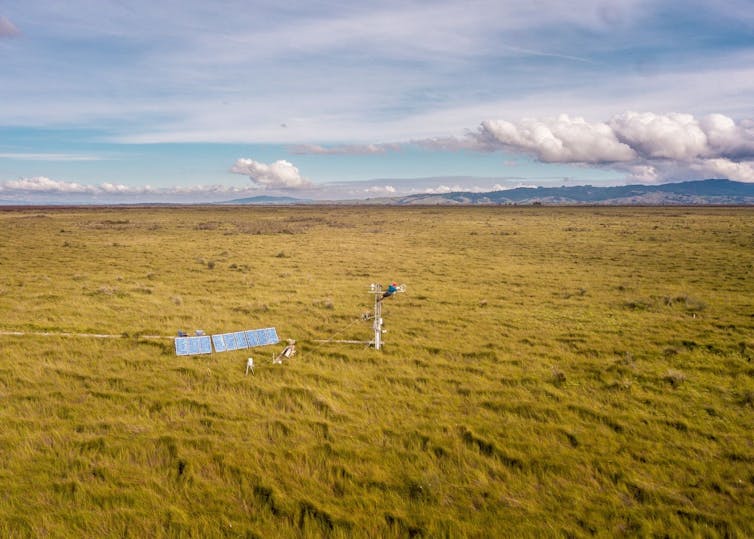 The Kopuatai dome is New Zealand’s largest intact peat bog.
Georgie Glover-Clark, CC BY-SA
The Kopuatai bog itself is surrounded by dairy farms operating on drained peat. Collectively, the Waikato’s drained peatlands produce 10-33 tonnes of CO₂-equivalent emissions per hectare each year.
The draining of peatlands in the Waikato region did far more damage, in terms of carbon emissions, than a small loss of forest area.
Read more:
Peat bogs: restoring them could slow climate change – and revive a forgotten world
But nevertheless, planting trees and increasing our forest area is an important and necessary contribution to climate mitigation, and often comes with a myriad of other benefits, far beyond carbon sequestration.
Sometimes it’s as easy as planting your own fruit trees around your house. They will capture carbon for years to come, and keep you from buying fruit that has been transported thousands of kilometres.
They might even motivate you to reduce food waste. Globally, about 25-30% of food goes to waste. If we reduced food waste, we could save agricultural land multiple times the size of New Zealand and plant trees there instead.
The Kopuatai dome is New Zealand’s largest intact peat bog.
Georgie Glover-Clark, CC BY-SA
The Kopuatai bog itself is surrounded by dairy farms operating on drained peat. Collectively, the Waikato’s drained peatlands produce 10-33 tonnes of CO₂-equivalent emissions per hectare each year.
The draining of peatlands in the Waikato region did far more damage, in terms of carbon emissions, than a small loss of forest area.
Read more:
Peat bogs: restoring them could slow climate change – and revive a forgotten world
But nevertheless, planting trees and increasing our forest area is an important and necessary contribution to climate mitigation, and often comes with a myriad of other benefits, far beyond carbon sequestration.
Sometimes it’s as easy as planting your own fruit trees around your house. They will capture carbon for years to come, and keep you from buying fruit that has been transported thousands of kilometres.
They might even motivate you to reduce food waste. Globally, about 25-30% of food goes to waste. If we reduced food waste, we could save agricultural land multiple times the size of New Zealand and plant trees there instead.
Authors: Sebastian Leuzinger, Professor, Auckland University of Technology
Read more https://theconversation.com/climate-explained-is-new-zealand-losing-or-gaining-native-forests-163976


















