

What should you eat after you've been on antibiotics? And can probiotics and prebiotics get your gut back to normal?
- Written by: Clare Collins, Laureate Professor in Nutrition and Dietetics, University of Newcastle
Antibiotics treat infections caused by bacteria. But they can also destroy the good bacteria in your gut. For some people, this results in an upset stomach and diarrhoea.
One UK review of the research looked at changes in gut bacteria after antibiotics commonly prescribed for respiratory and urinary tract infections found that after treatment, the numbers and diversity in bacteria types rapidly declines.
It also found some types of “bad” microorganisms increased while some “good” ones decreased.
For most people, once antibiotic treatment was stopped, the gut bacteria recover to some degree. But other studies suggest some antibiotics can have long-lasting effects on the balance of microorganisms.
It’s important to use antibiotics only when needed, and definitely not for viral infections, because antibiotics can’t kill viruses such as the common cold or COVID-19.
So what should you eat after a course of antibiotics? You might have heard of probiotics and prebiotics, but what are they, and what evidence is there to show they’re beneficial?
Probioitcs contain ‘good gut bacteria’
Probiotics are foods, typically yoghurts and yoghurt drinks, that contain “good gut bacteria”: live microorganisms that can recolonise the gut or improve your gut health.
To be called a probiotic, they must be able to resist stomach acid and digestive processes, and then be able adhere to the gut walls and grow, while not causing any issues for the gut wall. They must also be tested for safety and efficacy in controlled trials.
Read more: Plain, Greek, low-fat? How to choose a healthy yoghurt
To be called a probiotic, the dose of microorganisms needs to be sufficient to help restore the “good” bacteria, by elbowing out the “bad bacteria”.
Most yoghurts contain “good bacteria” but not all can survive the acidity of the stomach acid or the bacteria won’t grow in the bowel, so there is no probiotic benefit.
For probiotics to exert these beneficial effects, they not only have to make it to the large bowel, but once there they need the right fuel to help them grow well. That’s where prebiotics come into play – but more on them shortly.
What does the science say about probiotics?
Probiotics are widely promoted as being good for your overall health. The science on that has been mixed, but it does suggest people who are likely to get diarrhoea after antibiotics may benefit from consuming them.
One review of the evidence found probiotics may be useful for those at high risk of antibiotic-associated diarrhoea, such as the elderly and people in hospital.
 Most yoghurts contain good bacteria but can’t survive the acidity of the stomach.
Shutterstock
Most yoghurts contain good bacteria but can’t survive the acidity of the stomach.
Shutterstock
The review found side effects were common when taking antibiotics and include taste disturbances, nausea, abdominal cramping, soft stools, fever and flatulence.
But people taking probiotics reported fewer side effects, suggesting they may be helpful in countering some of the side effects.
So what are prebiotics?
Prebiotics are compounds that help beneficial gut microorganisms grow and survive.
Prebiotic foods contain complex carbohydrates that can’t be digested and dietary fibres that resist digestive processes in the stomach and small intestine.
They pass undigested into the large bowel where they are fermented by the healthy “good” bacteria.
Read more: Gut feeling: how your microbiota affects your mood, sleep and stress levels
To be called a prebiotic, they need to undergo the processes above, and be shown in clinical trials to selectively improve the microorganism composition in the gut.
Not all dietary fibres are prebiotic. Common ones include complex carbohydrates called fructo-oligosaccharides, inulin and resistant starch.
You can find foods at the supermarket with added prebiotics, but non-digestible carbohydrates occur naturally in many everyday foods, including:
grains: barley, rye bread, rye crackers, pasta, gnocchi, couscous, wheat bran, wheat bread, oats
legumes: chickpeas, lentils, red kidney beans, baked beans, soybeans
vegetables: artichokes, asparagus, beetroot, chicory, fennel bulb, garlic, green peas, leek, onion, shallots, spring onion, snow peas, sweetcorn, savoy cabbage
fruit: nectarines, white peaches, persimmon, tamarillo, watermelon, rambutan, grapefruit, pomegranate, dates, figs
nuts: cashews, pistachios.
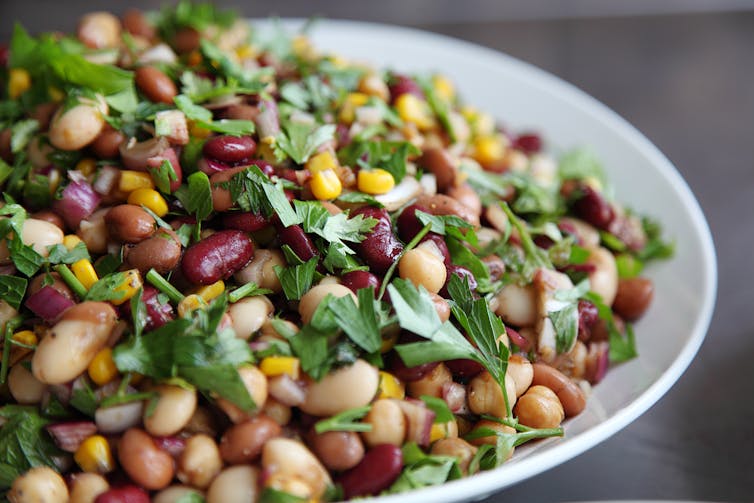 Prebiotics can be found in a range of foods, including legumes.
Shutterstock
Prebiotics can be found in a range of foods, including legumes.
Shutterstock
Additional sources of resistant starch include under-ripe bananas, cooked and cooled rice, cornflour, cooked and cooled potatoes.
For babies, breast milk is naturally rich in oligosaccharides.
So who should have them?
Prebiotic foods are good for everyone, contain a range of nutrients and help promote a healthy bacterial gut environment.
The benefits of probiotics for a range of health conditions are unclear – they’re likely to be small, and depend on what is being taken and the underlying health issues.
But people at high risk of diarrhoea after antibiotics may benefit from consuming probiotic – as well as prebiotic – foods daily.
There is also emerging evidence that combining specific probiotics and prebiotics can increase the beneficial effects of both. Both the pro- and prebiotics could be added to the one food, termed a “synbiotic”, or they could be from separate sources but eaten together.
When it comes to antibiotics, the bottom line is only take them when prescribed for bacterial infections. Take them according to instructions from the manufacturer, your pharmacist and your doctor.
Read more: Health Check: what happens when you hold in a fart?
Authors: Clare Collins, Laureate Professor in Nutrition and Dietetics, University of Newcastle


















