

Understanding how African-Australians think about COVID can help tailor public health messaging
- Written by: Levi Osuagwu, Research fellow, Western Sydney University
New South Wales reported 98 new COVID-19 cases in the past 24 hours. Twenty of those were infectious while in the community, a number which needs to get close to zero before the lockdown can end.
To reduce the spread of COVID-19 across Sydney, NSW premier Gladys Berejiklian tightened restrictions in Liverpool, Fairfield, and Canterbury-Bankstown over the weekend. On top of existing stay-at-home orders, residents are now unable to leave these local government areas for work unless they’re deemed “authorised” workers.
Sydney’s Southwest is home to many multicultural communities, which have had to respond quickly to many rounds of restrictions. But while Berejiklian says health authorities are working to tailor and disseminate basic public health messaging for migrant communities, this may not be enough.
Our research shows it’s also important to expand this information to counter myths and misinformation about COVID-19 so people in migrant communities have a clear sense of the risks of infection.
Read more: Sydney is locked down for another 7 days. So what will it take to lift restrictions?
What we found
We undertook a series of surveys of just under 15,000 people to assess the differences in knowledge, attitudes and perceptions of COVID-19 among sub-Saharan Africans. This includes a mix of different nationalities, tribes and cultures, including those living in developed countries such as Australia.
We also asked about their compliance with COVID-19 public health control measures such as social distancing, using face masks and hand sanitisers.
We found high levels of beliefs in COVID-19 myths among those from sub-Saharan African countries. While rates were lower among the 143 Africans we surveyed in the diaspora, including Australia, 7.5% of these participants believed in at least one of the following myths:
- drinking hot water flushes down the virus
- COVID-19 has a minimal effect on people from an African background
- COVID-19 was deliberately designed to reduce the world’s population
- the ability to hold your breath for ten seconds means you’re COVID-19 negative.
Some 8.3% of people in the diaspora believed the 5G network was associated with COVID-19.
Reassuringly, our research also found a significant association between knowledge of COVID-19 and being worried about contracting the virus, and positive behaviours such as wearing face masks, and using sanitisers.
In other words, the more our respondents knew about COVID-19, the more likely they were to protect themselves and others from the virus.
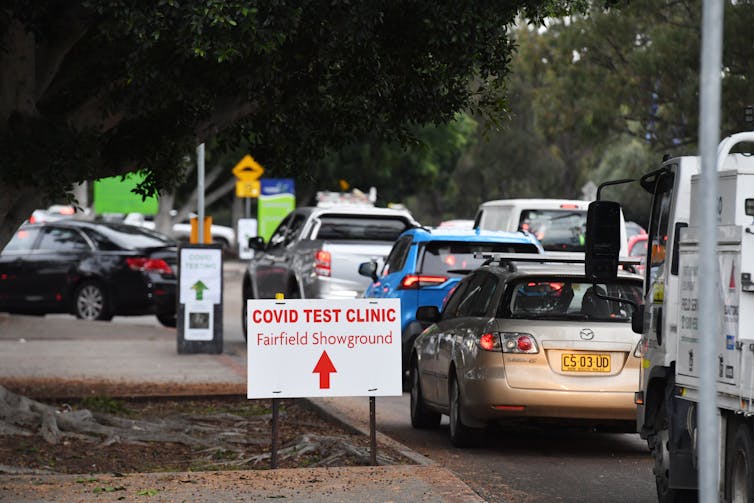 Understanding the virus makes people want to act.
Mick Tsikas/AAP
Understanding the virus makes people want to act.
Mick Tsikas/AAP
How do African communities get their information?
Because people’s perception of risk informs how they respond to a threat such as COVID-19, it’s important to understand their sources of information, attitudes, perceived risk of contracting the disease, and compliance with public health control measures.
Many of our survey participants got their information about COVID-19 from formal government and public health authority channels.
But some used social media, which routinely spread myths and misinformation about COVID-19 via video clips. These were commonly shared among communities in Africa and those in the diaspora.
Social media misinformation tended to focus on the origins of COVID-19, the dangers of COVID-19 vaccinations, and conspiracy theories claiming COVID-19 aims to reduce populations of African peoples.
Some respondents in Africa and Australia didn’t believe COVID-19 existed and mistrusted officials. This resulted in an inaccurate perception of their risk of infection, making them more likely to ignore public health messaging and disregard public health measures.
What does public health messaging need to do?
Health authorities need to form strong, mutually trusting bonds with African-Australian and other multicultural communities. Ideally this would be ongoing, not just during a pandemic.
This foundation of trust allows authorities to convincingly communicate health directives such as mask-wearing, testing, vaccinations, and stay-at-home orders.
 People are more likely to want to protect themselves and others from COVID-19 if they’re aware of the risks of contracting the virus.
Christina @ wocintechchat.com
People are more likely to want to protect themselves and others from COVID-19 if they’re aware of the risks of contracting the virus.
Christina @ wocintechchat.com
It’s promising to see health authorities in Western Sydney liaising with community leaders to disseminate basic health information.
But any new messaging campaign now needs to go beyond the generic and favour more nuanced messages that dispel misinformation among African and other multicultural communities in Western Sydney.
Read more: A tougher 4-week lockdown could save Sydney months of stay-at-home orders, our modelling shows
Storytelling mediums, including drama, dance and theatre, have been shown to be an effective and efficient means of communicating more nuanced health messages to African and other multicultural audiences.
Creative storytelling techniques can create memorable messages that help audiences identify with the characters and situations presented, and emotionally engage with messages.
These messages motivate people to change their beliefs and behaviours, and can be disseminated using the mass media and social media, in relevant languages, as well as shared among communities.
Importantly, creative storytelling techniques can enhance feelings of community and family cohesion, and lessen the feelings of isolation and social exclusion that migrants often feel, especially during a pandemic.
Authors: Levi Osuagwu, Research fellow, Western Sydney University


















